
What Is a Layer-1 Blockchain? The Base Layer of Bitcoin

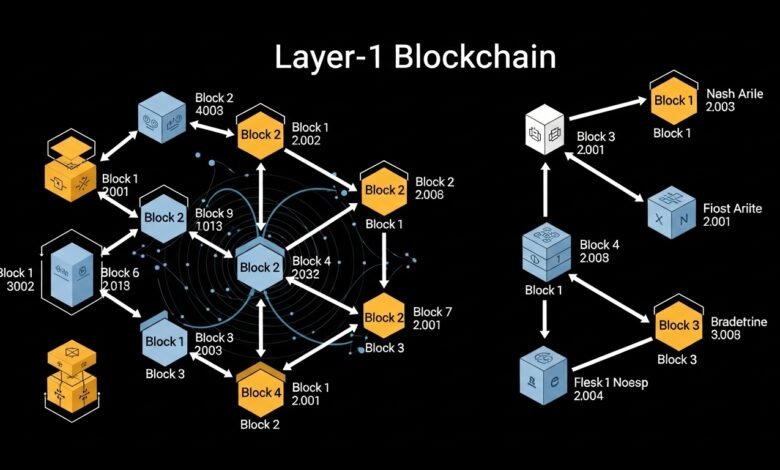
What Is a Layer-1 Blockchain is the foundation of the entire crypto ecosystem. When people talk about Bitcoin, Ethereum, or other major cryptocurrencies, they are usually talking about base layer networks that secure value, validate transactions, and enforce the rules of the system. Without this foundational layer, there would be no trustless digital money, no decentralized finance (DeFi), and no smart contract platforms.In simple terms, a layer-1 blockchain is the main blockchain protocol that processes and records on-chain transactions. It defines how blocks are created, how nodes reach agreement through a consensus mechanism, and how the native cryptocurrency is issued and transferred. Everything else in the crypto world—layer-2 scaling solutions, sidechains, and decentralized apps—ultimately depends on this base layer for security and settlement.
As crypto continues to grow, understanding what a layer-1 blockchain is and how it works is essential. Whether you are an investor, developer, or simply curious about Bitcoin and crypto, knowing what happens at layer 1 helps you make sense of fees, scalability debates, network upgrades, and the trade-offs between security and speed.In this article, we will break down the concept of layer-1 blockchains, explore real-world examples like Bitcoin and Ethereum, explain how they differ from layer-2 networks, and look at where the technology is heading next.
What Is a Layer-1 Blockchain Understanding the Blockchain Stack
Layers in Blockchain Architecture
To understand a layer-1 blockchain, it helps to imagine blockchain as a technology stack made of multiple layers. At the bottom sits the base layer, the fundamental protocol that defines how the network works. On top of it, you can have additional layers designed to improve speed, reduce costs, or add new functionality.
What Is a Layer-1 Blockchain is responsible for the core functions: storing the ledger, securing the network, and ensuring that transactions follow the rules. Above it, there may be:Layer-2 solutions, which handle transactions off the main chain and then settle back to layer 1.Application layers, where decentralized applications (dApps), wallets, and user interfaces live.Even though users often interact with friendly apps and websites, the real trust and security come from the layer-1 protocol underneath.
What Is a Layer-1 Blockchain Fits In
Think of a layer-1 blockchain as the operating system of a decentralized network. Everything else, from DeFi protocols to NFT marketplaces, runs on top of that operating system. The layer-1 blockchain provides:A shared, immutable ledger of transactionsA set of rules for validating new blocks A way to incentivize participants through a native cryptocurrency If layer 1 is robust, secure, and decentralized, then developers and users can confidently build and transact on it. If it is weak, centralized, or easily attacked, the whole ecosystem above it is at risk.
What Is a Layer-1 Blockchain?
Definition and Core Responsibilities
A layer-1 blockchain is the main network that processes and finalizes transactions without relying on another blockchain. It does not need another chain to verify its activity; it is the ultimate source of truth for its ecosystem.Maintaining the distributed ledger of balances and transactionsDefining the consensus mechanism that nodes use to agree on the stateEnforcing protocol rules, such as block size, block time, and transaction formatsIssuing and managing the native token that powers the networkBitcoin, Ethereum, Solana, Avalanche, Cardano, and BNB Chain are examples of layer-1 blockchains. Each has its own design choices, performance characteristics, and economic model, but they all share the role of being the primary blockchain infrastructure for their ecosystems.
Ledger, Consensus, and Security at the Base Layer
At the heart of every layer-1 blockchain is a shared ledger that records who owns What Is a Layer-1 Blockchain This ledger is replicated across thousands of nodes in a peer-to-peer network. To prevent double-spending and fraud, the network needs a way to agree on which transactions are valid and in what order they occurred.
This is where consensus mechanisms come in. A layer-1 blockchain uses a consensus protocol such as Proof of Work (PoW) or Proof of Stake (PoS) to achieve transaction finality without a central authority. By requiring work, stake, or other forms of cost, the protocol makes it extremely expensive to attack the network or rewrite history.Security at layer 1 is critical. If the base layer is compromised, everything above it—layer-2 rollups, dApps, and tokens—can be affected. That is why decentralization, network security, and economic incentives are so important at the layer-1 level.
Key Components of a Layer-1 Blockchain
Nodes and the Network
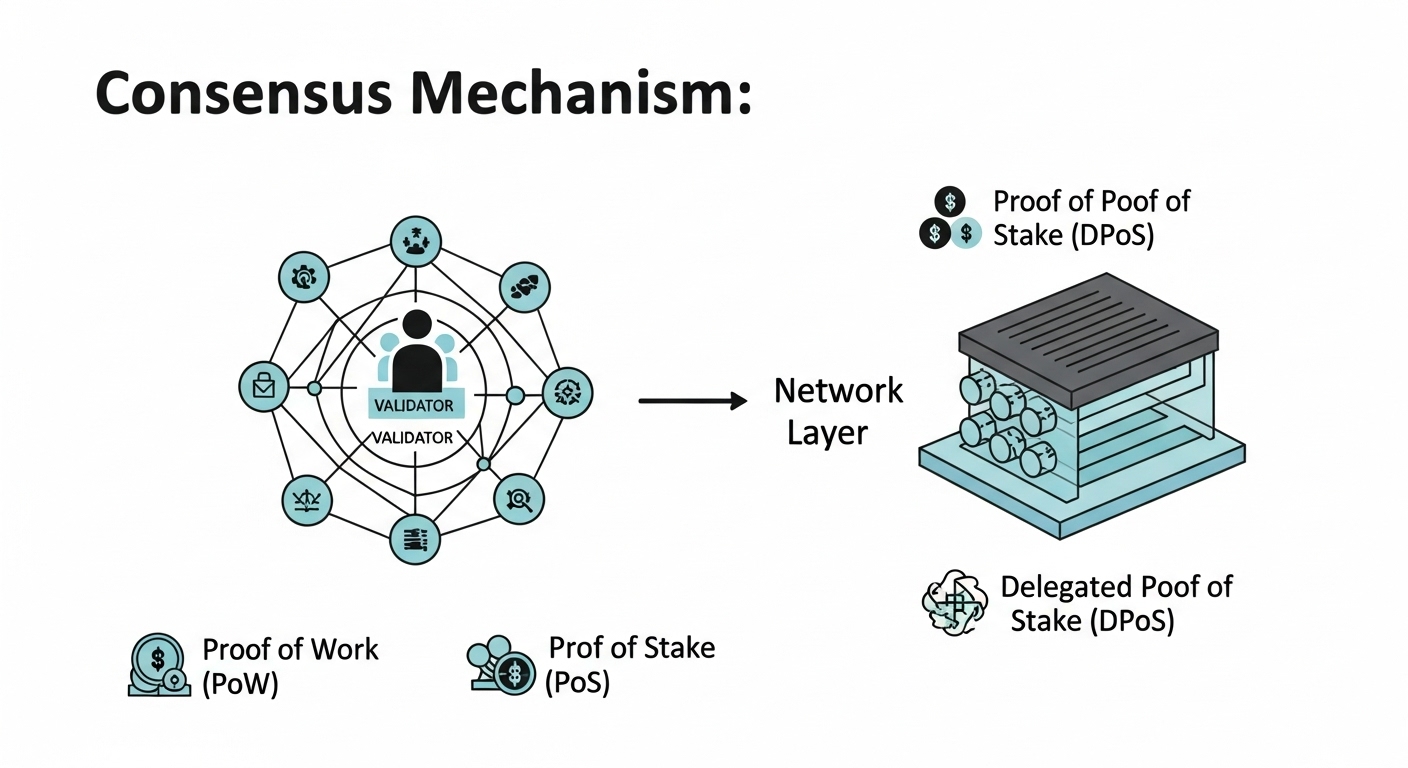
A layer-1 blockchain is made up of many nodes run by individuals, companies, and organizations around the world. Each node stores a copy of the blockchain and follows the protocol rules. Together, these nodes form a decentralized network that can operate without a central server.
Full nodes verify each transaction and block, ensuring that no rules are broken. Some networks also use validator nodes, which participate directly in the consensus process in Proof of Stake systems. The more distributed these nodes are, the stronger the censorship resistance and resilience of the layer-1 protocol.
Consensus Mechanisms: PoW and PoS
The consensus mechanism is a defining feature of every layer-1 blockchain.In Proof of Work, used by Bitcoin, miners compete to solve cryptographic puzzles. This process, called mining, requires significant energy but makes the network extremely hard to attack. The miner who finds the correct solution gets to add a new block and receive block rewards in the native cryptocurrency.
In Proof of Stake, used by many modern networks like Ethereum (post-merge) and Cardano, validators lock up (or “stake”) tokens to participate in block production. Honest behavior is rewarded, while malicious attempts can result in losing part of the stake. PoS aims to offer on-chain scalability and lower energy usage while maintaining strong security.Both models are designed to make attacks expensive and to align economic incentives with honest participation.
Native Cryptocurrency and Tokenomics
Every layer-1 blockchain has a native cryptocurrency that plays several role It is used to pay transaction fees.It may reward miners or validators for securing the network. It can act as a store of value, medium of exchange, or governance token.For example, BTC is the native asset of the Bitcoin network, while ETH is the native asset of the Ethereum network. These tokens are central to the tokenomics of the blockchain protocol, helping to coordinate participants and secure the base layer.
Smart Contracts on Layer-1
Some layer-1 blockchains are designed as smart contract platforms. What Is a Layer-1 Blockchain Ethereum is the prime example, along with other networks like Solana and Avalanche. On these chains, developers can deploy self-executing code called smart contracts that run directly on the base layer.These smart contracts power DeFi protocols, NFT marketplaces, DAOs, and many other on-chain applications. Because they run on the layer-1 blockchain, they inherit its security and decentralized consensus, making them difficult to shut down or censor.
Examples of Major Layer-1 Blockchains
Bitcoin: The Original Layer-1 Blockchain
Bitcoin is the first and most well-known layer-1 blockchain. It was created primarily as peer-to-peer digital cash and has evolved into a leading store of value. Bitcoin uses Proof of Work to secure the network, relying on miners and a large amount of computing power.Bitcoin’s focus is on security, simplicity, and decentralization. The protocol changes slowly and cautiously, and its base layer is intentionally limited in terms of scripting and programmability. While this means Bitcoin has less complex on-chain functionality, it also maintains extremely strong network security and immutability.
Ethereum: A General-Purpose Smart Contract Platform
Ethereum is another major layer-1 blockchain, but with a different goal. Instead of focusing purely on money, Ethereum was designed as a world computer that can run arbitrary smart contracts. This opened the door to DeFi, NFTs, Web3 applications, and decentralized autonomous organizations (DAOs).Ethereum has transitioned from Proof of Work to Proof of Stake, improving energy efficiency and enabling more advanced scaling solutions. It remains a central base layer for a large ecosystem of layer-2 rollups, such as optimistic rollups and zk-rollups, which help the network scale while settling securely on the layer-1 blockchain.
Other Prominent Layer-1 Blockchains
Beyond Bitcoin and Ethereum, many other layer-1 blockchains compete in the space, each offering different trade-offs in performance, scalability, and decentralization. Some notable examples include:Solana, known for high throughput and low feesAvalanche, with a focus on fast finality and customizable subnetsCardano, which emphasizes research-based development and formal methods BNB Chain, closely integrated with the Binance ecosystem
All of these networks aim to provide secure blockchain infrastructure and support a wide range of on-chain applications. They are part of a broader trend to experiment with new designs for the base layer of crypto.
The Scalability Trilemma
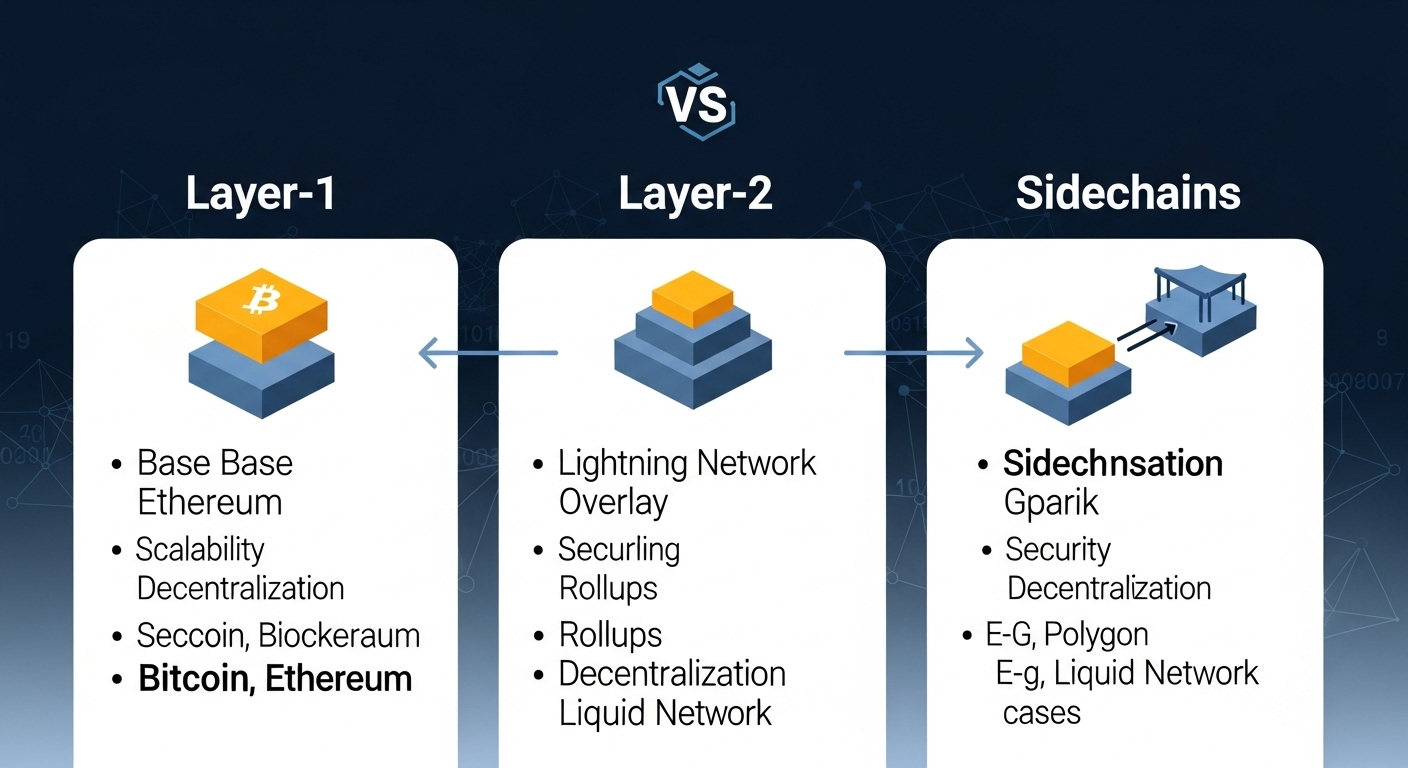
A key challenge every layer-1 blockchain faces is the scalability trilemma: the idea that it is hard to optimize security, decentralization, and scalability all at once. If a chain tries to process thousands of transactions per second directly on the base layer, it may require powerful hardware that fewer people can run, reducing decentralization. If it prioritizes small nodes and strong decentralization, it may process fewer transactions and suffer from congestion and higher fees.This trade-off led to the rise of layer-2 solutions and sidechains, which aim to increase throughput without weakening the security of the layer-1 protocol.
How Layer-2 Networks Complement Layer-1
A layer-2 network is built on top of a layer-1 blockchain. It processes transactions off-chain or in a separate environment, then periodically submits proofs or summaries back to the base chain. Examples include:Payment channelsRollups that bundle many transactions and post them to layer 1Off-chain scaling systems for specific use casesLayer-2 networks rely on the layer-1 blockchain for final settlement and security, but they help reduce load and costs. This relationship allows the base layer to remain secure and decentralized, while layer-2 scaling provides a smoother user experience.Sidechains, in contrast, are separate blockchains that run in parallel and may be bridged to the main layer-1 network. They often have their own validators and security assumptions, offering flexibility but sometimes less security than the primary base layer.
How Transactions Flow on a Layer-1 Blockchain
From Wallet to Mempool to Block
When you send a transaction on a layer-1 blockchain, the process typically looks like this:First, you create a transaction in your wallet by specifying the recipient, amount, and fee. Your wallet then broadcasts this transaction to the network, where it enters the mempool, a waiting area for unconfirmed transactions.Miners or validators pick transactions from the mempool, usually prioritizing those with higher fees. They assemble these transactions into a block and propose it to the network. The consensus mechanism then determines which proposed block becomes part of the official chain.
Confirmation, Finality, and Fees
Once your transaction is included in a block on the layer-1 blockchain, it receives its first confirmation. As more blocks are added on top, the transaction becomes increasingly difficult to reverse, leading to finality. In some layer-1 protocols, finality is probabilistic, while in others it is deterministic after a certain number of confirmations.Fees are an important part of this process. Transaction fees:Incentivize miners or validators to include your transaction Help prevent spam and abuse of the network Reflect the current demand for on-chain block spaceDuring periods of high demand, layer-1 blockchains can experience congestion, leading to higher fees and longer wait times. This is one of the main reasons why layer-2 scaling solutions and on-chain optimizations are such active areas of research and development.
What Is a Layer-1 Blockchain Strengths and Limitations of Layer-1 Blockchains
Security, Decentralization, and Neutrality
The greatest strengths of a robust layer-1 blockchain are security, decentralization, and neutrality. Because anyone can run a node and verify the rules, no single entity can easily control the ledger or censor transactions. This trust-minimized infrastructure is what makes public blockchains unique compared to traditional databases.Neutrality means that the base layer does not discriminate between users or transactions. Whether you are moving a small amount of crypto or interacting with a complex DeFi protocol, the layer-1 blockchain applies the same rules to everyone.
Scalability, Throughput, and Energy Usage
The main limitations of many layer-1 blockchains revolve around scalability and performance. As more users join the network, the limited capacity of the base layer can cause:Higher transaction feesSlower confirmation timesCompetition for block spaceIn Proof of Work systems, energy usage is another concern. While PoW provides strong security, it consumes significant power. Proof of Stake and other consensus models aim to address this by offering energy-efficient blockchain designs that still maintain decentralized consensus.Developers are constantly working on on-chain scalability improvements, such as sharding, more efficient virtual machines, and better cryptography. However, many of the biggest gains in user experience are expected to come from combining a secure layer-1 blockchain with powerful layer-2 networks.
What Is a Layer-1 Blockchain The Future of Layer-1 Blockchains
Upgrades, Interoperability, and Modular Architectures
The future of layer-1 blockchains is not just about making the base layer faster. It is about making it more modular, interoperable, and flexible, while preserving security and decentralization.Some key trends include Protocol upgrades that improve throughput and reduce fees Interoperability solutions that allow different blockchain networks to communicate and transfer valueModular blockchain designs, where the base layer focuses on consensus and data availability, while execution happens on separate layersAs more capital and innovation move into crypto, the role of the layer-1 blockchain as a secure settlement layer becomes even more important. Rather than trying to do everything, the base layer is increasingly viewed as the anchor of trust on which other layers and applications are built.
Conclusion
A layer-1 blockchain is the fundamental base layer that powers Bitcoin, Ethereum, and the broader crypto ecosystem. It maintains the ledger, enforces the rules, and provides the decentralized security that makes trustless digital money and on-chain applications possible.By defining the consensus mechanism, managing the native cryptocurrency, and securing on-chain transactions, the layer-1 protocol is the ultimate source of truth for its network. While it may face challenges related to scalability, throughput, and fees, it also offers unmatched neutrality, resilience, and censorship resistance.As layer-2 scaling, interoperability solutions, and modular architectures evolve, layer-1 blockchains will continue to serve as the settlement backbone of the crypto world. Understanding how they work gives you a clearer view of everything from Bitcoin’s monetary policy to Ethereum’s DeFi ecosystem, and helps you navigate the fast-changing landscape of blockchain technology with more confidence.
FAQs
Q: How is a layer-1 blockchain different from a layer-2 solution?
A layer-1 blockchain is the main network that validates and finalizes transactions, such as Bitcoin or Ethereum. A layer-2 solution is built on top of layer 1 to handle transactions more efficiently, often off-chain or in bundled form, then settles back to the base layer. Layer 2 depends on layer 1 for final security and settlement, while layer 1 is the ultimate source of truth.
Q: IWhat Is a Layer-1 Blockchain Bitcoin ?
Yes, Bitcoin is a classic example of a layer-1 blockchain. It processes transactions directly on its base layer using Proof of Work. While additional solutions like the Lightning Network act as layer-2 payment layers, they still rely on the Bitcoin layer-1 protocol for final settlement and security.
Q: Can a What Is a Layer-1 Blockchain support smart contracts?
Many layer-1 blockchains support smart contracts, but not all. Ethereum, Solana, Avalanche, and similar networks are designed as smart contract platforms, allowing developers to deploy dApps directly on the base layer. Bitcoin’s layer 1, on the other hand, is intentionally limited in programmability, focusing on secure and simple monetary transactions.
Q: Why are transaction fees sometimes high on layer-1 blockchains?
Fees on a blockchain reflect demand for limited block space. When many users try to transact at the same time, the mempool becomes crowded and users compete by paying higher fees to get included in blocks faster. This is a natural result of the scalability limits of the base layer, and one reason why layer-2 scaling solutions are being actively developed.What Is a Layer-1 Blockchain
Q: What Is a Layer-1 Blockchain layer-1 become obsolete as layer-2 grows?
No. Layer-2 networks are designed to complement, not replace, layer-1 blockchains. The base layer remains essential as the secure settlement and data availability layer, while layer 2 improves user experience with faster and cheaper transactions. In the long term, the combination of a secure layer-1 blockchain and powerful layer-2 infrastructure is likely to form the backbone of a scalable and decentralized crypto ecosystem.What Is a Layer-1 Blockchain