
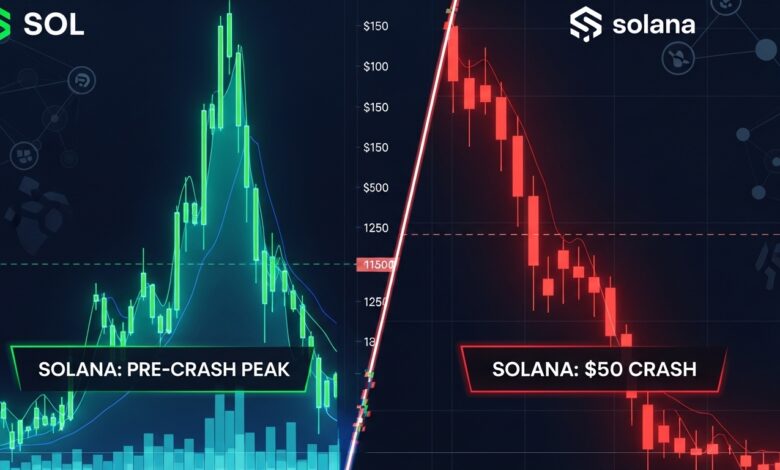
Solana Split Screen as $50 Crash Call Meets DeFi Record Solana has once again captured the spotlight in the cryptocurrency market, but this time the narrative is sharply divided. On one side, analysts are warning of a potential price crash toward the $50 level, citing technical weaknesses, market volatility, and shifting investor sentiment. On the other side, the network is experiencing unprecedented growth in its decentralized finance ecosystem, with total value locked reaching new highs. This “split screen” scenario has created one of the most fascinating moments in the Solana story, as bearish price forecasts clash with bullish on-chain metrics.
The contrast highlights the complex nature of modern crypto markets, where price action and network fundamentals do not always move in tandem. While some traders focus on short-term charts and macroeconomic signals, others are looking at long-term indicators such as DeFi adoption, on-chain activity, smart contract usage, and liquidity growth. The result is a market environment where the future of Solana appears uncertain yet full of opportunity.
We explores the forces behind the $50 crash prediction, the reasons behind the DeFi lockup record, and what these opposing signals could mean for the future of Solana in both the short and long term.
Solana Split Screen as $50 Crash
The current market sentiment around Solana can best be described as divided. Some analysts believe the price is overextended and due for a correction, while others argue that the network’s fundamentals remain stronger than ever. This split narrative has created confusion among investors, especially those trying to decide whether Solana represents a buying opportunity or a potential risk.
The bearish camp points to technical resistance, declining momentum indicators, and broader market uncertainty. From this perspective, the $50 price target is not necessarily a catastrophic prediction but rather a possible retracement to a key support zone. Traders who follow technical analysis, price structure, and market cycles often see such corrections as natural parts of the crypto market.
Meanwhile, the bullish side focuses on the growth of DeFi protocols, increasing total value locked, and the expansion of the Solana ecosystem. These investors argue that strong network usage often precedes price appreciation, especially in blockchain projects with active developer communities.
Understanding the $50 Crash Call
Technical Signals Behind the Bearish Outlook
The $50 crash call is largely rooted in technical analysis. Some analysts believe that Solana’s price structure shows signs of weakness, particularly if key support levels fail to hold. In volatile markets, a breakdown below major support zones can trigger cascading sell-offs, especially when leveraged positions are involved.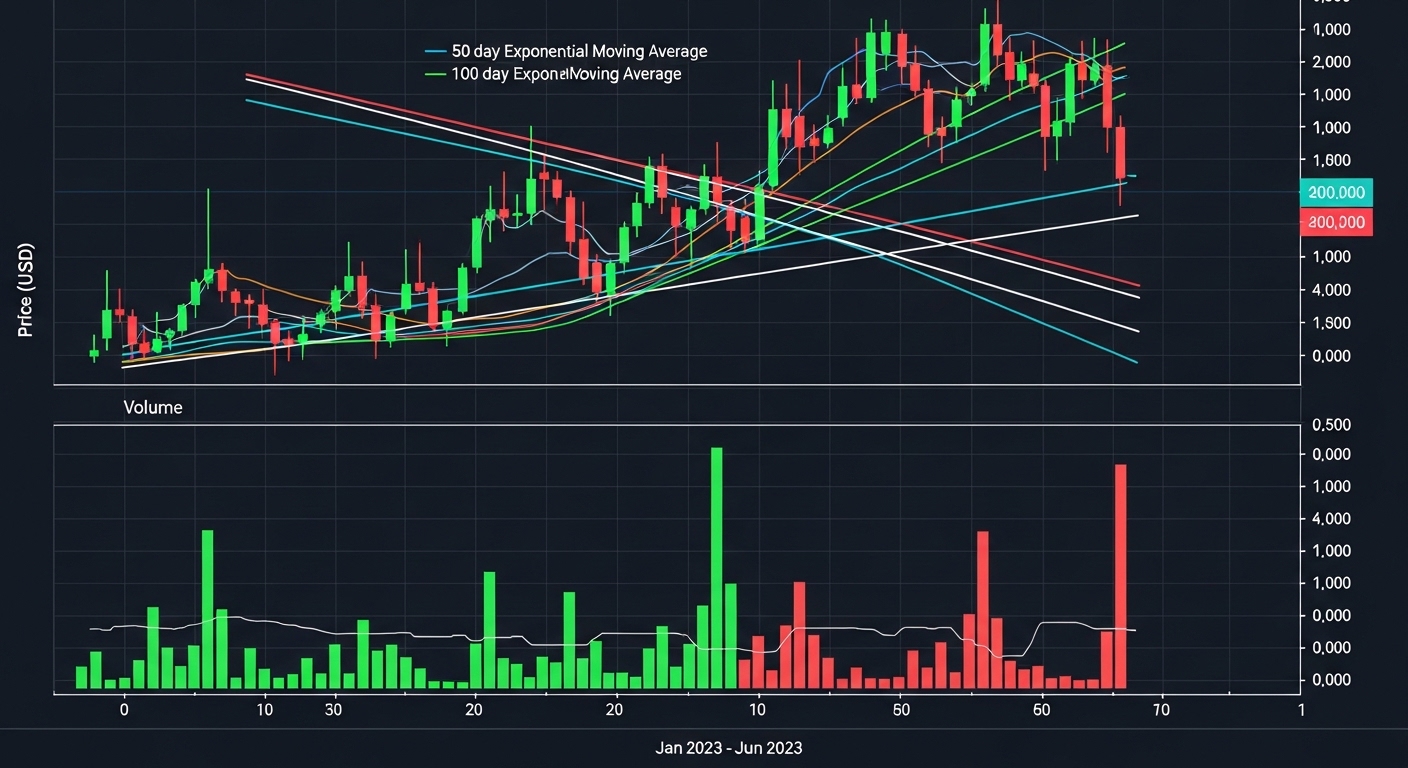
Indicators such as the relative strength index, moving averages, and volume trends are often cited in these bearish forecasts. When these indicators align in a negative pattern, traders may interpret it as a sign that momentum is shifting downward.
Another factor contributing to the crash prediction is the broader macro environment. Cryptocurrency markets often react strongly to changes in interest rates, global liquidity, and risk sentiment. If macroeconomic conditions worsen, even fundamentally strong projects like Solana could face price pressure.
Market Psychology and Liquidations
Crypto markets are heavily influenced by sentiment and leverage. When a major price level is threatened, traders who hold leveraged positions may be forced to close their trades, triggering liquidations. This can accelerate downward movements and create sharp price drops.
In the case of Solana, some analysts believe that a break below key support could unleash a wave of liquidations, pushing the price toward the $50 zone. This scenario is not uncommon in crypto markets, where rapid price swings are part of the landscape. However, it is important to note that crash predictions are not guarantees. They represent possible scenarios based on current data and market conditions, not certain outcomes.
DeFi Lockup Record Signals Strong Network Demand
Growth in Total Value Locked
While price forecasts paint a bearish picture, the Solana DeFi ecosystem is telling a very different story. The network has recently achieved record levels of total value locked, a key metric that measures the amount of capital committed to DeFi protocols.
Total value locked is often viewed as a proxy for network health. When TVL increases, it suggests that users are actively participating in decentralized exchanges, lending platforms, and yield farming protocols. This level of engagement typically reflects growing confidence in the network. The surge in TVL on Solana indicates that users are not abandoning the ecosystem despite the bearish price predictions. Instead, they are continuing to deposit funds into DeFi applications, signaling strong underlying demand.
Rising Activity Across DeFi Protocols
Several factors have contributed to the growth in Solana’s DeFi sector. The network’s high throughput and low transaction costs make it attractive for developers and users alike. As a result, new projects continue to launch, expanding the ecosystem and attracting liquidity.
The increase in smart contract deployments, liquidity pools, and decentralized applications has created a virtuous cycle. More users bring more liquidity, which attracts more developers, which in turn leads to more applications and features. This growth suggests that Solana’s ecosystem is maturing, even as short-term price predictions remain uncertain.
Why Price and Fundamentals Can Diverge
Short-Term Trading vs Long-Term Adoption
One of the key reasons behind the split narrative is the difference between short-term trading and long-term adoption. Price movements are often driven by speculation, leverage, and macroeconomic trends. In contrast, network fundamentals reflect actual usage and development.
In many cases, strong fundamentals do not immediately translate into higher prices. Markets can remain irrational or disconnected from underlying data for extended periods. However, over the long term, fundamentals tend to play a major role in determining a project’s value.
For Solana, the rising on-chain metrics, user growth, and developer activity suggest that the network’s foundation remains strong, even if short-term price volatility persists.
Historical Examples in Crypto
This kind of split scenario is not unique to Solana. Throughout crypto history, several major projects have experienced periods where price action and fundamentals moved in opposite directions.
In some cases, networks with strong adoption faced temporary price corrections before entering new growth phases. These situations often created opportunities for long-term investors who focused on fundamentals rather than short-term price movements.
Key Drivers Behind Solana’s DeFi Expansion
Low Fees and High Speed
One of Solana’s main advantages is its ability to process transactions quickly and at low cost. This combination has made it attractive for DeFi users who want to avoid the high fees often associated with other networks. The network’s architecture allows for high throughput, enabling complex DeFi applications to run smoothly. This technical advantage has played a major role in attracting liquidity and developers.
Growing Developer Ecosystem
Another factor behind the DeFi lockup record is the growth of Solana’s developer community. New projects continue to launch, bringing innovative features and attracting new users.
The increase in developer activity, protocol launches, and ecosystem funding has strengthened the network’s long-term prospects. A vibrant developer community is often seen as a key indicator of a blockchain’s future success.
Institutional and Retail Interest
Both institutional and retail investors have shown growing interest in Solana’s DeFi ecosystem. Institutions are increasingly exploring on-chain finance, while retail users are drawn to high-yield opportunities and fast transactions. This combination of user segments has contributed to the surge in total value locked, reinforcing the network’s position as a major player in the DeFi space.
Risks That Could Support the Bearish Scenario
Market-Wide Downturns
If the broader cryptocurrency market enters a downturn, Solana is unlikely to remain unaffected. Even strong projects often experience price declines during market-wide corrections. Macroeconomic factors such as interest rate hikes, regulatory uncertainty, or declining liquidity could put pressure on crypto assets, including Solana.
Network and Ecosystem Challenges
Although Solana has made significant progress, it still faces challenges. Network outages, security concerns, or competition from other blockchains could impact investor confidence. If such issues arise during a period of weak market sentiment, they could contribute to the bearish price scenario.
Bullish Catalysts That Could Counter the Crash Call
Continued DeFi Growth
If total value locked continues to rise, it could strengthen the bullish case for Solana.
Sustained growth in DeFi adoption, liquidity inflows, and protocol activity may eventually translate into higher prices.
New Use Cases and Partnerships
The introduction of new applications, partnerships, or technological upgrades could also support the price. Innovations in areas such as real-world asset tokenization, gaming, and payments could attract new users to the network.
Improved Market Conditions
A broader recovery in the cryptocurrency market would likely benefit Solana as well. If investor sentiment turns positive, strong fundamentals could amplify price gains.
What the Split Screen Means for Investors
The current situation presents both risks and opportunities. On one hand, the $50 crash prediction highlights the potential for short-term volatility. On the other hand, the DeFi lockup record suggests that the network’s fundamentals remain strong.
For traders, this environment may require careful risk management and attention to technical levels. For long-term investors, the growing DeFi ecosystem could represent a sign of resilience and future potential. Ultimately, the split narrative underscores the importance of looking at both price action and fundamental data when evaluating a cryptocurrency.
Conclusion
Solana’s current market situation reflects a classic split-screen scenario. Bearish price predictions suggest a possible drop toward the $50 level, driven by technical factors and macroeconomic concerns. At the same time, the network’s DeFi ecosystem is thriving, with total value locked reaching record highs.
This contrast highlights the complex dynamics of the cryptocurrency market, where short-term price movements and long-term fundamentals can diverge. While the bearish scenario cannot be ignored, the strong growth in DeFi activity, on-chain usage, and developer engagement suggests that Solana’s underlying foundation remains solid.
For investors and traders alike, the key takeaway is that both sides of the narrative deserve attention. The coming months will likely determine whether the bearish price forecasts play out or whether the strength of Solana’s DeFi ecosystem ultimately drives the next phase of growth.
FAQs
Q: Why are analysts predicting a $50 crash for Solana despite strong fundamentals?
Analysts who predict a $50 crash are mostly relying on technical indicators and market sentiment rather than long-term fundamentals. They believe that if key support levels break, a cascade of liquidations could push the price lower. In highly leveraged markets like crypto, such scenarios are common. However, these predictions are not guaranteed outcomes, and strong fundamentals such as rising DeFi adoption and increasing total value locked could counteract the bearish outlook over time.
Q: What does a DeFi lockup record mean for the Solana ecosystem?
A DeFi lockup record refers to the highest amount of total value locked within the network’s decentralized finance protocols. This metric shows how much capital users are committing to applications like lending, trading, and yield farming. When total value locked increases, it usually indicates strong user confidence, growing adoption, and expanding liquidity, all of which are positive signs for the long-term health of the ecosystem.
Q: Can Solana’s price fall even if its DeFi sector is growing?
Yes, price and fundamentals do not always move together in the short term. Market sentiment, macroeconomic factors, and technical trading patterns can cause prices to fall even when network usage is rising. Over the long term, however, strong fundamentals often influence price direction, as increased adoption tends to support higher valuations.
Q: What factors could prevent Solana from dropping to $50?
Several factors could prevent a drop to $50, including continued growth in total value locked, increased developer activity, and improving overall crypto market conditions. Positive news such as new partnerships, technological upgrades, or rising institutional interest could also support the price and counter bearish predictions.
Q: Is the current split narrative around Solana unusual in the crypto market?
No, this type of split narrative is common in the cryptocurrency industry. Many projects experience periods where price action and network fundamentals move in opposite directions. These situations often occur during transitional market phases and can create both risks and opportunities for investors depending on their time horizon and strategy.