Bitfarms Plunges 18% as It Winds Down Bitcoin Mining Ops
Bitfarms plunges 18% after plans to wind down Bitcoin mining and pivot to AI. Discover what this means for BTC miners, investors and crypto markets.

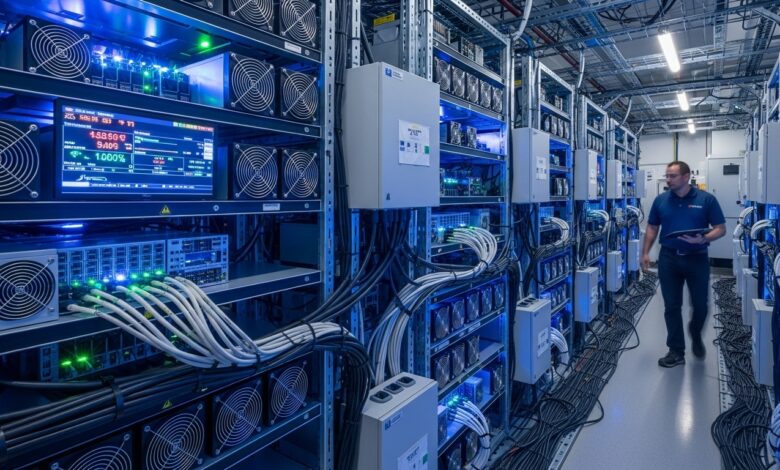
The headline “Bitfarms plunges 18% after plan to wind down Bitcoin mining ops” captures more than a single bad trading session. It points to a deeper shift inside one of the most recognizable Bitcoin mining companies in the world – and, indirectly, to a turning point for the broader crypto mining industry.
Bitfarms, long known as a large-scale Bitcoin miner with facilities across the Americas, has been battling rising energy costs, post-halving revenue pressure and increasingly fierce competition. Over the last year, the company has begun winding down parts of its Bitcoin mining operations, most notably its facility in Argentina, after an extended power supply suspension and economic uncertainty in the region.
At the same time, Bitfarms has been pivoting away from pure Bitcoin mining toward high-performance computing (HPC) and AI data centers, a move that has already shown up in its financials. In the first quarter of 2025, the firm reported a net loss of about $36 million as it invested heavily in infrastructure for AI computing and HPC, even as mining margins shrank.
For traders, this mix of operational shutdowns, strategic pivots and short-term losses has translated into sharp swings in the stock price. Double-digit drops, sometimes described as plunges of around 18%, have followed announcements tied to shutting down older mining sites and raising fresh capital. While the exact percentage moves will vary from session to session, the market’s message is clear: investors are re-pricing Bitfarms as it moves from a straightforward Bitcoin mining stock to a more complex hybrid of crypto miner and AI infrastructure provider.
In this in-depth guide, we will break down what the wind-down of Bitcoin mining means for Bitfarms, why the stock is so volatile, how this fits into the global Bitcoin mining landscape, and what both crypto investors and traditional equity traders should watch next.
What Actually Happened to Bitfarms?
When people read that Bitfarms plunges 18% after plan to wind down Bitcoin mining ops, they naturally ask a simple question: what exactly changed?
The Argentina Shutdown and Operational Headwinds
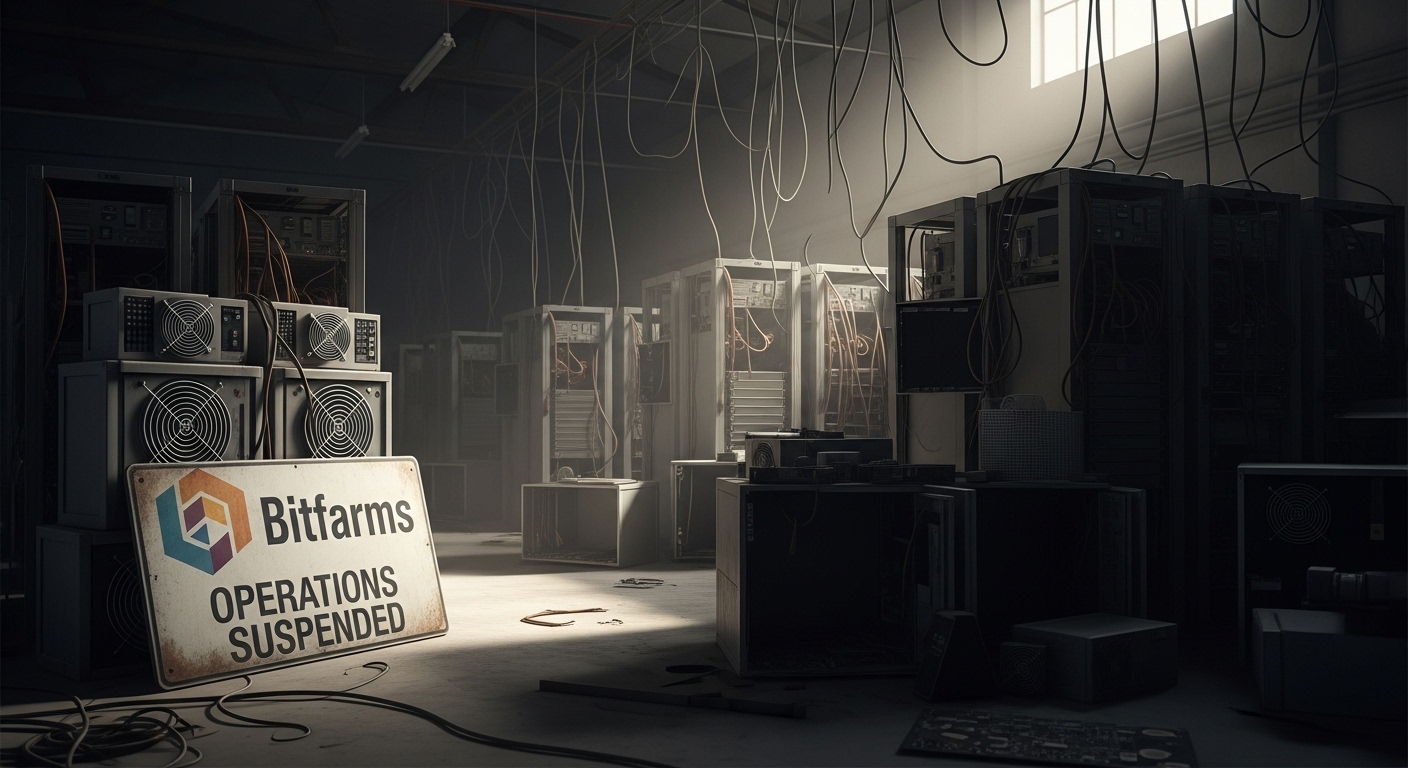
A major story behind the scenes is Bitfarms’ Argentina site at Río Cuarto. In May 2025, the company’s energy supplier, Generación Mediterránea S.A. (GMSA), halted power to the facility amid its own debt restructuring, forcing Bitfarms to suspend mining in the country. That site represented roughly 13% of Bitfarms’ total Bitcoin mining capacity.
Bitfarms has since decided to wind down its Argentina Bitcoin mine entirely, rather than wait indefinitely for power to return under uncertain economic and regulatory conditions. In regulatory filings and earnings updates, the company framed the decision as part of a broader optimization strategy: shutting a site that had become economically and politically risky, while improving fleet efficiency elsewhere and freeing capital for new ventures.
From a financial perspective, Bitfarms expects to recover millions of dollars through the elimination of remediation liabilities, prepaid deposits and lease expenses tied to Argentina, an amount it likens to more than two years of projected free cash flow from that site under current mining economics.Bitcoin mining ops
Still, for investors who see Bitfarms primarily as a Bitcoin mining company, the headline is simple: a double-digit portion of its hash rate has gone offline, and the firm is not in a hurry to replace it with like-for-like BTC mining rigs.
A Strategic Pivot from Bitcoin Mining to AI and HPC
Argentina is not an isolated story. Even before the shutdown, Bitfarms had begun reshaping its identity. Management has repeatedly emphasized a pivot from pure Bitcoin mining to high-performance computing for AI and other data-intensive workloads.
Key elements of this shift include:
-
Upgrading the existing mining fleet to be more energy-efficient, cutting the watt-per-terahash figure while keeping overall hash rate competitive.
-
Selling non-core sites, such as a Paraguay mining facility, and reallocating capital to AI data center projects.
-
Securing a large financing facility – around $300 million – to build out a high-performance computing campus in Pennsylvania, designed to serve AI workloads rather than just Bitcoin mining.
More recently, Bitfarms has acquired land in both Washington state and Pennsylvania, specifically earmarked for potential HPC and AI development, signaling that its long-term growth narrative is shifting away from relying solely on block rewards and transaction fees from Bitcoin mining
For the traditional crypto investor, that can be a jarring transition. A stock that once tracked the BTC price and network difficulty is now also dependent on demand for AI computing, data-center economics, and the ability to compete with non-crypto players in the HPC space.
Why Bitfarms Is Winding Down Bitcoin Mining Operations
To understand why Bitfarms plunges 18% after plan to wind down Bitcoin mining ops, you need to look at the basic economics of Bitcoin mining in 2025.
The Squeeze from Bitcoin Halving and Falling Hashprice
Every four years, the Bitcoin halving cuts the block subsidy in half. After the most recent halving, revenue per unit of hash power – often expressed as hashprice – dropped sharply across the industry. Bitfarms, like many miners, has felt the impact in its margins. In its recent financial disclosures, the company reported pressure on mining profitability even as revenue rose, reflecting tighter margins and higher operating costs.
When the BTC price is high enough, miners can offset a halving with scale and efficiency gains. But when Bitcoin price volatility combines with rising energy costs, the math becomes tougher. A site dependent on a single power supplier – such as GMSA in Argentina – becomes especially vulnerable. When power is cut or repriced, miners can no longer rely on stable, low-cost electricity, the biggest input cost in crypto mining.
Bitfarms’ decision to shut down Argentina and refrain from aggressive new ASIC purchases is a recognition that not every megawatt deployed into Bitcoin mining will generate attractive returns in the post-halving world. Instead, management has chosen to prioritize capital-efficient growth and to redirect resources to higher-margin opportunities like AI data centers and HPC hosting.
Energy Costs, Political Risk and the Search for Stability
Energy is the lifeblood of Bitcoin mining. Cheap, reliable power can mean the difference between a profitable operation and one that bleeds cash. Argentina initially looked attractive because of favorable power arrangements, but macroeconomic instability and the supplier’s debt restructuring turned that advantage into a liability.
By comparison, Bitfarms’ newer projects in North America are built around more stable long-term contracts and jurisdictions where rule of law and property rights are seen as more predictable. The company’s recent land acquisitions in Washington and Pennsylvania are about locking in sites where long-duration data-center projects can thrive, not just Bitcoin mines that might become unprofitable after the next halving.
In that sense, winding down older Bitcoin mining ops is less about abandoning crypto and more about upgrading the business model. Bitfarms still benefits from BTC upside through its remaining mining operations and any Bitcoin treasury it holds, but it no longer wants its fate tied exclusively to the volatile economics of proof-of-work mining.
Market Reaction: Why Bitfarms Shares Sold Off
Even if the strategy makes long-term sense, the short-term reaction has been brutal. Any time traders see a headline like Bitfarms plunges 18% after plan to wind down Bitcoin mining ops, they want to know what spooked the market.
Fear of a Shrinking Core Business
For many investors, Bitfarms was a straightforward play on Bitcoin mining stocks. When the company announces that it is shutting down a facility that once generated about 10% of its revenue and 13% of its production capacity, those investors may interpret it as shrinking the core business.
Even if Bitfarms emphasizes that it is improving fleet efficiency and redeploying capital to higher-margin projects, the optics can be negative in the short term. Traders see phrases like “wind down,” “shutdown,” and “halted power” and assume lower Bitcoin output in the near future. In a market where sentiment is everything, that can translate into steep one-day drops.
Concerns Over Execution Risk in AI and HPC
The other concern is execution risk. Pivoting from being a pure Bitcoin miner to a high-performance computing and AI data-center operator is not trivial. Bitfarms is expanding in a highly competitive space where hyperscalers and specialized AI infrastructure providers already have a head start.
The company’s Q1 2025 net loss of about $36 million – compared with roughly $6 million a year earlier – underscored the cost of this transition. Although revenue grew, margins were squeezed, and additional spending on new projects weighed on the bottom line.
When markets see larger losses, a major strategy shift and the shutdown of a large mining site happening at the same time, volatility is almost guaranteed. A sharp “re-rating” – such as a one-day move of 15–18% – becomes a way for traders to digest this new risk profile.
What Bitfarms’ Wind-Down Means for the Bitcoin Mining Industry

Bitfarms’ decision to wind down a significant Bitcoin mining operation is not happening in a vacuum. It reflects wider trends across the crypto mining sector.
Consolidation and M&A Pressure
The combination of rising difficulty, halving-driven revenue cuts and tightening capital markets has forced many miners to rethink their business models. Some have merged, while others have become takeover targets. Bitfarms itself has been in the spotlight as a potential acquisition candidate, and it previously rejected a major bid from Riot Platforms, another heavyweight in the space.
As mid-sized miners struggle with debt and operating losses, the industry is likely to consolidate further. Larger, better-capitalized players with access to cheap power and institutional funding will continue to scoop up distressed assets or entire companies. Bitfarms’ move away from risky sites and toward AI and HPC can be seen as a way to avoid being boxed in as a vulnerable pure-play miner.
The Shift Toward Diversified Revenue Streams
The most important takeaway for the industry is diversification. Many miners are now positioning themselves as infrastructure companies rather than just Bitcoin producers. Their existing strengths – power contracts, cooling systems, physical data-center sites and operational know-how – can be repurposed for AI training clusters, cloud computing, and other high-margin services.
Bitfarms’ decision to wind down certain Bitcoin mining ops while investing in AI data centers is part of this broader pattern. The company is effectively betting that demand for GPU-driven AI workloads will grow faster and more predictably than mining rewards, which are subject to Bitcoin halvings, difficulty adjustments and macro speculation.
Impact on Bitcoin Price and Crypto Mining Stocks
A natural question is whether the news that Bitfarms plunges 18% after plan to wind down Bitcoin mining ops has any material impact on Bitcoin’s price itself.
In practice, a single miner adjusting its operations rarely moves BTC in a lasting way. The Bitcoin network is designed to be resilient; if one miner shuts down, others eventually pick up the slack as difficulty adjusts. Even a 10–15% reduction in one company’s capacity is a small slice of global hash rate.
However, the sentiment around crypto mining stocks can spill over into broader market psychology. When investors see multiple miners reporting losses, shutting sites, or pivoting to non-crypto businesses, it can fuel narratives that Bitcoin mining is becoming less profitable or that adoption is slowing. That, in turn, can add to short-term volatility in BTC price, even if the underlying fundamentals remain sound.
For equity traders, the bigger story is sector rotation. Some investors may rotate from pure Bitcoin miners into more diversified plays – including those miners that are becoming AI infrastructure providers – while others might shift into ETF products or direct BTC exposure instead of stock picking.
What Investors Should Watch Next
If you are tracking Bitfarms after seeing headlines that it plunged on news of winding down Bitcoin mining ops, it helps to have a checklist of key factors to monitor.
Operational Efficiency and Remaining Mining Footprint
First, watch how efficiently Bitfarms runs its remaining Bitcoin mining facilities. After shutting down Argentina, the company has emphasized that its upgraded fleet delivers better energy efficiency and competitive hash rate at lower operating cost per terahash.
If Bitfarms can sustain strong gross mining margins even with a smaller footprint, it can still benefit from any future Bitcoin bull market while it builds out its AI and HPC business.
Progress on AI and HPC Data Centers
Second, track progress at the company’s planned HPC / AI data centers, particularly in Pennsylvania and Washington. Securing land and financing is the first step; converting those sites into revenue-generating AI data-center campuses is the real test.
Key questions include:
-
How quickly can Bitfarms sign customers for AI workloads?
-
Will it specialize in training large models, inference, or general HPC hosting?
-
Can it achieve attractive utilization rates and margins comparable to dedicated cloud and AI infrastructure players?
The answers will shape whether the market continues to price Bitfarms primarily as a Bitcoin mining stock or re-rates it as a broader digital infrastructure company.
Balance Sheet Strength and Capital Allocation
Finally, investors should keep an eye on the balance sheet. Bitfarms has raised capital through both a project-specific financing facility and convertible notes to support its expansion.The trade-off is leverage and shareholder dilution versus growth potential.
If management can deploy this capital into high-return AI and HPC projects while keeping debt manageable, the long-term upside could justify the short-term pain reflected in the latest share-price plunge.
Long-Term Outlook: Can Bitfarms’ AI Bet Pay Off?
At first glance, the idea that Bitfarms plunges 18% after plan to wind down Bitcoin mining ops might sound like a company in retreat. But there is another way to read the story: Bitfarms is making a calculated bet that its future lies in being a hybrid Bitcoin miner and AI infrastructure provider, not a pure, high-beta proxy for BTC price.
The long-term outcome will depend on execution. Bitfarms has real assets – land, power contracts, data-center know-how and an existing footprint across multiple countries. It also has experience operating in a fast-moving, capital-intensive industry, where hardware cycles and energy markets can shift quickly.
If the company can:
-
Maintain a lean, efficient Bitcoin mining base that benefits from periodic bull markets,
-
Successfully build out AI data centers with sticky, high-margin customers, and
-
Manage its debt and equity financing smartly,
then today’s plunge could one day look like the kind of volatility that early investors in disruptive infrastructure plays had to stomach before growth accelerated.
On the other hand, if Bitfarms struggles to compete in the crowded AI infrastructure market, or if its remaining Bitcoin mining operations continue to see margin pressure, the stock could remain under pressure even if BTC itself performs well.
For now, the only thing that is certain is that Bitfarms is not standing still. The company is choosing to wind down less attractive Bitcoin mining ops and reallocate capital toward what it sees as the next frontier: energy-hungry AI computing. Whether that gamble pays off is the key question investors must answer.
Conclusion
The idea that Bitfarms plunges 18% after plan to wind down Bitcoin mining ops is more than a scary headline. It reflects a deep transformation within Bitfarms and across the broader Bitcoin mining sector. Under pressure from the latest Bitcoin halving, energy-market shocks and intensifying competition, miners can no longer rely solely on adding more rigs and waiting for BTC price to rise.
Bitfarms’ decision to shut its Argentina site and slow new miner purchases, while investing heavily in AI data centers and high-performance computing, illustrates a new playbook. The company aims to balance a leaner, more efficient Bitcoin mining base with diversified revenue from hosting AI workloads and HPC clients.
In the short term, markets often react harshly to such transitions, leading to double-digit sell-offs and headlines about plunging share prices. Over the long term, however, the success of Bitfarms’ strategy will depend on its ability to execute in both worlds: securing profitable Bitcoin mining operations and carving out a sustainable niche in the booming but competitive AI infrastructure market.
For investors, traders and crypto enthusiasts, the story of Bitfarms is a live case study in how Bitcoin miners can evolve. The outcome will help shape how the market values not just Bitfarms, but the entire class of crypto mining stocks in the AI era.
FAQs
Q: Is Bitfarms shutting down all of its Bitcoin mining operations?
No. Bitfarms is not shutting down all of its Bitcoin mining activities. The company is winding down specific sites – most notably its Argentina facility – due to power supply issues and economic uncertainty. It still operates multiple Bitcoin mining farms in Canada, the United States and other regions, and continues to generate BTC from those facilities.
Q: Why did Bitfarms’ stock plunge after announcing the wind-down?
The stock fell sharply because investors viewed the wind-down as a sign that Bitfarms’ core Bitcoin mining business is shrinking and faces profitability challenges after the halving. The company also reported a sizable net loss as it invested in AI and HPC infrastructure, which increased concerns about execution risk and near-term cash burn.
Q: How much capacity did Bitfarms lose by shutting down Argentina?
The Argentina facility at Río Cuarto accounted for roughly 13% of Bitfarms’ total Bitcoin mining capacity and around 10% of its revenue in the first quarter of 2025, according to company filings Shutting it down is significant, but Bitfarms believes it can offset the impact through more efficient operations elsewhere and by using freed-up capital for higher-return projects.
Q: Does this wind-down mean Bitcoin itself is in trouble?
No. The Bitcoin network is designed to be resilient, and its security does not depend on any single miner. When one miner reduces capacity, others can expand, and the protocol automatically adjusts difficulty over time. Bitfarms’ wind-down is more about business strategy and local energy politics than about Bitcoin’s long-term viability.
Q: Should investors still consider Bitfarms after it winds down some mining ops?
That depends on your risk tolerance and thesis. If you want pure exposure to Bitcoin mining, Bitfarms is becoming less of a single-factor play as it diversifies into AI data centers and high-performance computing. If you believe that combining Bitcoin mining with AI infrastructure will create a stronger, more diversified business over time, Bitfarms could be an interesting, though volatile, way to bet on both trends. As always, it is important to review the latest financials, follow management updates and consider how Bitfarms fits into your broader portfolio and risk profile.