

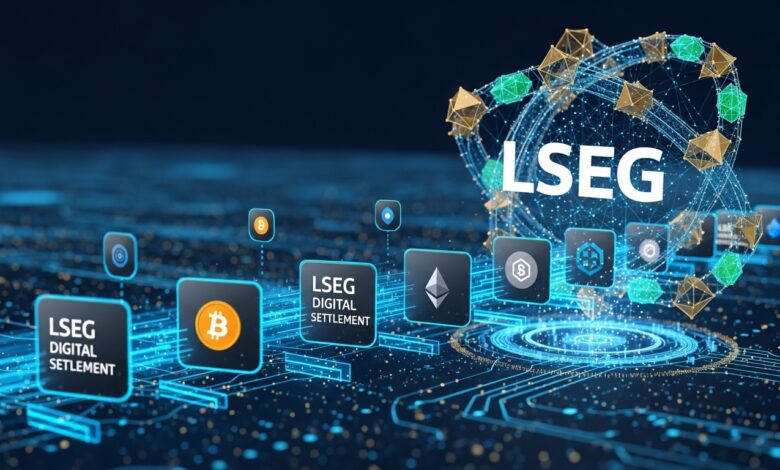
LSEG to Build Blockchain-Friendly Digital Settlement Platform the announcement that LSEG to build blockchain-friendly digital settlement platform marks a significant shift in the evolution of global financial infrastructure. The London Stock Exchange Group (LSEG), one of the world’s most influential market operators, is moving decisively toward digital asset settlement, reflecting a broader transformation taking place across capital markets. As financial institutions explore distributed ledger technology, tokenization, and real-time clearing, the need for modernized settlement systems has become increasingly urgent.
Traditional settlement processes, often involving multiple intermediaries and long processing times, are being challenged by new technologies that promise speed, transparency, and efficiency. LSEG’s initiative aims to create a platform capable of supporting blockchain-based assets, digital securities, and tokenized financial instruments, while maintaining the regulatory and operational standards expected in global financial markets.
The decision by LSEG to build blockchain-friendly digital settlement platform is not just a technological upgrade; it represents a strategic move that could redefine how trades are cleared, settled, and recorded. This development aligns with the growing interest among banks, asset managers, and exchanges in building digital market infrastructure that is faster, more resilient, and more transparent.
LSEG to Build Blockchain-Friendly Digital Settlement
The move by LSEG to build blockchain-friendly digital settlement platform is driven by several industry-wide trends. Capital markets are under increasing pressure to reduce settlement times, lower costs, and eliminate operational inefficiencies. Traditional settlement cycles, such as T+2, are being questioned as financial institutions seek instant settlement and atomic transactions.
Blockchain technology offers a decentralized and immutable ledger, allowing trades to be recorded and settled in near real time. This reduces counterparty risk, enhances transparency, and improves auditability. By developing a blockchain-friendly platform, LSEG is positioning itself at the forefront of financial technology innovation.
Moreover, the rapid growth of tokenized assets has created demand for infrastructure that can handle both traditional securities and digital instruments. From tokenized bonds to digital equities, financial products are increasingly being represented on distributed ledgers. LSEG’s platform is expected to support these innovations while maintaining compatibility with existing financial systems.
The Concept of a Blockchain-Friendly Digital Settlement Platform
When analysts say that LSEG to build blockchain-friendly digital settlement platform, they are referring to a system that integrates traditional market infrastructure with blockchain-based settlement mechanisms. Instead of replacing existing systems entirely, the platform is likely to operate as a hybrid environment that allows both conventional and digital asset transactions.
This approach reflects the realities of global financial markets, where institutions require stability, regulatory compliance, and interoperability. A blockchain-friendly settlement platform would enable smart contracts, automated clearing, and real-time reconciliation, while still connecting to traditional clearinghouses and custodians.
The platform is expected to focus on post-trade processes, including settlement, asset servicing, and record-keeping. By digitizing these functions, LSEG aims to reduce manual intervention, eliminate redundant processes, and create a more efficient trading ecosystem.
The Role of Tokenization in LSEG’s Strategy
A central theme behind the decision for LSEG to build blockchain-friendly digital settlement platform is the rise of asset tokenization. Tokenization involves converting traditional assets, such as equities, bonds, or commodities, into digital tokens recorded on a blockchain.
This process enables fractional ownership, improved liquidity, and faster settlement. For example, a tokenized bond could be issued, traded, and settled on the same platform, eliminating the need for multiple intermediaries. LSEG’s platform is expected to support such digital securities issuance and settlement.
Tokenization also opens new opportunities for market participants. Institutional investors could gain access to previously illiquid assets, while issuers could reach a broader investor base. By building infrastructure that supports tokenized assets, LSEG is positioning itself to capture growth in the digital capital markets sector.
Benefits of a Blockchain-Friendly Settlement System
The plan for LSEG to build blockchain-friendly digital settlement platform offers several potential advantages for financial institutions and investors. One of the most significant benefits is the reduction of settlement times. Traditional systems can take two or more days to finalize transactions, while blockchain-based systems can enable near-instant settlement.
Another major advantage is cost efficiency. By automating processes through smart contract execution, the platform could reduce operational expenses associated with reconciliation, clearing, and settlement. This would benefit brokers, custodians, and asset managers alike.
Transparency is another key benefit. Distributed ledger technology provides a single source of truth, allowing all participants to access the same transaction records. This improves trust and reduces disputes, making the settlement process more reliable. Security is also enhanced in blockchain-based systems. The cryptographic nature of distributed ledgers makes them resistant to tampering, providing a high level of data integrity and protection against fraud.
Regulatory Considerations and Compliance
Any effort for LSEG to build blockchain-friendly digital settlement platform must address regulatory challenges. Financial markets are heavily regulated, and settlement infrastructure must comply with strict standards related to transparency, reporting, and risk management.
Regulators around the world are actively exploring frameworks for digital asset regulation and blockchain-based securities. LSEG’s platform is expected to operate within these frameworks, ensuring compliance with existing rules while accommodating new types of assets.
One of the key challenges will be integrating blockchain technology with traditional regulatory processes. For example, regulators may require transaction monitoring, audit trails, and reporting mechanisms that align with current market practices. LSEG’s experience as a global market operator gives it a strong foundation for navigating these complexities.
Impact on Global Capital Markets
The decision for LSEG to build blockchain-friendly digital settlement platform could have far-reaching implications for global capital markets. As one of the world’s leading exchange operators, LSEG’s actions often influence industry trends.
If the platform proves successful, it could accelerate the adoption of blockchain technology across financial markets. Other exchanges and clearinghouses may follow suit, leading to a broader transformation of post-trade infrastructure. This shift could also change the competitive landscape. Market participants that adopt blockchain-based settlement systems may gain efficiency advantages, while those relying on legacy systems could face higher costs and slower processes.
In the long term, the widespread adoption of blockchain settlement platforms could lead to fully digital markets, where assets are issued, traded, and settled on distributed ledgers without the need for traditional intermediaries.
The Role of Smart Contracts and Automation
Smart contracts are expected to play a central role as LSEG to build blockchain-friendly digital settlement platform. These self-executing contracts automatically enforce the terms of a transaction once predefined conditions are met.
In a settlement context, smart contracts could handle tasks such as payment transfers, asset delivery, and compliance checks. This would eliminate the need for manual intervention and reduce the risk of human error.
Automation also enables real-time settlement and straight-through processing, where trades move seamlessly from execution to settlement. This could significantly improve operational efficiency across the financial industry.
Challenges Facing Blockchain Settlement Platforms
While the decision for LSEG to build blockchain-friendly digital settlement platform offers many benefits, it also presents challenges. One of the primary concerns is scalability. Blockchain networks must be capable of handling large volumes of transactions without delays. Interoperability is another issue. Financial markets involve multiple systems and institutions, and any new platform must integrate smoothly with existing infrastructure. Ensuring compatibility with legacy systems will be critical for widespread adoption.
Cybersecurity and operational resilience are also important considerations. Although blockchain technology is inherently secure, the surrounding infrastructure must be protected against cyber threats and technical failures. Finally, market adoption will play a crucial role. Financial institutions may be cautious about adopting new technologies until they are proven to be reliable, secure, and compliant with regulations.
Industry Reactions and Future Outlook
The news that LSEG to build blockchain-friendly digital settlement platform has generated significant interest across the financial industry. Many market participants view the move as a natural progression toward digital financial infrastructure.
Banks, asset managers, and fintech companies are increasingly investing in blockchain solutions, and LSEG’s initiative could serve as a catalyst for further innovation. The platform may also attract partnerships with technology providers and financial institutions seeking to develop next-generation settlement systems.
Looking ahead, the success of the platform will depend on several factors, including regulatory support, technological reliability, and industry adoption. If these elements align, LSEG’s initiative could become a cornerstone of the future digital financial ecosystem.
Conclusion
The decision for LSEG to build blockchain-friendly digital settlement platform represents a pivotal moment in the evolution of global financial markets. By embracing distributed ledger technology, tokenized assets, and smart contract automation, LSEG is positioning itself at the forefront of financial innovation.
This initiative has the potential to reduce settlement times, lower costs, and enhance transparency across capital markets. While challenges related to regulation, scalability, and adoption remain, the long-term benefits of blockchain-based settlement systems are difficult to ignore.
As financial institutions continue to explore digital asset strategies, LSEG’s platform could become a key component of the emerging digital capital markets landscape. The move underscores the growing importance of blockchain technology in shaping the future of finance.
FAQs
Q: What does it mean that LSEG to build blockchain-friendly digital settlement platform?
It means that the London Stock Exchange Group is developing a settlement system that can support blockchain-based assets and processes. The platform is designed to handle digital securities, tokenized assets, and traditional instruments using distributed ledger technology while maintaining regulatory compliance.
Q: How will a blockchain-friendly settlement platform benefit investors?
Investors could benefit from faster settlement times, lower transaction costs, and improved transparency. The use of smart contracts and real-time processing can reduce operational risks and provide greater confidence in the settlement process.
Q: Will the new platform replace traditional settlement systems?
The platform is expected to operate alongside existing systems rather than replace them entirely. It will likely function as a hybrid infrastructure, allowing both traditional securities and digital assets to be settled within the same environment.
Q: What role does tokenization play in LSEG’s new platform?
Tokenization allows traditional assets to be represented as digital tokens on a blockchain. This enables faster settlement, improved liquidity, and the possibility of fractional ownership. LSEG’s platform is expected to support these tokenized financial instruments.
Q: What challenges could LSEG face in implementing the platform?
Key challenges include regulatory compliance, technological scalability, cybersecurity concerns, and market adoption. Ensuring interoperability with existing financial systems will also be critical for the platform’s success.