

Feature Ends Crypto Ticker Confusion Turns X Into Trading Signal Crypto markets move at a pace that traditional financial systems were never designed to handle. Prices shift in seconds, narratives change within minutes, and sentiment can swing violently on the back of a single post. In this environment, social platforms have become just as important as charts and order books. Among them, X has evolved into the beating heart of crypto discourse, where traders, analysts, developers, and influencers share insights in real time. Yet for all its power, X has suffered from a persistent problem that has cost traders money and clarity for years: crypto ticker confusion.
Ticker confusion occurs when multiple cryptocurrencies share similar names or symbols, or when casual references blur the line between projects. In a market driven by speed, this confusion can lead to misinterpretation, missed opportunities, or costly mistakes. A single trending ticker can send prices soaring, even when users are not entirely sure which asset is being discussed. This is where a new feature is changing the game. By eliminating ambiguity and structuring how tickers are identified and contextualized, this innovation turns X into a real-time trading signal rather than just a noisy conversation hub.
This article explores how this feature kills crypto ticker confusion, why it matters in modern trading, and how it transforms X into a powerful real-time signal engine. By examining crypto market signals, social sentiment analysis, and the psychology of information flow, we can understand why this development represents a major shift in how traders interact with social data.
Feature Ends Crypto Ticker
Crypto ticker confusion has plagued traders since the early days of altcoins. Unlike traditional markets, where ticker symbols are tightly regulated and standardized, crypto operates in a decentralized environment with minimal oversight on naming conventions. This has resulted in countless tokens sharing similar symbols or names, often unintentionally and sometimes deliberately.
On X, where brevity is essential and context is often assumed, this confusion becomes amplified. A single ticker mentioned without clarification can refer to multiple assets across different blockchains. Traders scrolling quickly may assume one interpretation while the author intended another. In fast-moving markets, this misunderstanding can be enough to trigger impulsive trades.
The problem is not just theoretical. History has shown numerous instances where hype around a ticker led to sudden pumps in unrelated tokens simply because of name similarity. These events erode trust and highlight the need for better information hygiene in social-driven trading environments.
Why X Became Central to Crypto Trading
X did not become central to crypto trading by accident. Its real-time nature, open access, and global reach make it ideal for rapid information exchange. News often breaks on X before it reaches traditional media or even official channels. Developers announce updates, whales hint at positions, and analysts share charts in a continuous stream.
For traders, this immediacy is invaluable. Social sentiment on X often precedes price action, making it a leading indicator rather than a lagging one. When narratives gain traction, markets respond quickly, especially in smaller-cap assets.
However, this strength has also been a weakness. Without proper structure, the signal-to-noise ratio can be overwhelming. Ticker confusion has been one of the biggest contributors to that noise, diluting the effectiveness of X as a trading tool.
The Feature That Changes Everything
The feature that kills crypto ticker confusion introduces clarity and structure to how tickers are referenced on X. Instead of relying solely on raw text, the feature contextualizes tickers by linking them to verified asset identities. This means that when a ticker appears, users can immediately understand which specific cryptocurrency is being discussed.
This contextual layer transforms casual mentions into actionable data points. Traders no longer need to guess whether a post refers to a well-known asset or an obscure token with a similar name. The feature acts as a filter, separating genuine signals from accidental or misleading references.
By reducing ambiguity, the feature increases confidence in interpreting social data. When traders trust the information they see, they are more likely to incorporate it into their strategies. This trust is essential for turning X into a reliable real-time trading signal platform.
How Contextualized Tickers Improve Market Clarity
Context is everything in trading. A ticker without context is just a symbol, open to interpretation. By attaching metadata to ticker mentions, the feature provides immediate clarity about the asset’s identity, network, and relevance.
This improvement reduces cognitive load for traders. Instead of pausing to research which asset is being referenced, they can focus on evaluating the sentiment and implications of the post. In high-frequency environments, saving even a few seconds can make a significant difference.
Market clarity also benefits newer participants. Crypto has long been criticized for its steep learning curve, and ticker confusion is a major barrier to entry. By making information more accessible and precise, the feature lowers that barrier and encourages broader participation.
Turning Social Chatter Into Real-Time Trading Signals
With ticker confusion reduced, social chatter on X becomes far more valuable. Each mention of a ticker can be interpreted as a potential data point rather than noise. When aggregated across thousands of posts, these mentions form a real-time sentiment map of the market.
Traders can identify emerging trends earlier, as consistent mentions of a specific, clearly identified asset often precede price movement. This transforms X from a reactive platform into a proactive signal generator.
The feature effectively bridges the gap between qualitative sentiment and quantitative analysis. By structuring unstructured data, it allows traders to integrate social signals into systematic strategies, enhancing decision-making.
The Psychology Behind Social Trading Signals
Markets are driven as much by psychology as by fundamentals. Social platforms amplify this effect by accelerating the spread of narratives. When a ticker trends on X, it creates a sense of urgency and validation, prompting others to pay attention.
Ticker confusion previously distorted this psychological feedback loop, sometimes directing attention toward the wrong asset. By eliminating confusion, the new feature ensures that psychological momentum aligns more accurately with the intended asset.
This alignment strengthens the predictive power of social signals. When sentiment builds around a clearly defined asset, the resulting price action is more likely to reflect genuine interest rather than accidental hype.
Implications for Retail Traders
Retail traders stand to benefit significantly from this feature. They are often the most vulnerable to misinformation and ambiguity, lacking the resources of institutional players. Clear ticker identification helps level the playing field.
With reduced confusion, retail traders can respond more confidently to emerging narratives. They are less likely to chase the wrong asset or misinterpret market chatter. This improved clarity can reduce losses and improve overall trading discipline.
The feature also encourages education. As traders interact with contextualized tickers, they naturally learn more about different assets and ecosystems, fostering a more informed community.
Institutional Interest and Data Integrity
Institutions have traditionally been cautious about relying on social data due to its unstructured nature. Ticker confusion has been a major obstacle to incorporating platforms like X into professional trading models.
By introducing structured ticker identification, the feature enhances data integrity. Institutions can more reliably analyze social sentiment, knowing that mentions correspond to specific assets. This opens the door to more sophisticated sentiment-driven trading strategies.
As institutional participation grows, the credibility of social signals increases further. This creates a feedback loop where improved tools attract more serious participants, raising the overall quality of discourse.
Reducing Manipulation and False Signals
One of the darker aspects of crypto social media has been manipulation through misleading ticker usage. Bad actors have exploited confusion to generate hype around unrelated or low-quality assets.
The new feature makes such tactics harder to execute. Clear identification exposes attempts to piggyback on popular narratives without substance. This transparency discourages manipulation and promotes healthier market behavior.
While no system can eliminate bad actors entirely, improving clarity raises the cost of deception. Over time, this can lead to a more trustworthy information environment.
Integrating Social Signals With Technical Analysis
Technical analysis remains a cornerstone of trading, but it often benefits from confirmation through sentiment. When social signals align with technical setups, confidence in a trade increases.
The feature enables more precise alignment by ensuring that sentiment data corresponds to the correct asset. Traders can more effectively combine chart patterns with social momentum, enhancing timing and risk management.
This integration represents a step toward more holistic trading approaches that blend human psychology with quantitative tools.
The Evolution of X as a Trading Platform
X was never designed as a trading platform, yet it has evolved into one organically. The introduction of features that enhance signal clarity accelerates this evolution, pushing X closer to becoming an essential tool for market participants.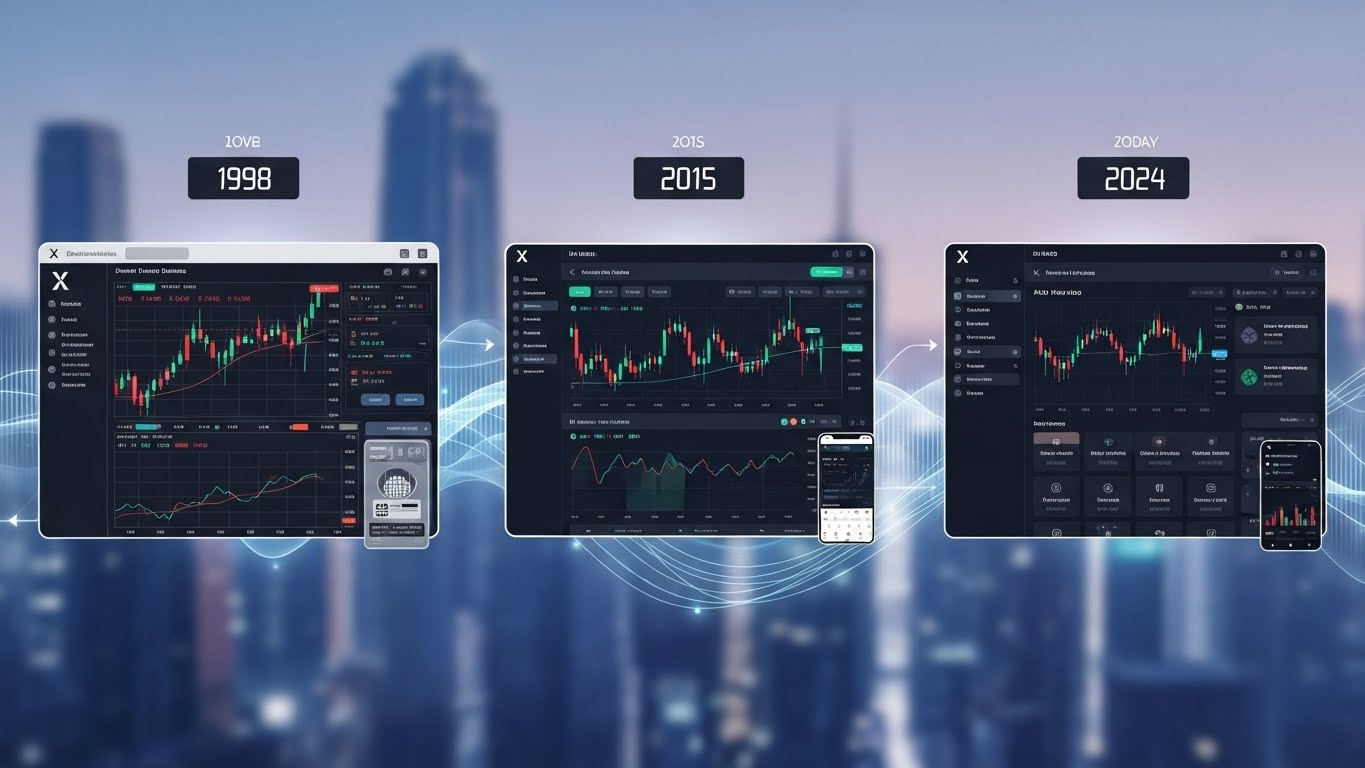
This shift reflects broader trends in finance, where information speed and accessibility are paramount. Platforms that can deliver clear, actionable insights in real time gain strategic importance.
As X continues to refine its features, its role in crypto trading is likely to deepen, influencing how markets respond to news and sentiment.
Challenges and Limitations
Despite its benefits, the feature is not a panacea. Social signals remain inherently noisy, and clarity does not guarantee accuracy or profitability. Traders must still exercise judgment and risk management.
There is also the challenge of adoption. For the feature to be effective, users must engage with it correctly, and systems must maintain accurate asset mappings. Ongoing refinement will be necessary to address edge cases and evolving markets.
Nevertheless, these challenges are manageable compared to the long-standing problems the feature addresses.
Long-Term Impact on Crypto Market Efficiency
Over time, reducing ticker confusion can improve overall market efficiency. Prices are more likely to reflect genuine information rather than misunderstandings. This efficiency benefits all participants by reducing unnecessary volatility.
As markets mature, tools that enhance clarity and trust become increasingly important. The feature represents a step toward a more professional and transparent crypto trading environment.
In the long run, such improvements may help bridge the gap between crypto and traditional finance, attracting a wider range of participants.
Conclusion
The feature that kills crypto ticker confusion and turns X into a real-time trading signal marks a significant milestone in the evolution of social-driven trading. By introducing clarity, structure, and context to ticker mentions, it transforms noisy chatter into actionable insights. Traders gain confidence, institutions gain reliable data, and the market benefits from reduced ambiguity.
While challenges remain, the impact of this innovation is already evident in how traders interpret and respond to social signals. As crypto markets continue to evolve, tools that enhance information quality will play a central role in shaping outcomes. In this sense, X is no longer just a place to talk about markets. With the right features, it becomes a place where markets are actively shaped.
FAQs
Q: Why has crypto ticker confusion been such a big problem on X?
Crypto ticker confusion arises because many tokens share similar symbols and there is no universal naming standard. On X, where posts are short and fast-moving, this ambiguity often leads to misinterpretation and trading mistakes.
Q: How does this feature turn X into a real-time trading signal?
By clearly identifying which asset each ticker refers to, the feature allows traders to interpret social sentiment accurately. Aggregated mentions become meaningful signals that can precede price movements.
Q: Can this feature eliminate all misinformation in crypto trading?
No feature can eliminate misinformation entirely, but reducing ticker confusion removes a major source of accidental and intentional misdirection. It raises the overall quality and reliability of social data.
Q: Who benefits most from clearer crypto tickers on X?
Retail traders benefit from reduced confusion and better decision-making, while institutions gain cleaner data for sentiment analysis. The broader market benefits from improved efficiency and trust.
Q: Should traders rely solely on X as a trading signal now?
X can provide valuable real-time insights, but it should be used alongside technical analysis, fundamentals, and risk management. Social signals are most effective when integrated into a balanced strategy.