

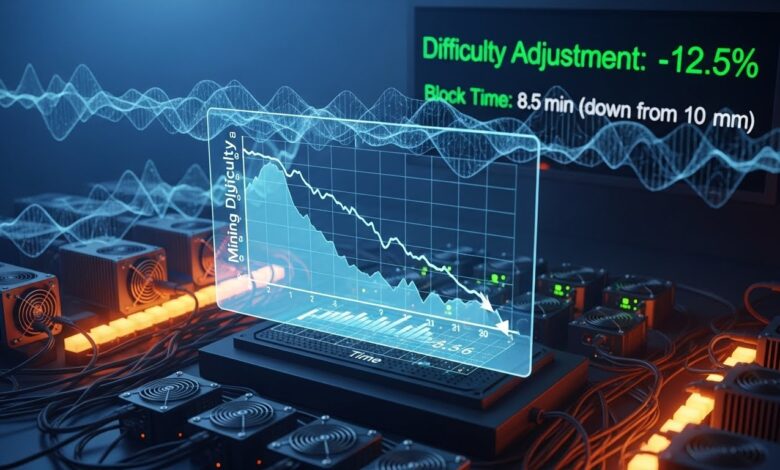
Bitcoin Mining Difficulty Decreases by 1.2% What It Means the news that Bitcoin Mining Difficulty Decreases by 1.2% has captured the attention of miners, investors, and analysts across the cryptocurrency ecosystem. Bitcoin mining difficulty is one of the most important yet often misunderstood metrics in the Bitcoin network, acting as a self-regulating mechanism that ensures block production remains stable regardless of how many miners are participating. When difficulty adjusts downward, it sends subtle but meaningful signals about network conditions, miner behavior, and broader market dynamics.
A 1.2% decrease may appear modest on the surface, but in the context of Bitcoin’s highly competitive mining environment, even small adjustments can have notable implications. Difficulty changes are influenced by factors such as hash rate fluctuations, energy costs, hardware efficiency, and market sentiment. For miners, a decrease often translates into slightly improved profitability and operational breathing room. For the network, it reflects Bitcoin’s remarkable ability to adapt autonomously to changing conditions.
This article explores what it means when Bitcoin mining difficulty decreases by 1.2%, how the difficulty adjustment mechanism works, and why this change matters for miners, investors, and the long-term security of the blockchain. By examining both technical and economic perspectives, we aim to provide a clear and comprehensive understanding of this development and its broader implications for the cryptocurrency market.
Bitcoin Mining Difficulty Decreases
Bitcoin mining difficulty is a measure of how hard it is to find a new block compared to the easiest it could ever be. It is a core component of Bitcoin’s design, ensuring that blocks are produced at an average rate of one every ten minutes. This stability is essential for maintaining predictable issuance and network reliability.
The difficulty is not static. It adjusts automatically based on the total computational power, or hash rate, dedicated to mining. When more miners join the network and hash rate increases, difficulty rises to maintain the ten-minute block interval. Conversely, when hash rate drops, difficulty decreases, making it easier for remaining miners to find blocks.
When Bitcoin mining difficulty decreases by 1.2%, it indicates that the network has detected a slight reduction in overall mining power. This adjustment helps restore balance, demonstrating the resilience and adaptability of the Bitcoin protocol.
The Difficulty Adjustment Mechanism Works
The Bitcoin network adjusts mining difficulty approximately every 2,016 blocks, which typically takes about two weeks. During this period, the protocol measures how long it took to mine the previous set of blocks. If blocks were mined faster than expected, difficulty increases. If they were mined more slowly, difficulty decreases.
This automated process requires no human intervention, relying solely on mathematical rules embedded in Bitcoin’s code. It is one of the features that makes Bitcoin a truly decentralized and self-governing system. The recent event where Bitcoin mining difficulty decreases by 1.2% suggests that blocks were taking slightly longer to mine during the previous adjustment period.
Although a 1.2% change is relatively small, it reflects real-world conditions affecting miners, such as changes in energy costs, hardware deployment, or market price fluctuations. Each adjustment, no matter the size, is part of Bitcoin’s continuous effort to maintain equilibrium.
Bitcoin Mining Difficulty Decreases
Several factors can contribute to a decrease in mining difficulty. One of the most common reasons is a reduction in hash rate caused by miners temporarily or permanently shutting down operations. This can happen when mining becomes less profitable due to lower Bitcoin prices or rising electricity costs.
Seasonal changes can also play a role. In some regions, energy prices fluctuate throughout the year, impacting mining operations. Additionally, regulatory actions or infrastructure challenges can force miners to reduce activity, leading to a drop in network hash rate.
When Bitcoin mining difficulty decreases by 1.2%, it reflects the cumulative effect of these factors rather than a single cause. It is a snapshot of the network’s current state, showing how external pressures influence participation in mining.
Impact on Bitcoin Miners
For miners, a decrease in difficulty is generally seen as positive news. When difficulty drops, the same amount of computational power has a slightly higher chance of earning block rewards. This can improve mining profitability, especially for smaller or less efficient operations that struggle during periods of high difficulty.
The 1.2% decrease means that miners who remain active may see marginally higher rewards relative to their energy expenditure. While the increase may not be dramatic, it can make a meaningful difference in a highly competitive industry where profit margins are often thin.
This adjustment can also encourage miners who previously shut down to consider re-entering the network if conditions improve. In this way, difficulty decreases help stabilize the mining ecosystem by responding dynamically to changing economic realities.
Effects on Network Security
Bitcoin’s security is closely tied to its hash rate and mining difficulty. A higher hash rate generally means greater resistance to attacks, as it would require immense computational power to manipulate the blockchain. When difficulty decreases, some observers worry about potential security implications.
However, a 1.2% decrease is relatively minor and does not significantly weaken the network. Bitcoin’s difficulty adjustment ensures that even with fluctuations, the network remains secure and operational. The system is designed to handle much larger changes without compromising integrity.
In fact, the ability to adjust difficulty downward is a strength rather than a weakness. It ensures that Bitcoin continues to function smoothly even during periods of reduced participation, maintaining consistent block production and transaction processing.
Relationship Between Bitcoin Price and Mining Difficulty
Bitcoin price and mining difficulty are closely related but do not move in lockstep. When prices rise, mining becomes more profitable, attracting new miners and increasing hash rate, which eventually leads to higher difficulty. When prices fall, the opposite can occur.
The recent event where Bitcoin mining difficulty decreases by 1.2% may reflect market conditions that have pressured miner revenues. Lower prices or increased costs can reduce profitability, prompting some miners to scale back operations.
However, it is important to note that difficulty adjustments often lag behind price movements. This delay means that difficulty can decrease even as prices begin to recover, creating periods where mining becomes temporarily more attractive.
Hash Rate Trends and Their Significance
Hash rate represents the total computational power securing the Bitcoin network. It is one of the most closely watched indicators of network health and miner confidence. When hash rate declines, difficulty adjustments like the recent 1.2% decrease follow to restore balance.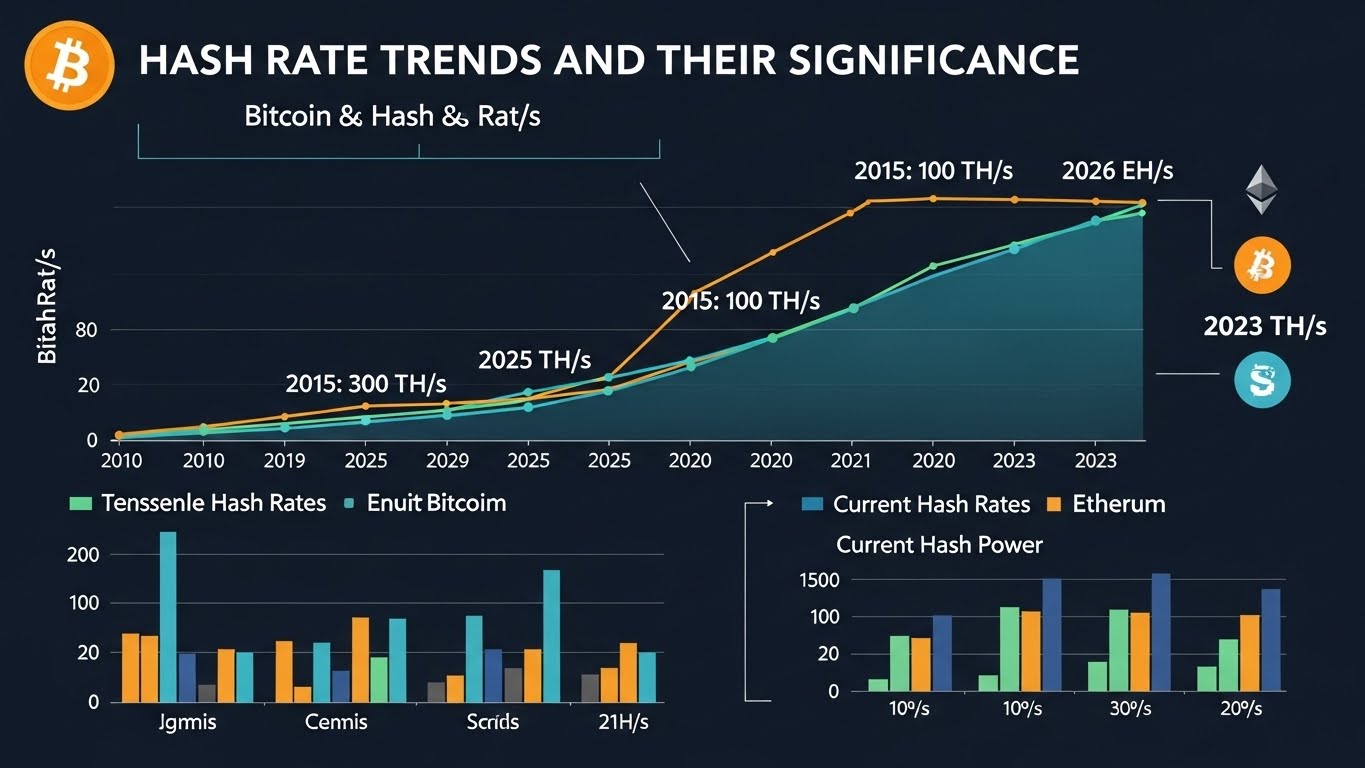
Short-term fluctuations in hash rate are normal and do not necessarily indicate long-term issues. Factors such as hardware upgrades, maintenance cycles, and energy availability can cause temporary dips. Over time, hash rate has historically trended upward, reflecting growing investment in mining infrastructure.
The fact that Bitcoin mining difficulty decreases by 1.2% suggests a short-term adjustment rather than a structural decline. It highlights the dynamic nature of the network and its ability to respond to real-world conditions.
Energy Costs and Mining Operations
Energy consumption is one of the most significant costs for Bitcoin miners. Changes in electricity prices can have an immediate impact on profitability and operational decisions. When energy costs rise, less efficient miners may be forced to shut down, contributing to a drop in hash rate.
The recent difficulty decrease may be partially influenced by such energy dynamics. In regions where electricity prices have surged, mining operations may have scaled back, prompting the network to adjust accordingly.
This relationship underscores the importance of energy efficiency and innovation in mining hardware. As miners adopt more efficient equipment and explore renewable energy sources, the network becomes more resilient to cost fluctuations.
Long-Term Implications for the Bitcoin Network
In the long term, periodic adjustments where Bitcoin mining difficulty decreases by 1.2% or similar amounts are part of the network’s natural rhythm. They do not indicate weakness but rather adaptability. Bitcoin was designed to function across a wide range of conditions, from rapid growth to temporary contraction.
These adjustments help ensure fair competition among miners and prevent prolonged disruptions to block production. They also reinforce Bitcoin’s decentralized nature, as no single entity controls the process.
Over time, the difficulty adjustment mechanism has proven itself as one of Bitcoin’s most robust features, contributing to its longevity and reliability as a digital asset.
Investor Perspectives on Difficulty Changes
Investors often look at mining difficulty as a proxy for network health and miner confidence. A decrease in difficulty can be interpreted in different ways depending on the broader context. Some may see it as a sign of reduced participation, while others view it as an opportunity for improved miner margins.
When Bitcoin mining difficulty decreases by 1.2%, it may suggest that weaker miners have exited the market, leaving a more efficient core group. This consolidation can strengthen the network over time by promoting operational efficiency.
For long-term investors, such adjustments are usually considered normal and do not significantly alter the fundamental outlook for Bitcoin. Instead, they are seen as part of the ongoing process that keeps the network balanced.
Comparing Current Adjustment to Historical Trends
Historically, Bitcoin has experienced much larger difficulty adjustments during periods of extreme market volatility or major external events. Compared to those instances, a 1.2% decrease is relatively modest.
Looking at past trends, difficulty decreases often follow sharp price declines or regulatory disruptions. In many cases, they are followed by periods of recovery and renewed growth in hash rate and miner participation.
This historical context suggests that the current adjustment is well within normal parameters and does not signal any fundamental issues with the Bitcoin network.
The Role of Mining Hardware Efficiency
Advancements in mining hardware play a crucial role in shaping difficulty trends. As new, more efficient machines are deployed, hash rate can increase even if the number of miners remains constant. Conversely, when older equipment becomes unprofitable, it may be retired, reducing hash rate.
The recent decrease where Bitcoin mining difficulty decreases by 1.2% may reflect a transitional phase as miners upgrade hardware or reassess operations. These cycles are common in the mining industry and contribute to the network’s ongoing evolution.
Improved efficiency ultimately benefits the network by reducing energy consumption per unit of hash rate, supporting sustainability goals without compromising security.
Broader Crypto Market
Bitcoin often sets the tone for the broader cryptocurrency ecosystem. Changes in mining difficulty can influence market sentiment, particularly among participants who closely follow on-chain metrics.
A slight decrease in difficulty may be seen as neutral to mildly positive, signaling that the network is adjusting smoothly to current conditions. It reinforces the idea that Bitcoin remains resilient and responsive, even amid market uncertainty.
While the immediate impact on prices may be limited, such adjustments contribute to long-term confidence in Bitcoin’s underlying mechanisms, which in turn supports the broader market.
Conclusion
The announcement that Bitcoin Mining Difficulty Decreases by 1.2% is a reminder of the elegant self-regulating design at the heart of the Bitcoin network. This adjustment reflects real-world conditions affecting miners, from energy costs to market dynamics, and demonstrates Bitcoin’s ability to adapt without centralized control.
For miners, the decrease offers slight relief and improved profitability. For the network, it ensures consistent block production and continued security. For investors and observers, it provides insight into the current state of the mining ecosystem without signaling any fundamental concerns.
As Bitcoin continues to evolve, such adjustments will remain a normal and healthy part of its operation. Understanding these mechanisms helps demystify the network and highlights why Bitcoin has remained robust and reliable for over a decade.
FAQs
Q: What does it mean when Bitcoin mining difficulty decreases by 1.2%?
When Bitcoin mining difficulty decreases by 1.2%, it means the network has adjusted to a slight reduction in overall mining power. This makes it marginally easier for miners to find new blocks, helping maintain the average ten-minute block time.
Q: Is a 1.2% decrease in mining difficulty significant?
A 1.2% decrease is relatively small and well within normal fluctuation ranges. It does not indicate a major change in network health but reflects routine adjustments based on recent mining activity.
Q: How does a decrease in difficulty affect miner profitability?
A decrease in difficulty can slightly improve miner profitability by increasing the chances of earning block rewards with the same computational effort. This can be particularly beneficial for smaller or less efficient miners.
Q: Does lower mining difficulty make the Bitcoin network less secure?
A minor decrease in difficulty does not significantly impact network security. Bitcoin’s security depends on overall hash rate, and small adjustments are designed to keep the system balanced and operational.
Q: How often does Bitcoin mining difficulty adjust?
Bitcoin mining difficulty adjusts approximately every two weeks, or every 2,016 blocks. This regular adjustment ensures stable block production regardless of changes in miner participation.