
Blockchain Helps Track and Reduce Supply Chain Emissions Global supply chains have become increasingly complex, stretching across multiple countries, industries, and regulatory systems. From raw material extraction to manufacturing, shipping, distribution, and final delivery, every step in the process produces carbon emissions. As governments, investors, and consumers push for greater sustainability, companies are under pressure to understand and reduce their environmental impact. However, tracking emissions across a fragmented and opaque supply chain remains a major challenge.
This is where blockchain technology is gaining attention. Known primarily for powering cryptocurrencies, blockchain is now being applied to environmental and industrial challenges. Its core strengths—transparency, immutability, and real-time data sharing—make it a powerful tool for monitoring and reducing global supply chain emissions. By creating a shared and tamper-proof record of transactions and environmental data, blockchain can help companies track emissions at every stage of production and distribution.
As sustainability becomes a central business priority, the combination of blockchain technology, carbon tracking, and digital supply chain solutions is transforming how companies measure and manage their environmental footprint. Understanding how blockchain helps track and reduce global supply chain emissions is essential for businesses, policymakers, and consumers looking to build a greener economy.
Blockchain Helps Track and Reduce Supply Chain
Most companies only measure emissions from their direct operations, known as Scope 1 and Scope 2 emissions. However, the majority of environmental impact often comes from Scope 3 emissions, which include everything from raw material extraction to transportation and product disposal. These emissions occur across multiple suppliers, subcontractors, and logistics partners, making them difficult to measure accurately.
Traditional systems rely on manual reporting, spreadsheets, and fragmented databases. This approach often leads to inconsistent data, delays, and even intentional misreporting. Without accurate information, companies struggle to create effective carbon reduction strategies.
Why Traditional Tracking Methods Fall Short
Conventional supply chain tracking systems face several limitations. Data is usually stored in isolated systems controlled by individual companies, meaning there is no single source of truth. This lack of transparency creates opportunities for errors and manipulation.
In addition, verifying environmental claims can be costly and time-consuming. Audits require physical inspections, documentation reviews, and coordination across multiple parties. As supply chains become more global and complex, these challenges grow even more significant. This is where blockchain offers a new approach to emissions monitoring and sustainable logistics.
Understanding Blockchain Technology in Supply Chains
What Makes Blockchain Different
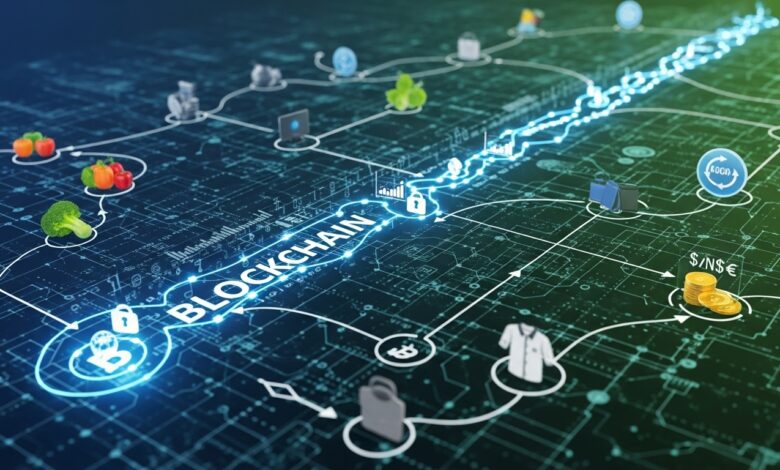
Blockchain is a decentralized digital ledger that records transactions across multiple computers. Once data is recorded, it cannot be altered without the consensus of the network. This creates a secure and transparent system where all participants can access the same information.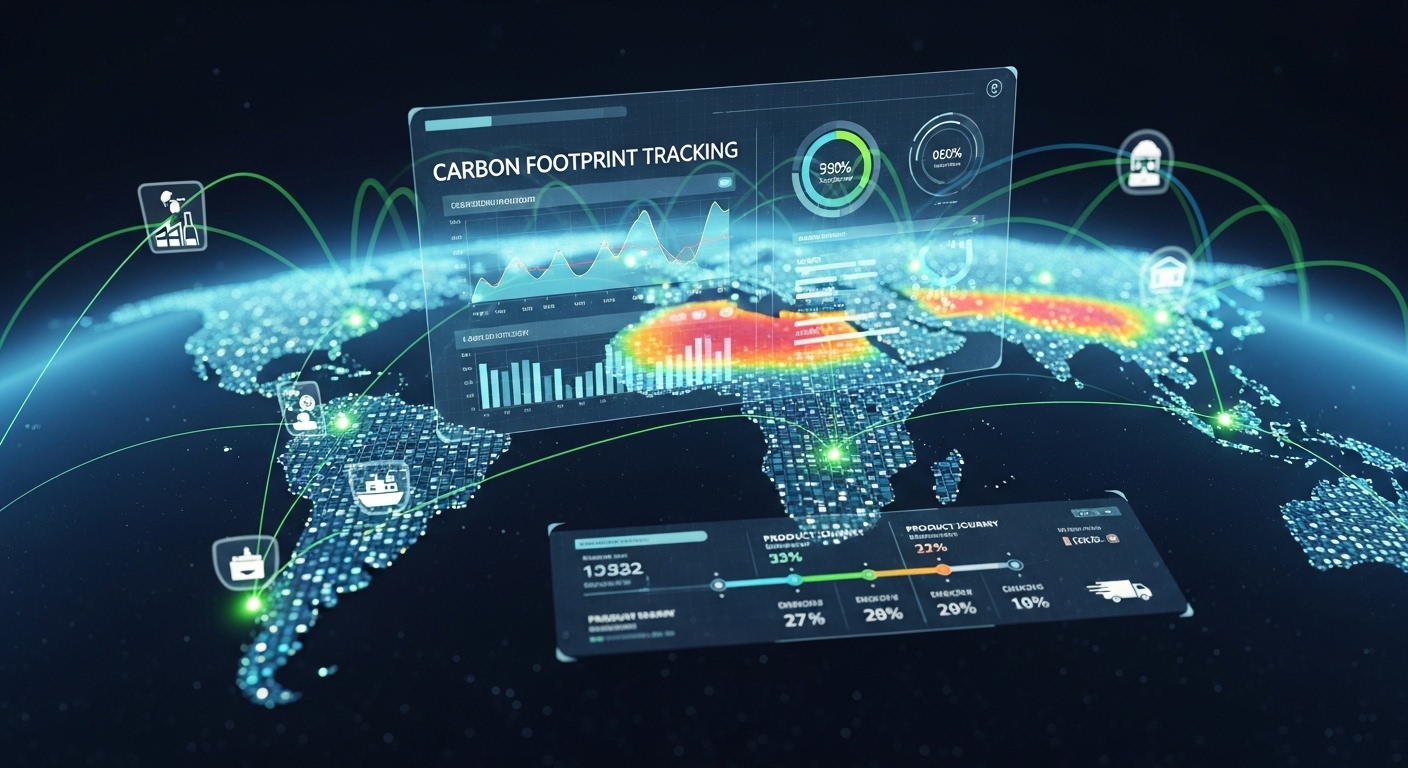
In the context of supply chains, blockchain can store data about product origin, manufacturing processes, transportation routes, and environmental impact. Every transaction or movement is recorded as a block, forming a chronological and tamper-proof chain. This transparency makes blockchain particularly useful for supply chain transparency and carbon footprint tracking.
How Blockchain Integrates with Environmental Data
Blockchain systems can be connected to sensors, Internet of Things (IoT) devices, and enterprise software. These technologies collect real-time data about fuel consumption, energy use, and transportation conditions.
For example, a shipping container equipped with IoT sensors can record fuel usage and emissions during transit. This data is automatically uploaded to the blockchain, creating a permanent and verifiable record. Each participant in the supply chain can then access this information, ensuring accurate emissions reporting.
How Blockchain Helps Track Global Supply Chain Emissions
Creating a Single Source of Truth
One of the biggest advantages of blockchain is its ability to create a shared, immutable record. Instead of each company maintaining separate databases, all participants in the supply chain can access the same information.
This shared ledger ensures that emissions data is consistent and verifiable. Suppliers, manufacturers, logistics providers, and retailers can all contribute data to the system, creating a comprehensive view of the supply chain’s environmental impact. This approach improves carbon accounting and reduces the risk of inaccurate reporting.
Real-Time Carbon Tracking
Traditional emissions tracking often relies on quarterly or annual reports. Blockchain enables real-time data updates, allowing companies to monitor their environmental impact continuously.
For example, a manufacturer can track the carbon footprint of raw materials as they move through different stages of production. If emissions exceed certain thresholds, the company can take immediate action to reduce them. Real-time tracking supports more effective sustainability management and helps companies meet regulatory requirements.
Enhancing Supplier Accountability
Supply chains often involve multiple tiers of suppliers, making it difficult to verify environmental claims. Blockchain creates a transparent system where each supplier’s data is recorded and visible to authorized participants.
If a supplier claims to use renewable energy or low-carbon processes, that information can be verified through blockchain records. This reduces the risk of greenwashing and encourages more responsible behavior across the supply chain. In this way, blockchain promotes ethical sourcing and sustainable procurement.
How Blockchain Helps Reduce Supply Chain Emissions
Optimizing Logistics and Transportation
Transportation is a major source of supply chain emissions. Blockchain can help optimize routes, reduce idle time, and improve coordination between logistics providers.
By sharing real-time data across the network, companies can identify inefficiencies and choose lower-emission transportation options. For example, shipments can be consolidated to reduce the number of trips, or routes can be adjusted to avoid congested areas. These improvements support low-carbon logistics and reduce overall emissions.
Enabling Carbon Credit and Offset Systems
Blockchain also supports the creation of transparent carbon credit markets. Companies can record emissions reductions on the blockchain and convert them into verifiable carbon credits.
These credits can then be traded or used to offset emissions. Because blockchain records are immutable, buyers can trust that the credits represent real and verified reductions. This system encourages investment in renewable energy projects and other sustainability initiatives.
Supporting Circular Economy Models
Blockchain can help track products throughout their lifecycle, from production to disposal or recycling. This visibility supports circular economy models, where materials are reused instead of discarded.
For example, a company can use blockchain to track the origin and composition of materials in a product. When the product reaches the end of its life, the materials can be recovered and reused more efficiently. This approach reduces waste and lowers overall environmental impact.
Real-World Applications and Industry Use Cases
Food and Agriculture Supply Chains
In the food industry, blockchain is being used to track the environmental impact of farming, processing, and transportation. Farmers can record data about fertilizer use, water consumption, and energy sources. This information travels with the product through the supply chain, allowing retailers and consumers to understand its carbon footprint. Such systems promote sustainable agriculture and improve consumer trust.
Manufacturing and Industrial Production
Manufacturers are using blockchain to monitor emissions from factories and suppliers. By tracking energy consumption and production processes, companies can identify high-emission areas and implement improvements. This level of visibility supports green manufacturing and helps companies meet environmental regulations.
Retail and Consumer Goods
Retailers are increasingly adopting blockchain to provide transparency about product origins and environmental impact. Consumers can scan a product and view its entire supply chain history, including emissions data. This transparency encourages more eco-friendly products and supports sustainable consumer choices.
Challenges and Limitations of Blockchain in Emissions Tracking
Data Accuracy and Input Reliability
While blockchain ensures that data cannot be altered once recorded, it does not guarantee that the data is accurate at the point of entry. If incorrect information is uploaded, it becomes permanently stored. To address this issue, companies must combine blockchain with reliable sensors, audits, and verification systems.
Integration Costs and Technical Complexity
Implementing blockchain systems requires investment in technology, training, and infrastructure. Smaller companies may find it difficult to adopt these systems without financial support.
In addition, integrating blockchain with existing supply chain systems can be technically complex.
Energy Consumption Concerns
Some blockchain networks, especially those using older consensus mechanisms, consume significant amounts of energy. This has raised concerns about the environmental impact of the technology itself. However, many modern blockchain platforms use energy-efficient consensus methods, making them more suitable for sustainability applications.
The Future of Blockchain and Sustainable Supply Chains
As governments introduce stricter environmental regulations and carbon reporting requirements, the demand for accurate emissions tracking will continue to grow. Blockchain is expected to play a key role in this transformation.
Future supply chains may operate on fully digital, transparent platforms where emissions data is automatically recorded and verified. Companies will be able to track the environmental impact of every component, shipment, and process in real time.
Advancements in smart contracts, AI-driven analytics, and IoT integration will further enhance the ability of blockchain to support sustainability goals. These technologies will enable automated carbon calculations, real-time compliance checks, and predictive emissions management. As adoption increases, blockchain could become a standard tool for climate-focused supply chain management.
Conclusion
The challenge of reducing global supply chain emissions requires accurate data, transparency, and collaboration across multiple stakeholders. Traditional tracking methods are often fragmented and unreliable, making it difficult for companies to measure and manage their environmental impact.
Blockchain technology offers a powerful solution by creating a transparent, immutable, and shared record of supply chain activities. By enabling real-time carbon tracking, improving supplier accountability, and supporting sustainable logistics, blockchain helps companies reduce emissions and meet growing environmental expectations. While challenges such as data accuracy, costs, and energy consumption remain, ongoing technological advancements are addressing these issues. As sustainability becomes a core business priority, blockchain is poised to play a central role in building cleaner, more transparent, and more efficient global supply chains.
FAQs
Q: How does blockchain improve carbon tracking in supply chains?
Blockchain improves carbon tracking by creating a shared and tamper-proof record of emissions data across all participants in the supply chain. Instead of relying on isolated databases, companies can access a single source of truth where environmental data is recorded in real time. This ensures greater accuracy, reduces the risk of manipulation, and makes it easier to monitor emissions across multiple suppliers and transportation stages.
Q: Can blockchain actually help reduce emissions, or does it only track them?
Blockchain does more than track emissions; it also helps reduce them by improving supply chain efficiency and transparency. Real-time data allows companies to identify high-emission processes, optimize logistics routes, and switch to lower-carbon suppliers. It also supports carbon credit systems and circular economy models, both of which encourage sustainable practices.
Q: What industries benefit the most from blockchain-based emissions tracking?
Industries with complex and global supply chains benefit the most from blockchain-based emissions tracking. This includes manufacturing, food and agriculture, retail, and logistics. These sectors often rely on multiple suppliers and transportation networks, making it difficult to measure emissions accurately without a transparent system like blockchain.
Q: Is blockchain environmentally friendly given its energy consumption?
Some early blockchain networks consumed large amounts of energy, which raised environmental concerns. However, many modern blockchain platforms use energy-efficient consensus mechanisms that significantly reduce power consumption. When applied to emissions tracking and sustainability projects, these systems can create a net positive environmental impact.
Q: What is the future of blockchain in sustainable supply chains?
The future of blockchain in sustainable supply chains is likely to involve deeper integration with IoT devices, artificial intelligence, and smart contracts. These technologies will enable automated emissions tracking, predictive sustainability planning, and real-time compliance with environmental regulations. As adoption grows, blockchain could become a standard tool for global carbon accounting and transparent supply chain management.