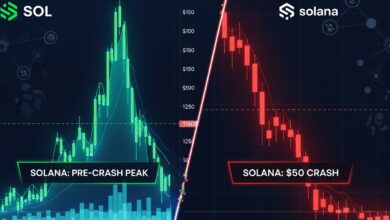

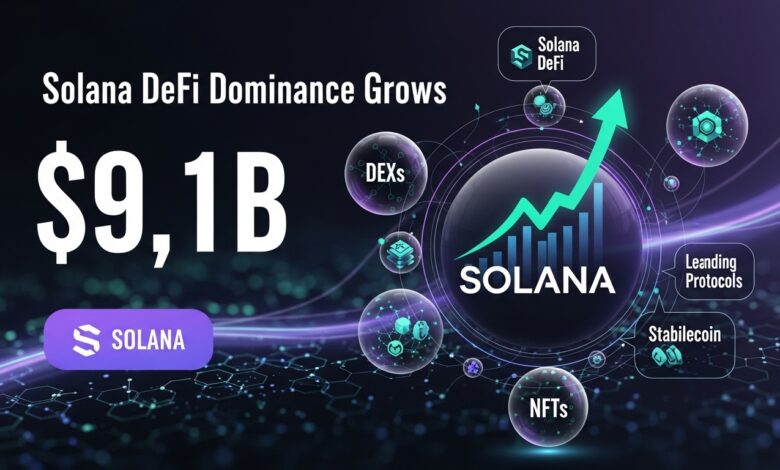
Solana DeFi Dominance Grows With $9.1B Locked Despite SOL Dip the decentralized finance market has entered a more mature and competitive phase, where blockchain networks are judged not only by token price performance but by real usage, liquidity depth, and developer activity. In this environment, Solana has emerged as one of the most resilient and strategically important ecosystems in DeFi. Even as the SOL token experiences a noticeable pullback from recent highs, Solana now controls approximately 7.7% of the total decentralized finance market, with around $9.1 billion in total value locked. This figure places the network firmly among the top DeFi chains globally and signals that capital, developers, and users continue to trust Solana’s infrastructure.
What makes this development especially noteworthy is the contrast between Solana’s growing DeFi footprint and the short-term weakness in SOL’s market price. Historically, declining token prices often coincide with falling liquidity and shrinking on-chain activity. Solana is challenging that pattern by demonstrating that its DeFi ecosystem, application diversity, and performance advantages can attract and retain capital even during periods of market consolidation. This article explores how Solana achieved this milestone, why total value locked remains strong, and what it means for the future of decentralized finance on the network.
Solana DeFi Dominance Grows With $9.1B
Total value locked, commonly abbreviated as TVL, is one of the most widely used metrics for measuring the health and relevance of a DeFi ecosystem. It represents the total amount of capital deposited in decentralized applications, including lending protocols, decentralized exchanges, liquid staking platforms, and yield-generating products. When Solana controls 7.7% of the global DeFi market, it means a significant portion of on-chain financial activity is taking place on the network rather than on competitors.
This level of adoption is particularly impressive considering the dominance historically held by Ethereum and the growing competition from other Layer 1 and Layer 2 networks. Solana’s total value locked figure of $9.1 billion reflects real usage rather than speculative hype. Users are actively trading, lending, staking, and deploying capital across Solana-based applications, reinforcing the chain’s relevance in the broader DeFi economy.
Solana’s Position Among Competing Blockchains
Solana’s share of DeFi places it comfortably ahead of many emerging networks while closing the gap with more established ecosystems. While Ethereum remains the dominant force in decentralized finance, Solana’s rapid rise highlights a shift toward performance-focused blockchains that can handle high throughput at low cost. Its ability to maintain a meaningful market share even during a SOL price pullback underscores that DeFi participation is increasingly driven by utility rather than token speculation alone.
The network’s growth also reflects a broader trend of multi-chain DeFi, where users distribute capital across several ecosystems to optimize yield, speed, and cost. Solana has positioned itself as a core destination within this multi-chain landscape.
Why Solana’s DeFi TVL Remains Strong Despite SOL Price Weakness
Decoupling Token Price From Network Usage
One of the most important signals in Solana’s current performance is the partial decoupling between SOL’s market price and on-chain activity. While SOL has faced selling pressure due to broader market conditions, DeFi usage on the network has remained robust. This suggests that users are less inclined to withdraw capital purely based on short-term price movements and more focused on the functionality of Solana-based protocols.
This decoupling is a sign of ecosystem maturity. In earlier market cycles, price declines often triggered sharp drops in TVL as participants rushed to exit. Solana’s ability to retain $9.1 billion locked in DeFi applications indicates stronger conviction among users and a more stable base of long-term participants.
Role of Stablecoins and Yield Strategies
Another factor supporting Solana’s DeFi TVL is the growing use of stablecoins and yield-focused strategies. Many users are not directly exposed to SOL price fluctuations when participating in Solana DeFi. Instead, they deploy capital in stablecoin pools, lending markets, and liquid staking solutions that offer predictable returns.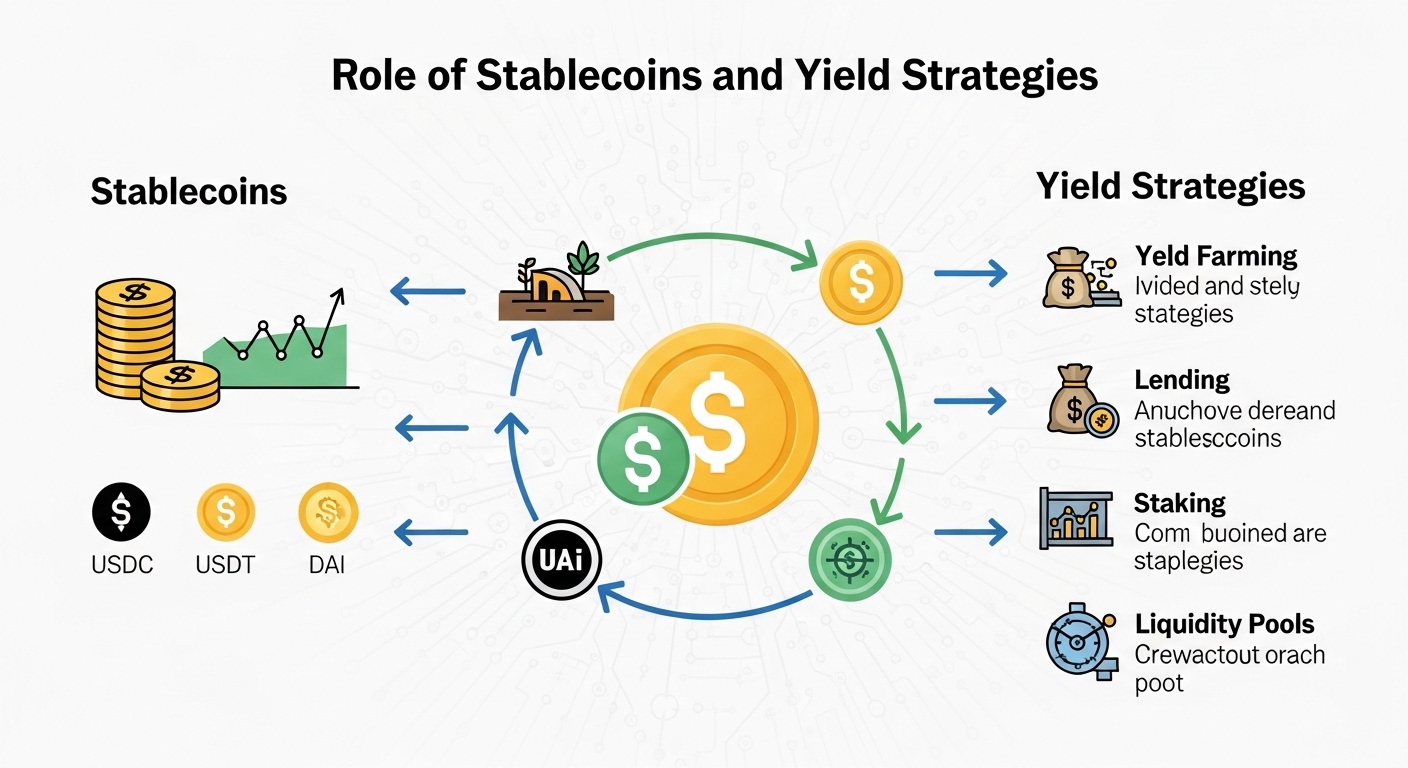
This structure reduces the incentive to exit during token volatility and helps stabilize the overall ecosystem. As a result, Solana continues to attract capital from users seeking efficiency and yield rather than pure price appreciation.
Core DeFi Sectors Driving Solana’s $9.1B Locked
Decentralized Exchanges as Liquidity Anchors
Decentralized exchanges are the backbone of Solana’s DeFi ecosystem. High-performance trading platforms on the network benefit from Solana’s low latency and minimal transaction fees, making them attractive to both retail and professional traders. These exchanges account for a substantial portion of Solana’s TVL, as liquidity providers commit assets to trading pools in exchange for fees and incentives.
The smooth user experience offered by Solana-based decentralized exchanges has helped retain liquidity even as market sentiment fluctuates. This consistency plays a major role in maintaining Solana’s 7.7% share of the DeFi market.
Lending and Borrowing Protocols Fueling Capital Efficiency
Lending and borrowing platforms are another major contributor to Solana’s locked value. These protocols allow users to earn interest on idle assets or access liquidity without selling their holdings. On Solana, fast confirmation times and low fees make these activities more efficient compared to congested networks.
The growth of decentralized lending on Solana reflects increasing confidence in the network’s security and reliability. As users become more comfortable deploying larger sums, TVL continues to rise even during periods of market uncertainty.
Liquid Staking and Restaking Innovations
Liquid staking has emerged as one of the most important trends in Solana’s DeFi landscape. By allowing users to stake SOL while retaining liquidity through derivative tokens, these protocols unlock additional capital efficiency. Users can earn staking rewards while simultaneously deploying assets across other DeFi applications.
This innovation has significantly boosted Solana’s TVL by encouraging deeper participation rather than passive holding. The expansion of liquid staking products has been a key factor in sustaining high levels of locked value.
Solana’s Technical Advantages Supporting DeFi Growth
High Throughput and Low Transaction Costs
Solana’s architecture is designed to process thousands of transactions per second with minimal fees. This performance advantage is not just a technical talking point but a practical benefit that directly impacts DeFi adoption. Lower costs enable smaller users to participate without being priced out, while high throughput supports complex trading and arbitrage strategies.
These features make Solana particularly attractive during periods of high market activity, when other networks may experience congestion. As a result, Solana’s blockchain scalability continues to draw DeFi users even when market conditions are volatile.
Network Stability and Infrastructure Improvements
Past concerns about network stability have gradually diminished as Solana’s infrastructure has matured. Continuous upgrades and improved validator coordination have enhanced reliability, which is critical for DeFi applications handling billions of dollars in assets.
Increased stability builds trust among developers and institutional participants, further reinforcing Solana’s position as a serious DeFi contender.
Institutional and Developer Confidence in the Solana Ecosystem
Growing Developer Activity
Developer engagement is a leading indicator of long-term ecosystem health. Solana has consistently attracted developers interested in building high-performance decentralized applications. This influx of talent has led to a diverse range of DeFi products that appeal to different user segments.
The expansion of developer tooling and community support has lowered barriers to entry, enabling faster experimentation and innovation. This dynamic environment contributes to sustained growth in Solana DeFi adoption.
Institutional Interest and Capital Allocation
Institutional players are increasingly exploring Solana as part of their DeFi strategies. The network’s efficiency and growing liquidity make it suitable for larger capital deployments. While institutions remain cautious, the steady rise in TVL suggests that professional participants are beginning to view Solana as a credible alternative to more established networks.
Institutional confidence adds a layer of stability to the ecosystem, as these participants typically take a longer-term view and are less reactive to short-term price swings.
How Solana’s DeFi Share Impacts the Broader Crypto Market
Competitive Pressure on Other Layer 1 Networks
Solana’s 7.7% share of the DeFi market introduces meaningful competition among Layer 1 blockchains. As users experience faster and cheaper transactions, expectations rise across the industry. This competitive pressure encourages innovation and improvements across all networks.
Solana’s success demonstrates that performance-oriented blockchains can capture significant market share without sacrificing decentralization or security.
Reinforcing the Multi-Chain DeFi Future
Rather than replacing other networks, Solana’s growth supports the idea of a multi-chain DeFi ecosystem. Users increasingly allocate capital across several chains based on specific use cases. Solana’s strong DeFi presence ensures it remains a core pillar in this diversified landscape.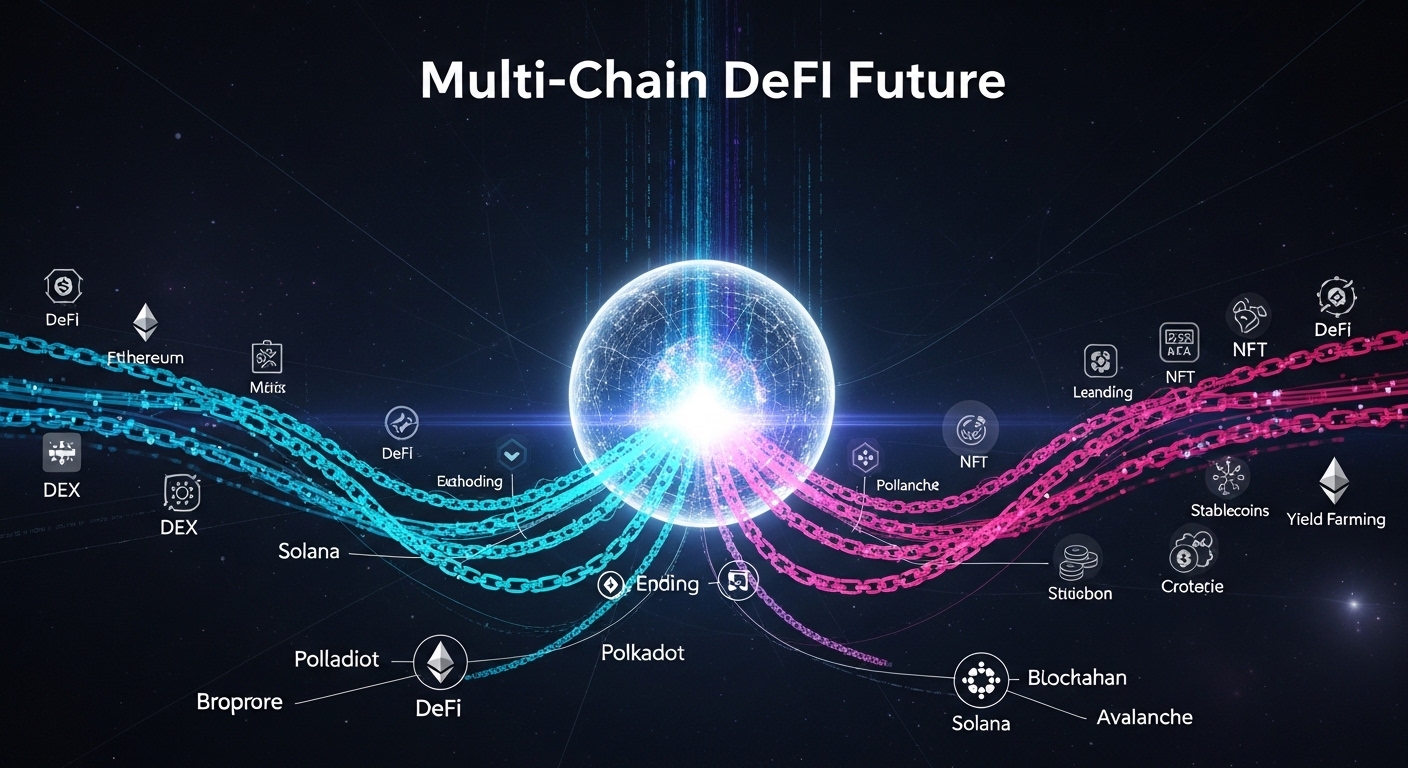
This interconnected future benefits users by offering choice, resilience, and improved efficiency across decentralized finance as a whole.
Risks and Challenges Facing Solana DeFi
Market Volatility and User Sentiment
While Solana’s TVL remains strong, prolonged market downturns could still impact user behavior. A deeper or longer-lasting decline in SOL price may eventually influence participation, especially among newer users. Maintaining engagement during volatile periods will require continued innovation and strong incentives within the ecosystem.
Competition and Technological Evolution
The DeFi space evolves rapidly, and Solana faces constant competition from both established and emerging networks. To maintain its market share, Solana must continue investing in scalability, security, and developer experience.
The ability to adapt to new trends such as cross-chain interoperability and advanced financial primitives will be critical for sustaining long-term growth.
The Road Ahead for Solana and DeFi
Solana’s control of 7.7% of the DeFi market with $9.1 billion locked represents more than a short-term achievement. It signals a structural shift in how decentralized finance is distributed across blockchain networks. Even amid a SOL price pullback, the ecosystem’s strength suggests that users and developers see lasting value in Solana’s technology.
As decentralized finance continues to mature, metrics like TVL, user retention, and application diversity will matter more than speculative price movements. Solana’s current performance positions it well to remain a major player in the next phase of DeFi evolution.
Conclusion
Solana’s ability to command 7.7% of the DeFi market with $9.1 billion in total value locked, despite a pullback in SOL’s price, highlights the growing maturity and resilience of its ecosystem. Strong decentralized exchanges, efficient lending protocols, and innovative liquid staking solutions have created a robust foundation that attracts and retains capital. Supported by high-performance infrastructure and increasing developer and institutional confidence, Solana has proven that real DeFi adoption can persist even during market volatility. As the industry moves toward a multi-chain future, Solana’s role in decentralized finance appears not only secure but increasingly influential.
FAQs
Q: Why does Solana’s DeFi TVL remain high even when SOL price is falling?
Solana’s DeFi TVL remains high because many users participate through stablecoins, lending platforms, and liquid staking products that are less directly exposed to SOL price movements. This allows capital to stay deployed based on utility and yield rather than short-term speculation.
Q: How significant is Solana’s 7.7% share of the DeFi market compared to other blockchains?
A 7.7% share places Solana among the top DeFi networks globally, ahead of many newer blockchains and competitive with several established ecosystems. It reflects meaningful adoption and sustained on-chain activity.
Q: What types of DeFi applications contribute most to Solana’s $9.1B locked?
Decentralized exchanges, lending and borrowing platforms, and liquid staking protocols contribute the majority of Solana’s locked value. These sectors benefit directly from Solana’s speed and low transaction costs.
Q: Does Solana’s growing DeFi presence mean it will replace Ethereum?
Solana’s growth does not necessarily mean it will replace Ethereum. Instead, it supports a multi-chain DeFi future where different networks specialize in various use cases and users distribute capital across ecosystems.
Q: What risks could threaten Solana’s DeFi growth in the future?
Potential risks include prolonged market downturns, increasing competition from other blockchains, and the need to continuously improve network stability and security. Addressing these challenges will be key to maintaining long-term growth.