

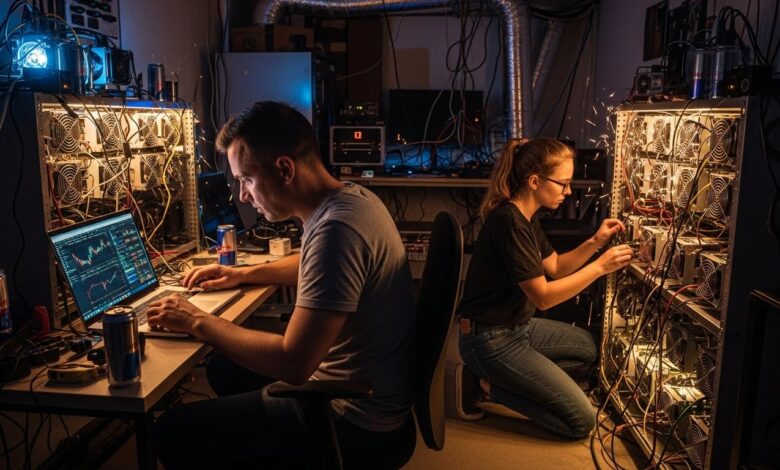
Two Solo Bitcoin Miners Hit Rare $300,000 Jackpots in One Week the world of cryptocurrency is often dominated by massive mining pools, industrial-scale operations, and headlines about corporations controlling vast portions of the network’s hash rate. Against this backdrop, the news that two solo bitcoin miners hit rare $300,000 jackpots in the same week sent shockwaves through the crypto community. It was not just the amount of money involved that captured attention, but the sheer improbability of the event. For many, this story reignited debates about decentralization, fairness, and whether individual miners still stand a chance in the modern Bitcoin ecosystem.
Bitcoin mining has evolved dramatically since its early days. What started as a hobby for enthusiasts running software on personal computers has become a highly competitive industry requiring specialized hardware, cheap electricity, and technical expertise. Yet, every so often, an extraordinary event reminds everyone that Bitcoin’s design still allows room for unexpected outcomes. When two solo bitcoin miners hit rare $300,000 jackpots in the same week, it became a symbol of both hope and statistical wonder.
We will explores the full context behind these remarkable wins, explains how solo mining works today, analyzes why such jackpots are so rare, and examines what this means for the future of Bitcoin mining. Along the way, we will also address the broader implications for Bitcoin decentralization, block rewards, hash rate competition, and the psychology of solo miners who continue to challenge the odds.
The Event That Shook the Bitcoin Mining World
When reports emerged that two solo bitcoin miners hit rare $300,000 jackpots in the same week, many initially assumed there must be a mistake. In a mining landscape dominated by pools controlling enormous portions of the network hash rate, solo miners are statistically unlikely to discover a block. Yet, both miners independently solved a Bitcoin block and received the full block reward, including transaction fees.
At the time of the event, the total reward per block hovered around 6.25 BTC plus fees, which translated into roughly $300,000 per block depending on the Bitcoin price. For a solo miner, this means receiving the entire payout rather than a small share distributed by a pool. The rarity lies not only in a solo miner finding a block, but in two such events occurring within the same week.
These wins were verified on the blockchain, confirming that they were not anomalies or reporting errors. Each miner used their own setup and did not rely on large cooperative pools. This fact alone reignited interest in solo Bitcoin mining, a practice many had written off as impractical or purely symbolic.
Bitcoin Mining Works in Simple Terms
To appreciate why two solo bitcoin miners hit rare $300,000 jackpots in the same week is such a big deal, it is important to understand how Bitcoin mining functions. Bitcoin relies on a process called proof of work, where miners compete to solve complex cryptographic puzzles. The first miner to find a valid solution earns the right to add a new block to the blockchain and receive the block reward.
The difficulty of these puzzles adjusts automatically to ensure that, on average, one block is mined approximately every ten minutes. As more miners join the network and the total hash rate increases, the difficulty rises. This system keeps the network stable but also makes it increasingly challenging for individual miners to compete.
Most miners today join mining pools. In a pool, participants combine their computing power and share rewards proportionally. This approach offers predictable, smaller payouts rather than the all-or-nothing nature of solo mining. Solo miners, by contrast, work independently and only receive rewards if they personally find a block.
The Mathematics Behind Solo Mining Odds
The story of two solo bitcoin miners hitting rare $300,000 jackpots in the same week is rooted in probability. The chances of a solo miner finding a block depend on their share of the total network hash rate. For example, if a miner controls 0.001 percent of the total hash rate, their probability of finding any given block is equally small.
In practice, this means a solo miner could theoretically mine for years without finding a single block. However, probability does not mean impossibility. Over a large number of attempts, rare events do occur. This is similar to winning a lottery, where millions may lose, but someone eventually wins.
The remarkable aspect of this event is not just that one solo miner succeeded, but that two did so within the same week. Statistically, this is extremely unlikely, which is why the story captured widespread attention across the crypto community and beyond.
Two solo bitcoin miners
When two solo bitcoin miners hit rare $300,000 jackpots in the same week, it challenged the prevailing narrative that solo mining is obsolete. While mining pools remain the rational choice for consistent income, these events demonstrate that the Bitcoin network remains open and permissionless.
This openness is a cornerstone of Bitcoin’s philosophy. Anyone with the right hardware and software can participate, regardless of scale. The jackpots served as a powerful reminder that Bitcoin is not entirely controlled by large entities, even if they dominate much of the hash rate.
These wins also sparked renewed interest in Bitcoin mining profitability, block discovery, and the emotional appeal of solo mining. For some miners, the thrill of potentially earning a life-changing reward outweighs the statistical disadvantages.
The Role of Mining Hardware in Solo Success
Modern Bitcoin mining requires specialized machines known as ASICs, which are designed solely for hashing Bitcoin’s SHA-256 algorithm. The miners who hit these jackpots were using ASIC hardware, though not necessarily at the scale of industrial operations.
Hardware efficiency plays a crucial role in mining success. Even a solo miner with a relatively modest setup can theoretically find a block if their machine runs continuously. However, higher hash rates increase the probability of success over time.
The fact that two solo bitcoin miners hit rare $300,000 jackpots in the same week suggests that their hardware was competitive enough to participate meaningfully in the network. It also highlights how advancements in ASIC technology have lowered barriers to entry compared to earlier eras, even if competition remains fierce.
Energy Costs and Economics of Solo Mining
Electricity costs are one of the largest expenses for any Bitcoin miner. For solo miners, these costs can accumulate quickly without guaranteed returns. This economic reality is why many miners prefer pools, where steady payouts help offset operational expenses.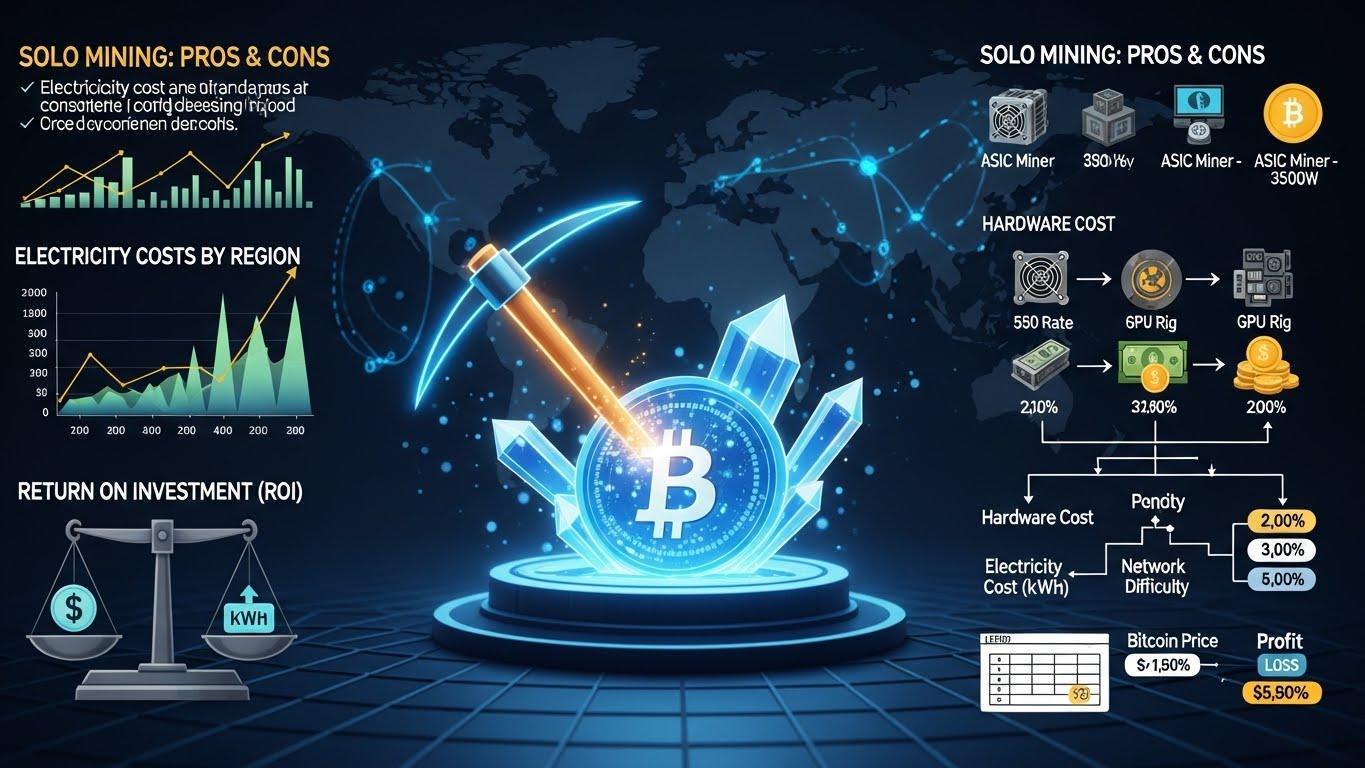
When two solo bitcoin miners hit rare $300,000 jackpots in the same week, it temporarily flipped the usual economic equation. Years of electricity costs could be covered by a single successful block. This possibility, however remote, is what keeps some miners committed to solo mining.
From an economic perspective, solo mining is often compared to a high-risk, high-reward strategy. While the expected value may be similar to pool mining over the long term, the variance is dramatically higher. This variance is both the danger and the allure.
Psychological Motivation Behind Solo Mining
Beyond economics, psychology plays a significant role in why individuals continue to mine solo. The story of two solo bitcoin miners hitting rare $300,000 jackpots in the same week resonates because it taps into human fascination with rare victories and underdog success.
Solo miners often describe a sense of independence and personal achievement that comes from finding a block on their own. Unlike pool mining, where rewards are shared, solo mining offers the satisfaction of individual accomplishment.
This psychological dimension is closely tied to Bitcoin’s original ethos of individual empowerment and resistance to centralization. Each solo success reinforces the idea that participation is still meaningful, even in a highly competitive environment.
Implications for Bitcoin Decentralization
Decentralization is a core principle of Bitcoin. Critics often point to the concentration of hash rate among large pools as a potential weakness. When two solo bitcoin miners hit rare $300,000 jackpots in the same week, it served as a counterpoint to those concerns.
While such events do not significantly alter the overall distribution of hash rate, they demonstrate that the protocol does not exclude smaller participants. The network does not favor large miners by design; it simply rewards computational effort.
These jackpots sparked renewed discussions about network security, mining centralization, and whether protocol changes are needed to support broader participation. For many, the conclusion was reassuring: Bitcoin still works as intended.
Media Reaction and Community Response
The crypto community reacted with a mix of excitement, skepticism, and curiosity. Social media platforms buzzed with discussions about how two solo bitcoin miners hit rare $300,000 jackpots in the same week and whether more such events could follow.
Some commentators viewed the news as inspirational, while others cautioned against overinterpreting rare occurrences. Experienced miners were quick to remind newcomers that these jackpots are statistical outliers, not evidence of a trend.
Nevertheless, the media attention helped educate a broader audience about how Bitcoin mining actually works. It also highlighted the transparency of the blockchain, where such claims can be independently verified.
This could Happen Again Anytime Soon
One of the most common questions following the event was whether similar jackpots could occur again soon. In theory, yes. Probability does not prohibit rare events from clustering. In practice, however, such occurrences remain extremely unlikely.
The fact that two solo bitcoin miners hit rare $300,000 jackpots in the same week does not change the underlying mathematics. The odds remain the same for each new block. Yet, the story serves as a reminder that randomness can produce surprising outcomes.
For solo miners, this means hope persists, but expectations should remain grounded. The long-term realities of mining economics still favor pooled approaches for most participants.
Lessons for Aspiring Bitcoin Miners
Aspiring miners can draw several lessons from this story. First, understanding probability and risk is essential. Second, having realistic expectations about income is crucial to avoiding disappointment.
When two solo bitcoin miners hit rare $300,000 jackpots in the same week, it showed what is possible, not what is probable. New miners should carefully evaluate their goals, resources, and tolerance for uncertainty before choosing a mining strategy.
This event also underscores the importance of staying informed about Bitcoin mining difficulty, hash rate trends, and market conditions, all of which influence long-term outcomes.
The Broader Significance for Bitcoin’s Future
Beyond individual miners, this event has symbolic significance for Bitcoin’s future. It reinforces the idea that Bitcoin remains open, unpredictable, and governed by code rather than authority.
The fact that two solo bitcoin miners hit rare $300,000 jackpots in the same week is a testament to the resilience and fairness of the protocol. Even as the ecosystem grows more complex, its foundational principles remain intact.
Such stories contribute to Bitcoin’s enduring narrative as a system where anyone, anywhere, can participate and potentially succeed, even against overwhelming odds.
Conclusion
The story of two solo bitcoin miners hitting rare $300,000 jackpots in the same week is more than just a headline about unexpected wealth. It is a powerful illustration of how Bitcoin’s design continues to allow individual participation, randomness, and opportunity in a highly competitive environment. While solo mining remains a high-risk endeavor with low odds of success, these rare events remind the world that the network is still open to all.
For the broader crypto community, the event reaffirmed Bitcoin’s core values of decentralization, transparency, and fairness. For solo miners, it provided a surge of motivation and proof that the improbable can still happen. Ultimately, this remarkable week will be remembered as a moment when chance, mathematics, and technology aligned to create a story that captured the imagination of the entire Bitcoin ecosystem.
FAQs
Q: How did two solo bitcoin miners manage to earn $300,000 each in the same week
The two solo bitcoin miners earned around $300,000 each by independently discovering valid Bitcoin blocks during the same week. By solving the cryptographic puzzle first, each miner received the full block reward and transaction fees, which together amounted to roughly $300,000 depending on the Bitcoin price at the time.
Q: Does this mean solo bitcoin mining is becoming profitable again
While the event was extraordinary, it does not mean solo bitcoin mining has become consistently profitable. These jackpots were rare statistical outcomes. For most miners, the probability of finding a block solo remains extremely low, making pool mining a more stable option for predictable income.
Q: What kind of equipment do solo bitcoin miners need to win such jackpots
Solo bitcoin miners need specialized ASIC mining hardware capable of competing on the Bitcoin network. While massive industrial setups increase odds, even smaller ASIC rigs can theoretically find a block, as demonstrated by these rare jackpot wins.
Q: How does this event impact Bitcoin decentralization debates
The fact that two solo bitcoin miners hit rare $300,000 jackpots in the same week supports the argument that Bitcoin remains decentralized at the protocol level. Although large pools dominate hash rate, the network still allows individual miners to participate and succeed independently.
Q: Should new miners try solo mining after hearing about these jackpots
New miners should approach solo mining with caution. While the jackpots are inspiring, they are extremely rare. Beginners should carefully assess costs, risks, and expectations before choosing solo mining, and understand that such wins are the exception rather than the rule.