Gold & Silver Price Forecast as Gold Slips Below $4,600
Gold & Silver Price Forecast as Gold Slips Below $4,600. Explore the latest gold and silver price forecast, key drivers, and market outlook.

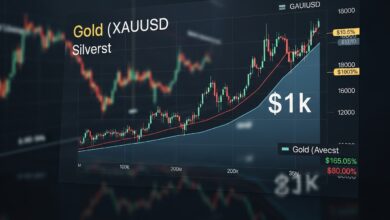
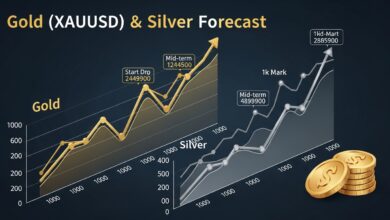
Gold & Silver Price Forecast as Gold Slips Below $4,600 the precious metals market is navigating a critical moment as investors reassess risk, inflation expectations, and global economic signals. Gold has slipped below the closely watched $4,600 level, raising questions about whether the recent pullback marks a temporary correction or the start of a deeper retracement. At the same time, silver has shown relative resilience, finding support and stabilizing after its own period of volatility. This divergence between gold and silver is drawing attention from traders, hedgers, and long-term investors alike.
The gold price forecast and silver price forecast are now being shaped by a complex mix of macroeconomic factors, including interest rate expectations, currency movements, and shifting safe-haven demand. While gold has historically led during periods of uncertainty, silver’s dual role as both a precious and industrial metal often allows it to behave differently under changing economic conditions. Understanding why gold is slipping while silver finds support requires a deeper look at market structure, sentiment, and broader financial trends.
We explore the current outlook for Gold (XAUUSD) and silver, examine the key drivers behind recent price action, and assess what may come next for both metals. By breaking down technical levels, macro influences, and investor psychology, this article aims to provide clarity on where gold and silver prices could be headed in the near and medium term.
Gold & Silver Price Forecast
The $4,600 level has emerged as an important psychological and technical marker for gold traders. When prices hold above such levels, it often signals confidence in the underlying bullish trend. Gold slipping below $4,600 has therefore triggered renewed debate about the strength of the current uptrend and whether momentum is weakening.
From a technical perspective, breaking below a key level can invite short-term selling as traders adjust positions. However, such moves do not automatically imply a trend reversal. In many cases, gold experiences corrective phases that allow the market to reset before resuming its broader direction. The current decline must be viewed within the context of gold’s longer-term trajectory rather than as an isolated event.
Short-Term Pressure Vs Long-Term Trend
The recent weakness in Gold (XAUUSD) appears to be driven more by short-term pressures than by a fundamental shift in outlook. Profit-taking after strong gains, fluctuations in bond yields, and changes in currency dynamics have all contributed to the pullback. These factors often create temporary headwinds for gold, even when long-term fundamentals remain supportive.
Despite slipping below $4,600, gold continues to trade at historically elevated levels. This suggests that while momentum has cooled, investor interest has not disappeared. The broader XAUUSD forecast still reflects underlying demand for gold as a store of value in an uncertain global environment.
Macroeconomic Factors Influencing Gold Prices
Interest Rates and Their Impact on Gold
Interest rates play a central role in shaping gold prices. When yields rise, non-yielding assets like gold can face pressure as investors seek higher returns elsewhere. Recent movements in interest rate expectations have contributed to gold’s pullback, as markets reassess the timing and pace of potential policy shifts.
However, the relationship between rates and gold is not always straightforward. If higher rates are accompanied by inflation concerns or economic instability, gold can still attract safe-haven flows. This nuanced dynamic is critical to understanding why gold may experience short-term weakness without losing its long-term appeal.
Currency Strength and Gold Valuation
Gold is typically priced in U.S. dollars, making currency movements a key factor in price fluctuations. A stronger dollar can make gold more expensive for international buyers, reducing demand and pressuring prices. Recent dollar strength has therefore added to the downward pressure on Gold (XAUUSD).
At the same time, currency volatility can increase gold’s appeal as a hedge. Investors often turn to gold during periods of foreign exchange uncertainty, which can offset some of the negative effects of a stronger dollar. This balance will continue to influence gold’s near-term direction.
Safe-Haven Demand and Market Sentiment
Shifts in Risk Appetite
Gold’s role as a safe-haven asset means its price is closely tied to market sentiment. When risk appetite is strong and equity markets perform well, gold can lose some of its defensive appeal. Conversely, rising uncertainty often drives investors back toward precious metals.
The recent slip below $4,600 suggests a modest improvement in risk sentiment rather than a wholesale abandonment of safety. Investors appear to be recalibrating positions rather than exiting gold entirely. This distinction is important when evaluating whether the current move is corrective or structural.
Inflation Expectations and Gold’s Hedge Role
Inflation remains a key driver of gold demand. When investors expect inflation to erode purchasing power, gold often benefits as a perceived hedge. Recent data suggesting mixed inflation signals have contributed to uncertainty, leading some investors to adopt a wait-and-see approach.
Despite short-term fluctuations, gold’s reputation as an inflation hedge remains intact. This ongoing role supports the view that the gold market outlook remains constructive over the longer term, even as prices consolidate.
Silver Price Forecast: Finding Support Amid Volatility
Why Silver Is Holding Up Better Than Gold
While gold has slipped, silver has found support, highlighting the different forces at play in the two markets. Silver’s price behavior is influenced not only by safe-haven demand but also by industrial usage. This dual nature can provide additional support when economic activity remains resilient.
Silver finding support suggests that industrial demand expectations are helping to offset broader market volatility. As a result, silver has been able to stabilize even as gold experiences a modest pullback. This divergence is a key feature of the current silver price forecast.
Key Support Levels for Silver
Support levels play a crucial role in shaping price action. For silver, recent stabilization near important support zones has reassured traders that selling pressure may be easing. Holding these levels increases the likelihood of sideways movement or a potential rebound if broader conditions improve.
Technical support often reflects areas where buyers are willing to step in, viewing prices as attractive. Silver’s ability to find support suggests that market participants see value at current levels, reinforcing the idea that downside risk may be limited in the near term.
Industrial Demand and Silver’s Outlook
The Role of Manufacturing and Technology
Silver’s industrial applications span electronics, renewable energy, and manufacturing. These sectors continue to influence demand expectations, particularly as technological adoption and infrastructure investment remain key themes. This industrial component differentiates silver from gold and adds complexity to its price dynamics.
As long as industrial demand remains stable, silver may continue to find support even during periods of broader market uncertainty. This factor is central to understanding why silver’s price behavior has diverged from gold’s in recent sessions.
Long-Term Demand Trends for Silver
Looking beyond short-term fluctuations, long-term demand trends for silver remain positive. Growth in renewable energy technologies and digital infrastructure supports a constructive outlook. These structural drivers provide a foundation that can help silver weather periods of volatility.
This long-term perspective reinforces the idea that silver’s current support may be more than just a temporary pause, aligning with a cautiously optimistic silver market outlook.
Technical Analysis and Market Structure
Gold Technical Levels to Watch
From a technical standpoint, gold slipping below $4,600 brings several levels into focus. Immediate support zones below this level will be closely monitored to assess whether selling pressure intensifies or stabilizes. A sustained hold above key support could signal consolidation rather than continuation of the decline.
Resistance levels above $4,600 also become important, as reclaiming this area would suggest renewed bullish momentum. Technical traders will look for confirmation through volume and price behavior before committing to new positions.
Silver’s Technical Setup
Silver’s technical structure appears more balanced, with support holding and resistance levels clearly defined. This setup often precedes periods of consolidation or gradual trend development. If silver can maintain its support, it may be better positioned to benefit from any improvement in market sentiment.
Technical indicators suggest that silver’s downside momentum has slowed, reinforcing the narrative that the metal is stabilizing rather than breaking down.
Comparing Gold and Silver in the Current Environment
Diverging Drivers and Correlations
Although gold and silver are often grouped together, their price drivers can diverge significantly. Gold is more sensitive to monetary policy and safe-haven flows, while silver responds to both economic growth and risk sentiment. The current divergence highlights these differences.
Understanding this distinction helps explain why gold has slipped below $4,600 while silver finds support. Each metal is responding to a different mix of influences, even within the same macro environment.
Portfolio Implications for Investors
For investors, the divergence between gold and silver presents both challenges and opportunities. Diversification across precious metals can help balance exposure to different drivers. While gold provides stability and hedging benefits, silver offers growth-linked potential.
Evaluating both metals together allows for a more nuanced approach to precious metals allocation, particularly in uncertain markets.
Medium-Term Outlook for Gold and Silver
Scenarios for Gold Moving Forward
In the medium term, gold’s trajectory will depend on how macroeconomic conditions evolve. If interest rate pressures ease and inflation concerns resurface, gold could regain upward momentum. Alternatively, sustained risk-on sentiment may keep prices range-bound.
The gold price forecast therefore points to consolidation as a likely near-term outcome, with potential for renewed strength if supportive catalysts emerge.
Potential Paths for Silver Prices
Silver’s medium-term outlook appears slightly more balanced, supported by industrial demand and technical stability. If economic growth expectations remain intact, silver could outperform gold during periods of recovery. However, it remains sensitive to broader market shifts.
Overall, the silver price forecast suggests cautious optimism, with support levels providing a foundation for potential upside.
Investor Psychology and Precious Metals
How Sentiment Shapes Price Action
Investor psychology plays a critical role in precious metals markets. Fear, confidence, and expectations often drive price movements as much as fundamentals. The recent gold pullback reflects a temporary shift in sentiment rather than a collapse in confidence.
Silver’s stability suggests that investors remain selectively optimistic, willing to hold positions where value and demand dynamics align.
Navigating Uncertainty with Precious Metals
Gold and silver have long been used to navigate uncertainty. Their current behavior underscores the importance of understanding context rather than reacting to isolated price moves. Short-term volatility does not necessarily undermine their long-term roles in portfolios.
Maintaining perspective helps investors avoid overreacting to temporary fluctuations, particularly in markets influenced by complex and interrelated factors.
Conclusion
The current precious metals landscape is defined by divergence and recalibration. Gold (XAUUSD) slipping below $4,600 reflects short-term pressure driven by interest rates, currency movements, and shifting sentiment, rather than a fundamental breakdown. Silver finding support highlights the resilience provided by industrial demand and balanced market expectations.
Together, these dynamics shape a nuanced gold and silver price forecast. Gold may continue to consolidate as markets reassess macro signals, while silver appears better positioned to stabilize and potentially recover if economic conditions remain supportive. For investors, understanding the distinct drivers behind each metal is essential for navigating the evolving precious metals market with confidence.
FAQs
Q: Why did gold (XAUUSD) fall below the $4,600 level?
Gold fell below $4,600 due to short-term pressures such as changing interest rate expectations, a stronger currency environment, and profit-taking after recent gains. These factors temporarily reduced demand without altering gold’s long-term appeal.
Q: Does gold slipping below $4,600 mean the bullish trend is over?
Not necessarily. A move below $4,600 can represent a corrective phase rather than a trend reversal. Gold often consolidates after strong rallies, and long-term fundamentals may still support higher prices over time.
Q: Why is silver finding support while gold is weakening?
Silver benefits from both safe-haven demand and industrial usage. Ongoing industrial demand expectations have helped silver find support, even as gold faces pressure from macroeconomic factors.
Q: How do interest rates affect gold and silver prices differently?
Rising interest rates tend to pressure gold more because it does not generate yield. Silver is also affected by rates but can find offsetting support from industrial demand tied to economic activity.
Q: What should investors watch next for gold and silver prices?
Investors should monitor interest rate developments, currency movements, inflation expectations, and technical support levels. These factors will help determine whether gold stabilizes and whether silver can build on its current support.