
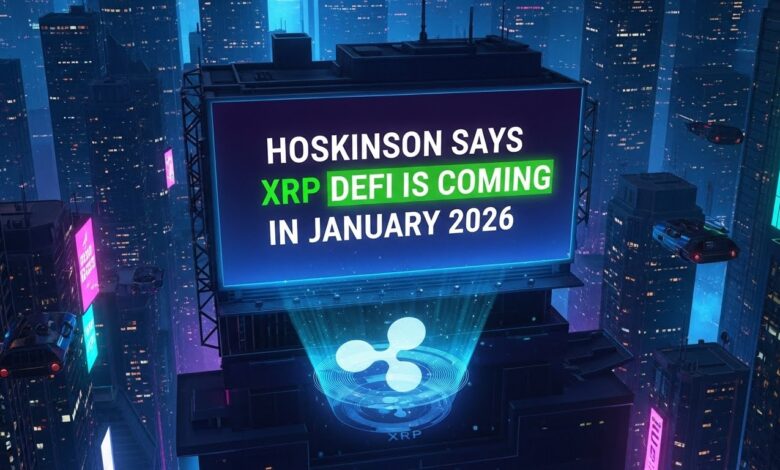
Hoskinson says XRP DeFi is coming in January 2026, and this updated timeline has reignited discussions across the crypto industry. While earlier remarks hinted at XRP’s eventual entry into decentralized finance, the mention of a concrete timeframe adds new weight and urgency to the conversation. January 2026 now stands out as a potential milestone where Ripple’s blockchain and the XRP ecosystem could finally step into the DeFi arena in a meaningful way.
For years, XRP has occupied a unique position in crypto. It has been widely adopted for payments and liquidity solutions but largely absent from decentralized finance, a sector that has reshaped how users interact with digital assets. When Hoskinson says XRP DeFi is coming in January 2026, it signals not only technical readiness but also a broader shift in mindset across blockchain ecosystems. The statement suggests that interoperability, maturity, and collaboration are reaching a point where long-standing boundaries between networks are dissolving.
We will explores what Hoskinson’s January 2026 comment really implies, why this timing matters, how XRP DeFi could realistically work, and what it could mean for Ripple, Cardano, and the wider DeFi landscape. By examining technical, market, and regulatory dimensions, we can better understand whether January 2026 could mark the beginning of a new era for XRP.
Hoskinson Says XRP DeFi Is Coming in January 2026
When Hoskinson says XRP DeFi is coming in January 2026, the timing itself is meaningful. Blockchain development moves in long cycles, often requiring years of research, testing, and coordination. A specific date suggests that foundational work is already underway and approaching maturity.
January 2026 also aligns with broader industry trends. By that point, many blockchains are expected to have advanced interoperability standards, more robust security models, and clearer regulatory frameworks. These conditions are essential for integrating an asset like XRP into DeFi without compromising its reliability or compliance-oriented reputation.
The mention of January 2026 implies that XRP DeFi is not a rushed experiment but a carefully planned expansion. This long-term approach resonates with Hoskinson’s philosophy of deliberate, research-driven development and adds credibility to the idea that XRP DeFi could be built on solid foundations.
Charles Hoskinson’s Role in Shaping the Narrative
Charles Hoskinson’s influence in the blockchain world extends far beyond Cardano. As a vocal advocate for formal methods, decentralization, and interoperability, his opinions often reflect deeper industry shifts. When Hoskinson says XRP DeFi is coming in January 2026, it suggests that conversations are happening at a level where cross-ecosystem collaboration is becoming practical rather than theoretical.
Hoskinson has historically emphasized that no single blockchain can dominate every use case. His comments about XRP indicate a recognition that Ripple’s strengths in payments and liquidity can complement DeFi ecosystems rather than compete with them. This perspective marks a departure from earlier periods of ecosystem rivalry.
By attaching a timeline to his statement, Hoskinson reinforces the idea that interoperability is moving from vision to execution. XRP’s entry into DeFi becomes part of a broader strategy to unify blockchain functionality across networks.
XRP’s Evolution Beyond Payments
XRP was originally designed to solve inefficiencies in cross-border payments, offering fast settlement and low transaction costs. This focus brought institutional adoption but also limited XRP’s exposure to decentralized finance. Many DeFi users viewed XRP as disconnected from the permissionless experimentation that defined early DeFi growth.
Hoskinson says XRP DeFi is coming in January 2026 because XRP’s role is evolving. The asset is no longer confined to payments alone. As blockchain architecture becomes more modular, assets can gain new capabilities without altering their core design.
This evolution allows XRP to maintain its strengths while expanding into new domains. DeFi does not replace XRP’s original purpose but adds another layer of utility, potentially transforming how the asset is used and valued.
The Technical Pathway to XRP DeFi
A central question raised when Hoskinson says XRP DeFi is coming in January 2026 is how it will be implemented technically. Ripple’s blockchain does not natively support complex smart contracts in the same way as Ethereum or Cardano. However, modern blockchain development offers multiple pathways to overcome this limitation.
Sidechains, smart contract-enabled companion networks, and cross-chain bridges can allow XRP to interact with DeFi protocols securely. These solutions enable XRP to be locked or represented in environments where lending, borrowing, and trading are possible.
The maturation of cross-chain infrastructure is key to this process. By January 2026, many of these technologies are expected to be more secure, scalable, and user-friendly, making XRP DeFi a realistic possibility rather than a speculative idea.
Cardano, Interoperability, and XRP DeFi
Hoskinson’s association with Cardano adds another layer of significance to his statement. Cardano has positioned itself as an interoperability-focused blockchain, designed to interact seamlessly with other networks. This design philosophy aligns well with the idea of XRP DeFi.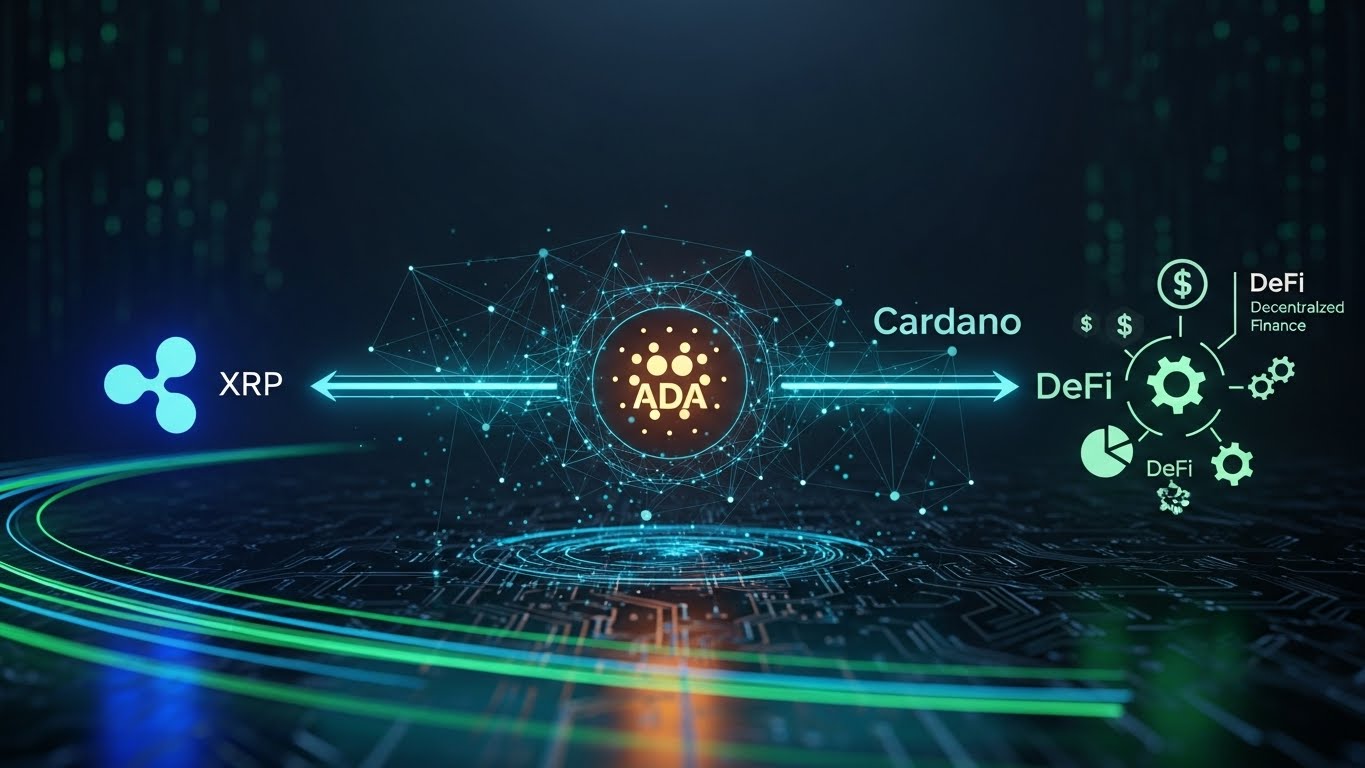
When Hoskinson says XRP DeFi is coming in January 2026, it suggests potential collaboration or at least compatibility between ecosystems. Cardano’s smart contract capabilities and XRP’s liquidity could complement each other, enabling new DeFi applications that leverage both networks’ strengths.
This vision reflects a broader trend toward multi-chain DeFi, where users are not limited to a single blockchain. Assets flow freely across networks, and value is created through cooperation rather than isolation.
Market Implications of XRP DeFi in 2026
The market impact of XRP entering DeFi could be substantial. DeFi thrives on liquidity, and XRP’s deep global markets could inject significant capital into decentralized protocols. This influx of liquidity could improve efficiency and expand the range of available financial products.
Hoskinson says XRP DeFi is coming in January 2026 at a time when investors are increasingly focused on utility-driven narratives. DeFi participation could provide XRP holders with new ways to generate yield, access liquidity, and engage with decentralized markets.
This expanded utility may influence long-term demand dynamics. Assets that offer functional use cases beyond speculation often attract more stable and committed participants, potentially reshaping XRP’s market profile.
Regulatory Considerations Around XRP DeFi
Regulation has been a defining factor in XRP’s history. Any discussion of XRP DeFi must consider how decentralized finance intersects with compliance and legal clarity. By January 2026, regulatory frameworks for digital assets are expected to be more defined in many jurisdictions.
Hoskinson says XRP DeFi is coming in January 2026 in a context where regulatory alignment may actually become an advantage. XRP’s history of institutional engagement could position it as a compliant-friendly asset within DeFi.
This could lead to the emergence of regulated or semi-regulated DeFi platforms that bridge traditional finance and decentralized systems. XRP could play a central role in this hybrid model, appealing to both institutional and retail participants.
Community Reactions and Shifting Perceptions
The XRP community has long sought broader utility and recognition within the crypto space. Hoskinson’s statement has been received as validation that XRP’s evolution is being acknowledged by influential industry figures.
When Hoskinson says XRP DeFi is coming in January 2026, it shifts perceptions beyond the XRP community. Developers, investors, and DeFi users begin to view XRP as a potential participant in decentralized finance rather than an outsider.
This narrative shift can have powerful effects. In crypto, perception often precedes adoption, and increased interest can accelerate development and experimentation within the ecosystem.
Potential DeFi Use Cases for XRP
If XRP DeFi becomes a reality in January 2026, several use cases could emerge. XRP could be used as collateral in decentralized lending platforms, allowing holders to unlock liquidity without selling their assets.
It could also serve as a liquidity asset in decentralized exchanges, benefiting from its speed and efficiency. Hoskinson says XRP DeFi is coming in January 2026 with implications for cross-border DeFi, where XRP’s original payment strengths enhance decentralized financial services.
These use cases highlight how XRP’s existing advantages can translate naturally into DeFi applications.
Risks and Challenges Ahead
Despite the optimism, XRP DeFi faces challenges. Technical integration must be secure to prevent exploits, and DeFi’s history of hacks underscores the importance of rigorous testing.
There are also cultural challenges. DeFi users value decentralization and transparency, while Ripple’s institutional focus has sometimes raised concerns. Hoskinson says XRP DeFi is coming in January 2026, but success will depend on addressing these concerns openly.
Adoption is another uncertainty. DeFi is competitive, and XRP-based solutions must offer clear benefits to attract sustained usage.
Long-Term Impact on the DeFi Ecosystem
The arrival of XRP in DeFi could reinforce the idea that decentralized finance is evolving into a universal financial layer rather than a niche movement. It demonstrates that assets designed for different purposes can converge within a shared financial framework.
Hoskinson says XRP DeFi is coming in January 2026 as part of a broader transition toward interconnected blockchain finance. This transition could reduce fragmentation, increase liquidity, and bring DeFi closer to mainstream adoption.
In the long term, such integration may help bridge the gap between traditional finance and decentralized systems.
Conclusion
Hoskinson says XRP DeFi is coming in January 2026, and this statement captures a moment of transformation within the crypto industry. It reflects growing maturity, improved interoperability, and a willingness to move beyond ecosystem silos. For XRP, DeFi represents an opportunity to expand its utility and relevance beyond payments, while for DeFi, XRP offers liquidity, efficiency, and global recognition.
While challenges remain, the foundations for XRP DeFi are steadily forming. If January 2026 delivers on this vision, it could mark a turning point not only for XRP but for decentralized finance as a whole, signaling a future where collaboration and interoperability define the next phase of blockchain innovation.
FAQs
Q: What does Hoskinson mean by saying XRP DeFi is coming in January 2026?
When Hoskinson says XRP DeFi is coming in January 2026, he suggests that technical and ecosystem developments may enable XRP to actively participate in decentralized finance around that time.
Q: Why is January 2026 considered important for XRP DeFi?
January 2026 aligns with expected advancements in interoperability, regulation, and blockchain infrastructure, making it a realistic timeframe for secure and scalable XRP DeFi integration.
Q: How can XRP join DeFi without native smart contracts?
XRP can join DeFi through sidechains, cross-chain bridges, and smart contract platforms that allow XRP to be used as collateral, liquidity, or a settlement asset.
Q: Could XRP DeFi change how XRP is used by investors?
Yes, XRP DeFi could expand XRP’s utility beyond payments, allowing holders to earn yield, access decentralized financial services, and participate more actively in DeFi markets.
Q: What risks could affect XRP DeFi adoption in 2026?
Risks include technical security challenges, regulatory uncertainty, and competition from existing DeFi ecosystems. Successful adoption will depend on careful implementation and clear value propositions.