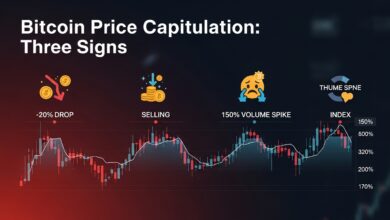


Bitcoin Price Hits $93.6K as Venezuela Fallout Drives Market as the global cryptocurrency markets usher in a new phase of volatility and opportunity, Bitcoin price today has captured attention by climbing toward $93,600, reflecting renewed investor interest and broader macroeconomic narratives.
After a relatively quiet start to 2026 characterized by sideways movement and cautious trading, Bitcoin’s momentum has picked up as geopolitical fallout in Venezuela reverberates around global markets. This surge illustrates not only the dynamic nature of Bitcoin’s price movements but also how external events such as political instability, economic collapse, and sovereign financial strategies can shape Bitcoin’s trajectory.
In this comprehensive analysis, we dive deep into the latest live Bitcoin price trends, the complex Venezuela situation impacting crypto sentiment, adoption patterns within the crisis-ridden nation, and what this might mean for investors and markets globally.
Bitcoin Price Movements Today
At the time of writing, Bitcoin price today is trading in the low-$90,000s, with live market platforms such as CoinMarketCap showing BTC hovering near $92,865 and briefly touching highs around $94,000 amid trading activity.
Bitcoin’s value fluctuates continuously, influenced by trading volume, macroeconomic trends, investor sentiment, and geopolitical news flow. Unlike traditional markets, Bitcoin trades 24/7, and short-term price movements must be viewed within the context of broader trends such as institutional inflows, regulatory developments, and the performance of correlated assets like tech equities.
Bitcoin Price Hits $93.6K
The recent uptick in Bitcoin price today is not merely a statistical blip — it coincides with heightened geopolitical tension centered around the U.S. military action in Venezuela. Reports indicate that Bitcoin has climbed more than 2.6% to roughly $93,613 within the trading session as traders absorbed this news alongside optimistic equity markets.
Technical data from on-chain analytics such as CryptoQuant suggests Bitcoin traders are not engaging in panic selling — a key insight supporting the stability of this price rise. Rather, netflows to exchanges remain muted, indicating that holders are retaining positions rather than moving Bitcoin to platforms for liquidation.
Venezuela Fallout
The Catalyst: Political Upheaval and Global Response
At the heart of the recent market movements is a significant geopolitical development: the capture of Venezuelan President Nicolás Maduro by U.S. forces and the subsequent announcement by U.S. leadership that Washington will oversee Venezuela until new elections take place.
This extraordinary event has triggered widespread reactions from both global governments and financial markets. Latin American neighbors, as well as global powers like China and Russia, have expressed their positions, creating geopolitical tension that markets generally despise for its uncertainty. In traditional markets, this risk often pushes investors toward safe-haven assets — and Bitcoin’s narrative as “digital gold” has increasingly placed it within this category.
Geopolitical shocks such as these can also ripple through commodities like oil, which Venezuela is a major exporter of, adding another layer of complexity to the broader macroeconomic picture. Changing oil dynamics often influence inflation expectations and currency stability — key components in cryptocurrency valuation frameworks.
Short-Term Fallout and Crypto Market Reaction
While Bitcoin’s price reacted positively, the wider crypto market has also been shaped by risk sentiment oscillation. Broader crypto indices have mirrored Bitcoin’s gains, though cautious trading persists amid ongoing uncertainty. Some analysts suggest that the immediate rebound reflects traders positioning Bitcoin as a hedge against instability rather than an outright bullish signal.
In recent sessions, tech equities also performed well, and Bitcoin’s historic correlation with risk assets like NASDAQ has played a role in upward movement. This reinforces the view that Bitcoin’s trajectory often mirrors broader market sentiment rather than functioning solely as an independent asset.
Venezuela’s Crypto Ecosystem
Hyperinflation and the Surging Demand for Bitcoin
Long before the current geopolitical shockwaves, Venezuela was already a compelling environment for Bitcoin adoption due to its economic collapse and hyperinflation. The Venezuelan bolívar has lost significant value over recent years, with inflation rates soaring and traditional currency stability evaporating. In response, citizens and businesses have increasingly turned to digital assets, particularly Bitcoin and stablecoins like USDT, as alternatives for preserving value.
According to multiple analysis reports, Venezuela experienced one of the most dramatic increases in cryptocurrency usage globally, with adoption rising sharply as the bolívar’s purchasing power eroded.
Today, stablecoins and Bitcoin play a dual role in the Venezuelan economy: a means of shielding savings from inflation and a practical medium of exchange. Merchants, larger retailers, and even remittance channels have integrated digital currencies into everyday transactions.
The Rise and Fall of Venezuela’s Petro
In an effort to combat economic instability, Venezuela previously launched its own state-backed token, the Petro, theoretically backed by natural resources including oil and minerals. However, this initiative ultimately failed to gain traction and was terminated in 2024.
The collapse of the Petro left a vacuum that decentralized cryptocurrencies like Bitcoin continued to fill — not because they were mandated by policy, but because market forces and survival imperatives drove widespread adoption. Unlike the Petro, Bitcoin’s decentralized nature and global liquidity made it a practical choice for many Venezuelans.
Venezuela’s Crisis Impacts Bitcoin Price Today
Narratives That Drive BTC Demand
Venezuela’s economic challenges have created a powerful narrative: in environments where fiat currency loses value rapidly, decentralized digital assets tend to gain appeal. This narrative — long observed in Latin America — dovetails with how Bitcoin is increasingly represented in global financial conversations as a hedge against currency degradation.
This perception drives long-term adoption and, by extension, adds to Bitcoin’s narrative strength on the global stage. Even if Venezuelan domestic demand does not directly move global prices, it underpins a broader story of Bitcoin utility in markets where traditional banking and currency mechanisms have failed.
Geopolitical Shocks, Safe-Haven Dynamics, and BTC
Global investors often treat Bitcoin in times of geopolitical shock differently than traditional safe-haven assets like gold or treasury bonds. Bitcoin’s decentralized construct and digital liquidity make it attractive in crises where trust in sovereign financial systems is compromised. This was visible during conflicts in Eastern Europe and Middle East tensions, and the current situation in Venezuela adds another data point to this trend.
In markets, this translates to temporary gains when risk sentiment tilts toward preserving wealth outside conventional systems. Bitcoin doesn’t always behave identically to gold, but the narrative of crypto as alternative value strengthens in periods of monetary uncertainty.
Bitcoin Price Hits $93.6K
Short-Term Outlook
In the near term, Bitcoin’s price action will likely remain influenced by ongoing geopolitical headlines, macroeconomic data (such as U.S. employment prints), and market risk sentiment. Traders and investors keenly watch Bitcoin’s ability to hold above key price levels like the mid-$90,000s as a signal of sustained momentum. 
Market volatility around the Venezuela fallout could continue to drive both upward spikes and corrective pullbacks, depending on global risk dynamics and capital flow. If Bitcoin maintains correlation with broader risk assets, it could rise further as markets stabilize. Conversely, renewed risk aversion could cap price advances.
Long-Term Implications
For the Bitcoin price narrative beyond immediate geopolitical noise, underlying factors such as institutional adoption, network development, and macroeconomic conditions like inflation will remain central. Bitcoin’s long-term price discovery is shaped by broader changes in financial systems, regulatory environments, and adoption curves that go well beyond singular events.
Venezuela’s example, however, highlights a core theme: decentralized digital currencies will continue to play a role wherever national currencies fail, reinforcing Bitcoin’s function as both a speculative and practical asset class.
Conclusion
The Bitcoin price today surge toward $93.6K reflects a confluence of market forces macroeconomic optimism in risk assets, geopolitical upheaval in Venezuela, evolving adoption trends, and Bitcoin’s deepening narrative as a decentralized value asset. The fallout from Venezuela’s political crisis has amplified Bitcoin’s profile as an alternative in unstable economic environments, reinforcing its relevance beyond speculative trading.
While short-term volatility is inevitable, the broader trajectory underscores how global events can shape Bitcoin price movements and investor perspectives. As markets continue to absorb these dynamics, Bitcoin remains a key bellwether for digital finance and global capital flows.
FAQs
Q. Why did Bitcoin price rise toward $93.6K today?
Bitcoin’s recent gains are linked to a mix of positive risk sentiment in global markets, on-chain indicators showing strong holder behavior, and heightened geopolitical uncertainty from the Venezuela crisis.
Q. How does Venezuela’s economic crisis affect Bitcoin adoption?
Venezuela’s hyperinflation and bolívar collapse have driven citizens to use Bitcoin and stablecoins as a store of value and transactional tool, boosting local crypto activity significantly.
Q. Can geopolitical events like the Venezuela fallout permanently move Bitcoin’s price?
Geopolitical shocks can influence short-term price movements and reinforce Bitcoin’s narrative as a hedge asset, though long-term trends depend on broader economic, institutional, and regulatory factors.
Q. Is Bitcoin a safe haven during political instability?
While Bitcoin is sometimes viewed as a “digital gold,” its behavior differs from traditional safe-haven assets and often reflects broader risk sentiment alongside crisis responses.
Q. Will Venezuela’s crypto adoption continue to impact global markets?
Venezuela’s domestic crypto adoption highlights Bitcoin’s utility during currency crises, and such trends reinforce global narratives, though direct price impact on global markets is nuanced and part of larger adoption dynamics.