
Bitcoin’s 10-Year Grind: Why Crypto Advocates Stay Bullish
Retail investors exit crypto markets, but long-term Bitcoin believers remain confident. Discover why the 10-year grind strategy could transform digital assets.


Bitcoin’s 10-Year Grind The cryptocurrency landscape has undergone a dramatic transformation over the past few years, with mainstream retail investors—often referred to as “normies” in crypto circles—gradually stepping away from digital assets. After the euphoric highs of previous bull markets and the devastating crashes that followed, many everyday investors have grown weary of the volatility and uncertainty that characterize the crypto space. Yet despite this exodus of casual participants, a dedicated core of cryptocurrency advocates remains steadfastly optimistic, armed with a compelling narrative: the “10-year Bitcoin grind” will ultimately reward those patient enough to weather the storms.
Bitcoin’s 10-Year Grind This divergence between retail sentiment and long-term believer conviction raises important questions about the future of digital currencies and blockchain technology. While headlines frequently highlight Bitcoin’s price fluctuations and the departure of fair-weather investors, a deeper examination reveals a maturing ecosystem with strengthening fundamentals. The concept of the 10-year grind represents more than mere speculation—it embodies a philosophy rooted in technological innovation, institutional adoption, and the gradual evolution of global financial systems. Understanding why committed advocates maintain their conviction while mainstream interest wanes offers crucial insights into cryptocurrency’s trajectory and its potential role in reshaping our economic future.
The Exodus of Retail Investors from Cryptocurrency Markets
The retreat of retail investors from cryptocurrency markets has become increasingly evident across multiple metrics. Trading volumes on major exchanges have declined significantly from their peak levels, and Google search trends for terms like “buy Bitcoin” and “crypto investment” have plummeted compared to the frenzy witnessed during previous bull runs. This withdrawal isn’t surprising when considering the rollercoaster journey many newcomers experienced—entering the market near all-time highs, only to watch their portfolios shrink by 70% or more during subsequent bear markets.
Several factors have contributed to this cooling of mainstream enthusiasm. First, the regulatory uncertainty surrounding digital assets has created an atmosphere of caution among everyday investors. High-profile enforcement actions, exchange collapses, and ongoing debates about cryptocurrency classification have made the space feel increasingly risky for those without deep technical knowledge. Additionally, the proliferation of scams, rug pulls, and failed projects has eroded trust among casual participants who lack the expertise to distinguish legitimate initiatives from fraudulent schemes.
The macroeconomic environment has also played a significant role in dampening retail interest. Rising interest rates and traditional investment opportunities offering reliable returns have made the risk-reward calculus of cryptocurrency investment less appealing to conservative investors. When savings accounts and treasury bonds provide decent yields without the stomach-churning volatility, many normies have opted for the safer path. Furthermore, the collapse of several high-profile crypto companies and the resulting contagion effects have reinforced negative perceptions about the industry’s stability and maturity.
The 10-Year Bitcoin Grind Philosophy

The concept of the “10-year Bitcoin grind” represents a fundamental shift in how serious cryptocurrency advocates approach digital asset investment. Rather than chasing quick gains or attempting to time market cycles perfectly, this philosophy embraces a long-term perspective that acknowledges Bitcoin’s inherent volatility while focusing on its potential to serve as a revolutionary financial technology and store of value. Proponents of this approach draw inspiration from Bitcoin’s historical performance, noting that despite numerous dramatic crashes, the cryptocurrency has consistently recovered and reached new heights over extended timeframes.
Bitcoin’s 10-Year Grind This grinding mentality recognizes that blockchain adoption and the transformation of global financial infrastructure cannot happen overnight. Just as the internet required decades to reach its current level of integration into daily life, advocates argue that cryptocurrency technology needs time to mature, overcome technical limitations, and gain widespread acceptance. The 10-year timeframe isn’t arbitrary—it represents roughly two to three Bitcoin halving cycles, events that historically have preceded significant bull markets due to the reduction in new Bitcoin supply entering circulation.
Bitcoin’s 10-Year Grind Crucially, the grind philosophy emphasizes continuous accumulation through dollar-cost averaging rather than attempting to identify perfect entry points. This strategy acknowledges that predicting short-term price movements is essentially impossible, but it maintains confidence in Bitcoin’s long-term trajectory based on its fixed supply, decentralized nature, and growing network effects. Advocates often point to institutional investors and corporations that have added Bitcoin to their balance sheets as validation of this patient approach, arguing that smart money understands the value of thinking in decades rather than days.
Why Cryptocurrency Advocates Remain Optimistic Despite Market Conditions
Despite the departure of retail investors and extended periods of price stagnation, committed cryptocurrency advocates maintain their optimism for several compelling reasons. First and foremost, they point to the Bitcoin’s 10-Year Grind continuous development and improvement of blockchain infrastructure. Layer-2 scaling solutions, enhanced privacy features, and interoperability protocols represent genuine technological progress that addresses many of Bitcoin’s early limitations. This ongoing innovation suggests that the underlying technology is maturing rather than stagnating.
Bitcoin’s 10-Year Grind The gradual march toward institutional adoption provides another source of confidence for long-term believers. Major financial institutions that once dismissed Bitcoin as a passing fad have established cryptocurrency trading desks, custody solutions, and even launched Bitcoin-related investment products. Bitcoin’s 10-Year Grind approval of spot Bitcoin ETFs in various jurisdictions represents a watershed moment, making exposure to digital assets accessible through traditional brokerage accounts. This institutional infrastructure wasn’t built for short-term speculation—it reflects expectations of cryptocurrency’s permanent integration into the global financial ecosystem.
Bitcoin’s 10-Year Grind Advocates also draw encouragement from Bitcoin’s performance during times of economic uncertainty and monetary instability. In countries experiencing hyperinflation or strict capital controls, cryptocurrency adoption has surged as citizens seek alternatives to failing local currencies. This real-world utility—serving as a hedge against monetary debasement and providing financial access to the unbanked—reinforces the conviction that Bitcoin addresses genuine problems rather than existing as mere speculation. Bitcoin’s 10-Year Grind network’s resilience, having operated continuously without centralized control since 2009, demonstrates a level of reliability that strengthens the long-term thesis.
The Role of Bitcoin Halving Cycles in Long-Term Value
Understanding Bitcoin halving events is essential to comprehending why advocates emphasize decade-long time horizons. Approximately every four years, the reward that miners receive for validating Bitcoin transactions is cut in half, reducing the rate at which new Bitcoin enters circulation. This programmed scarcity creates a supply shock that historically has preceded significant price appreciation, though typically with a lag of several months to over a year.
The halving mechanism represents one of Bitcoin’s most distinctive features—a monetary policy that is predictable, transparent, and immune to political manipulation. Unlike traditional currencies where central banks can increase money supply at will, Bitcoin’s maximum supply of 21 million coins is immutable. Each halving brings the network closer to this terminal supply, theoretically increasing scarcity if demand remains constant or grows. Past halving cycles in 2012, 2016, and 2020 were each followed by substantial bull markets, though with different magnitudes and characteristics.
However, advocates caution against expecting identical patterns in future cycles. As Bitcoin’s market capitalization grows, the percentage gains from each cycle may diminish—a million-dollar Bitcoin represents more realistic expectations than the 100x returns early adopters enjoyed. The 10-year grind philosophy acknowledges this maturation, focusing instead on Bitcoin’s evolution from a speculative asset to a recognized store of value competing with gold and other traditional safe havens. Market cycles will continue, but the long-term trend remains upward if the fundamental value proposition holds.
Institutional Adoption and Infrastructure Development
The landscape of cryptocurrency infrastructure has transformed dramatically from Bitcoin’s early days when purchasing digital assets required navigating obscure forums and sending money to unknown entities. Today, regulated exchanges, institutional-grade custody solutions, and sophisticated trading platforms have professionalized the industry. This infrastructure development doesn’t just facilitate speculation—it enables legitimate integration of digital assets into corporate treasury management, pension fund allocation, and mainstream financial services.
Major corporations including MicroStrategy, Tesla, and numerous publicly-traded companies have allocated portions of their balance sheets to Bitcoin, viewing it as a treasury reserve asset. While some have since sold portions of their holdings, the mere fact that corporate boards approved such allocations represents a significant shift in Bitcoin’s legitimacy. Similarly, sovereign wealth funds and pension systems have begun cautiously exploring digital asset exposure, albeit typically through regulated investment vehicles rather than direct ownership.
The development of compliant infrastructure also addresses one of the primary concerns that kept institutional investors sidelined—custody and security. Enterprise-level solutions from established financial institutions now provide insurance, multi-signature security, and regulatory compliance that meets fiduciary standards. This maturation process takes years to unfold but creates the foundation necessary for cryptocurrency to transition from a niche technology to a recognized asset class. Advocates view this infrastructure buildout as validation of the long-term vision, even if it doesn’t generate the speculative excitement that once drove retail participation.
Comparing Cryptocurrency to Early Internet Adoption
Cryptocurrency advocates frequently draw parallels between Bitcoin adoption and the early internet’s development trajectory. In the 1990s, internet skeptics questioned why anyone would need email when fax machines existed or why online shopping could ever compete with traditional retail. These critiques seem absurd in retrospect, yet they mirror contemporary skepticism about cryptocurrency’s utility and future relevance. Just as the internet required decades to develop user-friendly interfaces, reliable infrastructure, and killer applications that justified its existence, blockchain technology needs time to realize its potential.
The dot-com bubble of the late 1990s provides particularly instructive lessons. Irrational exuberance drove valuations to unsustainable levels, and the subsequent crash wiped out trillions in market value. Yet the internet itself didn’t fail—only specific business models and overvalued companies did. The truly transformative companies like Amazon, Google, and others either survived the crash or emerged afterward, eventually validating the revolution that skeptics had prematurely dismissed. Cryptocurrency advocates argue that we’re witnessing a similar pattern, where speculative excess and inevitable crashes obscure the genuine innovation occurring beneath the volatility.
This comparison suggests that the 10-year grind isn’t about waiting for cryptocurrency to suddenly become valuable—it’s about recognizing that transformative technologies require patient capital and realistic timeframes. The blockchain revolution may ultimately touch everything from supply chain management to digital identity to cross-border payments, but these applications need years of development, testing, and refinement before achieving mainstream adoption. Those who maintain exposure throughout this development phase, rather than abandoning ship during inevitable setbacks, position themselves to benefit from the eventual maturation.
Challenges Facing the Long-Term Cryptocurrency Thesis
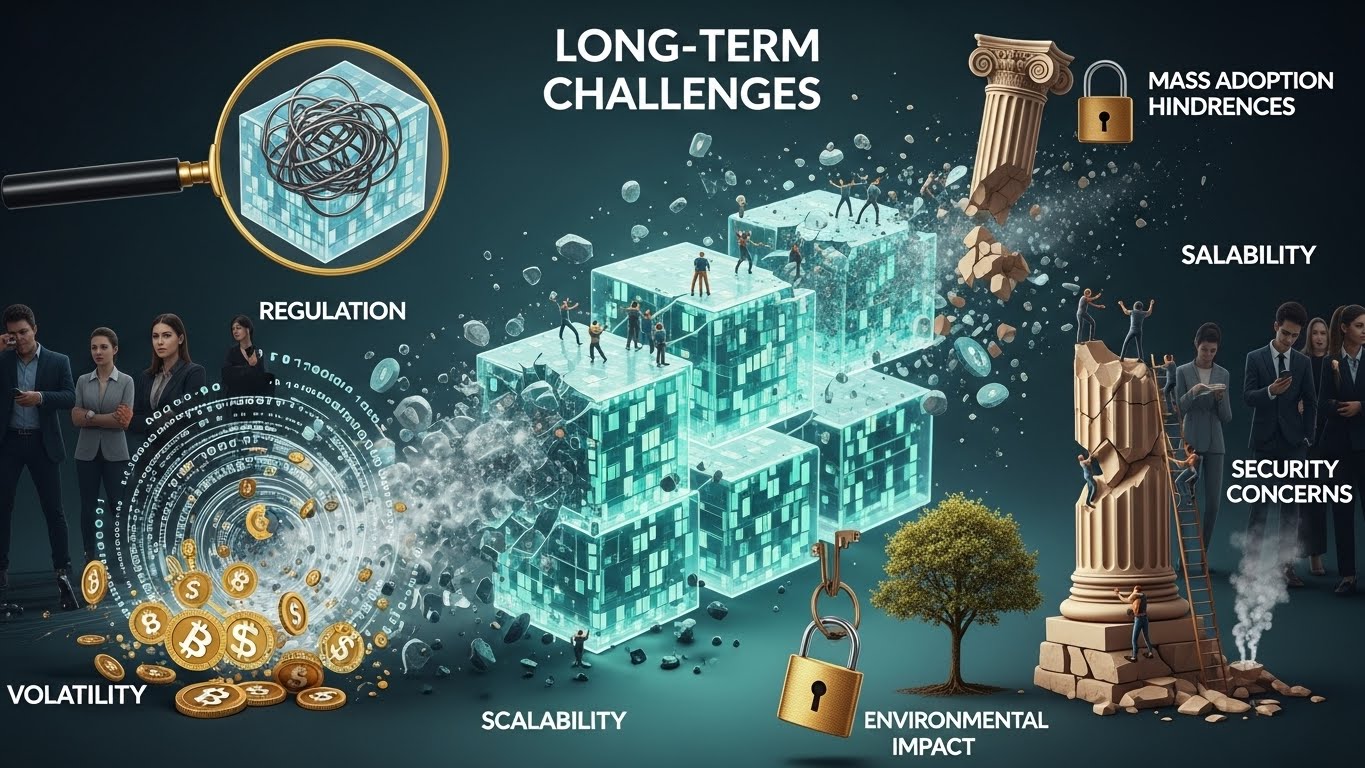
While advocates present compelling arguments for maintaining conviction, honest assessment requires acknowledging significant challenges facing the long-term cryptocurrency thesis. Regulatory uncertainty remains perhaps the most substantial risk, with governments worldwide still determining how to classify, tax, and regulate digital assets. Overly restrictive regulations could stifle innovation, limit adoption, or even attempt to ban cryptocurrency ownership in certain jurisdictions. The tension between cryptocurrency’s decentralized ethos and governments’ desire for oversight and control represents an ongoing struggle with uncertain outcomes.
Technological risks also persist despite continuous development. Quantum computing, though likely decades from practical implementation, theoretically threatens current cryptographic security. Scalability challenges, while addressed through layer-2 solutions, haven’t been definitively solved at the base layer. Environmental concerns about Bitcoin’s energy consumption continue generating criticism and could influence regulatory approaches or institutional adoption decisions. Additionally, the emergence of central bank digital currencies (CBDCs) might satisfy some of the use cases cryptocurrency aims to address while maintaining government control.
Competition within the cryptocurrency space itself presents another complication. While Bitcoin maintains first-mover advantage and the strongest network effects, thousands of alternative cryptocurrencies compete for attention and capital. Some offer genuine technological improvements or address different use cases, potentially fragmenting the market rather than consolidating around a single dominant standard. The crypto market dynamics remain unpredictable, and there’s no guarantee that current leaders will maintain their positions over a 10-year horizon. These challenges don’t necessarily invalidate the long-term thesis, but they inject uncertainty that advocates must acknowledge alongside their optimism.
Building Wealth Through Patient Capital Deployment
The practical application of the 10-year grind philosophy centers on disciplined capital allocation and emotional resilience. Rather than attempting to time perfect entries or exits, this approach emphasizes consistent accumulation regardless of short-term price action. Dollar-cost averaging—investing fixed amounts at regular intervals—naturally buys more during price dips and less during peaks, averaging out the entry price over time. This strategy removes the emotional component from investment decisions and prevents the paralysis that comes from trying to identify optimal timing.
Patience becomes the most valuable asset in this approach. During extended bear markets when prices languish and mainstream attention disappears, maintaining conviction requires genuine belief in the underlying thesis rather than reliance on momentum or crowd validation. This period tests whether investors truly understand why they hold Bitcoin or simply followed hype. Those who survive these grinding periods without panic selling position themselves to benefit when market conditions eventually shift, as historical patterns suggest they will.
Risk management remains essential even within a long-term framework. Advocates of the 10-year grind don’t suggest allocating one’s entire portfolio to cryptocurrency—rather, they recommend position sizing appropriate to individual risk tolerance and financial circumstances. For some, this might mean allocating 1-5% of investable assets, while more risk-tolerant individuals might go higher. The key principle is investing only capital one can afford to hold through extreme volatility without forced liquidation at inopportune times. This investment strategy recognizes that conviction without prudent risk management leads to preventable losses when unexpected life circumstances require accessing capital.
Conclusion
The divergence between mainstream retail investors losing interest in cryptocurrency and dedicated advocates maintaining long-term conviction represents more than a simple difference in risk tolerance—it reflects fundamentally different perspectives on technology adoption timelines and financial system evolution. While normies retreat from crypto markets after experiencing volatility and disappointment, committed believers embrace the “10-year Bitcoin grind” as the patient approach necessary for transformative technologies to mature and demonstrate their value.
The case for long-term optimism rests on multiple pillars: continuous technological development, gradual institutional adoption, Bitcoin’s programmed scarcity through halving events, and the historical pattern of revolutionary technologies requiring decades to reach their potential. These factors suggest that the current period of diminished retail interest may represent opportunity rather than obituary for those willing to maintain exposure through inevitable ups and downs.
However, this long-term thesis isn’t without significant risks. Regulatory uncertainty, technological challenges, environmental concerns, and intense competition within the cryptocurrency ecosystem all introduce variables that could derail optimistic projections. The 10-year grind philosophy acknowledges these uncertainties while maintaining that Bitcoin’s unique properties—decentralization, fixed supply, censorship resistance—address genuine needs that won’t disappear regardless of short-term market sentiment.
Ultimately, whether the advocates or the departing normies prove correct will be determined not by quarterly price movements but by cryptocurrency’s actual adoption and utility over the coming decade. Those betting on the grind are wagering that patience, disciplined accumulation, and genuine technological innovation will overcome the volatility and setbacks that have discouraged casual participants. Time will reveal whether this conviction was visionary or merely stubborn, but the next ten years will undoubtedly shape the permanent role—or lack thereof—that cryptocurrency occupies in the global financial system.
Frequently Asked Questions
Q: What does the “10-year Bitcoin grind” mean for average investors?
The 10-year Bitcoin grind refers to a patient, long-term investment approach that prioritizes consistent accumulation over market timing. For average investors, this means committing capital you can afford to leave untouched through extreme volatility, using dollar-cost averaging to build positions gradually, and maintaining conviction based on fundamental technology developments rather than short-term price movements. It requires understanding Bitcoin’s halving cycles, technological maturation, and gradual institutional adoption rather than expecting quick returns.
Q: Why are retail investors leaving cryptocurrency markets?
Retail investors are exiting crypto markets due to several converging factors: significant portfolio losses during bear markets, regulatory uncertainty creating perceived risk, high-profile exchange collapses eroding trust, improved returns from traditional investments like bonds and savings accounts, and general fatigue from extreme volatility. Many casual investors entered during hype cycles without understanding the technology or realistic timeframes, leading to disappointment when prices crashed and recovery took years rather than months.
Q: How do Bitcoin halving events affect long-term value?
Bitcoin’s 10-Year Grind Bitcoin halving events occur approximately every four years and reduce the reward miners receive for validating transactions by half, decreasing the rate of new Bitcoin entering circulation. This Bitcoin’s 10-Year Grind programmed scarcity creates a supply shock that historically has preceded significant bull markets, typically with a lag period. While past performance doesn’t guarantee future results, the halving mechanism ensures Bitcoin becomes progressively scarcer as it approaches its 21 million coin maximum supply, potentially supporting long-term value if demand remains constant or grows.
Q: What risks should long-term Bitcoin holders consider?
Bitcoin’s 10-Year Grind Long-term Bitcoin holders face several significant risks including regulatory crackdowns that could restrict ownership or usage, technological vulnerabilities like quantum computing threats, competition from alternative cryptocurrencies or central bank digital currencies, environmental concerns affecting institutional adoption, and extended bear markets testing emotional resilience. Additionally,Bitcoin’s 10-Year Grind individual risks like exchange hacks, lost private keys, and personal financial emergencies requiring premature liquidation can undermine even sound long-term strategies. Proper position sizing and security practices are essential.
Q: How does institutional adoption support the long-term cryptocurrency thesis?
Bitcoin’s 10-Year Grind Institutional adoption validates cryptocurrency’s transition from speculative novelty to recognized asset class by bringing professional infrastructure, regulatory compliance, and significant capital. When corporations add Bitcoin to treasury reserves, pension funds explore allocation, and Bitcoin’s 10-Year Grind traditional financial institutions build custody and trading solutions, it demonstrates sophisticated investors view digital assets as having permanent relevance. This infrastructure development takes years but creates the foundation necessary for broader adoption, lending credibility to the decade-long investment horizon that advocates emphasize.