
China Bitcoin Mining Ban Experts Doubt Beijing Will Reverse Policy
Despite rising hashrate and excess energy, experts say China is unlikely to lift its bitcoin mining ban. Here’s why a policy reversal remains doubtful.


China Bitcoin Mining Ban China’s complex relationship with bitcoin mining has fascinated global markets for years. Once the undisputed powerhouse of the global mining ecosystem, the country abruptly shifted course in 2021 by enforcing a sweeping ban that forced mining businesses to close, relocate, or operate underground. Although the ban initially appeared absolute, new signs show that mining activity has gradually resurfaced across various provinces, powered by surplus electricity and opportunistic local operations. At the same time, China Bitcoin Mining Ban China is grappling with excess energy supply, overbuilt data-centre capacity, and new economic pressures, prompting some observers to question whether the country might eventually soften its stance on mining.
Despite these shifts, most analysts remain convinced that China is unlikely to formally reverse its policy. China Bitcoin Mining Ban The resurgence of mining does not necessarily indicate an impending legislative reversal but rather reflects the tension between central government priorities and local economic interests. As Bitcoin’s value climbs and global demand for computing power intensifies, the question of China’s future role has become increasingly relevant. Yet experts continue to doubt that Beijing will legitimize an industry it once decisively pushed out of the spotlight.This article explores the historical background of China’s ban, the forces driving underground mining growth, and the political and economic realities that continue to discourage a full policy U-turn. It also examines how miners are adapting, how energy infrastructure plays a role, and what it would truly take for China to reconsider the bitcoin mining ban.
China’s rise and fall as the world’s mining epicenter
Before the 2021 crackdown, China dominated the global cryptocurrency mining landscape. The country benefited from an extraordinary combination of natural advantages, including low-cost electricity, ready access to advanced mining hardware, and established supply chains centered around ASIC miners, chip manufacturing, and high-density server facilities. Provinces like Sichuan and Yunnan attracted miners with abundant hydroelectric power, while Xinjiang and Inner Mongolia offered coal-powered electricity at extremely competitive rates through much of the year.During its peak, China controlled more than half of the global bitcoin hashrate, and its mining farms formed the backbone of Bitcoin’s security infrastructure.
China Bitcoin Mining Ban The country’s miners were known for their scale, efficiency, and ability to rapidly deploy the latest generation of hardware. Many of the world’s leading mining equipment manufacturers, including those producing cutting-edge bitcoin mining rigs, are still based in China The China Bitcoin Mining Ban today.The crackdown in 2021 brought this era to a halt. Citing concerns related to financial risk, environmental impact, and the potential for cryptocurrency to facilitate speculation and capital outflows, Beijing enforced a strict prohibition on both trading and mining. Facilities were dismantled, electricity was cut off to mining hubs, and companies were forced to relocate their machines to more favorable jurisdictions.While this appeared to end China’s involvement in the sector, new evidence shows that the story did not end there. Underground mining has quietly and steadily reemerged.
The unexpected resurgence of underground bitcoin mining
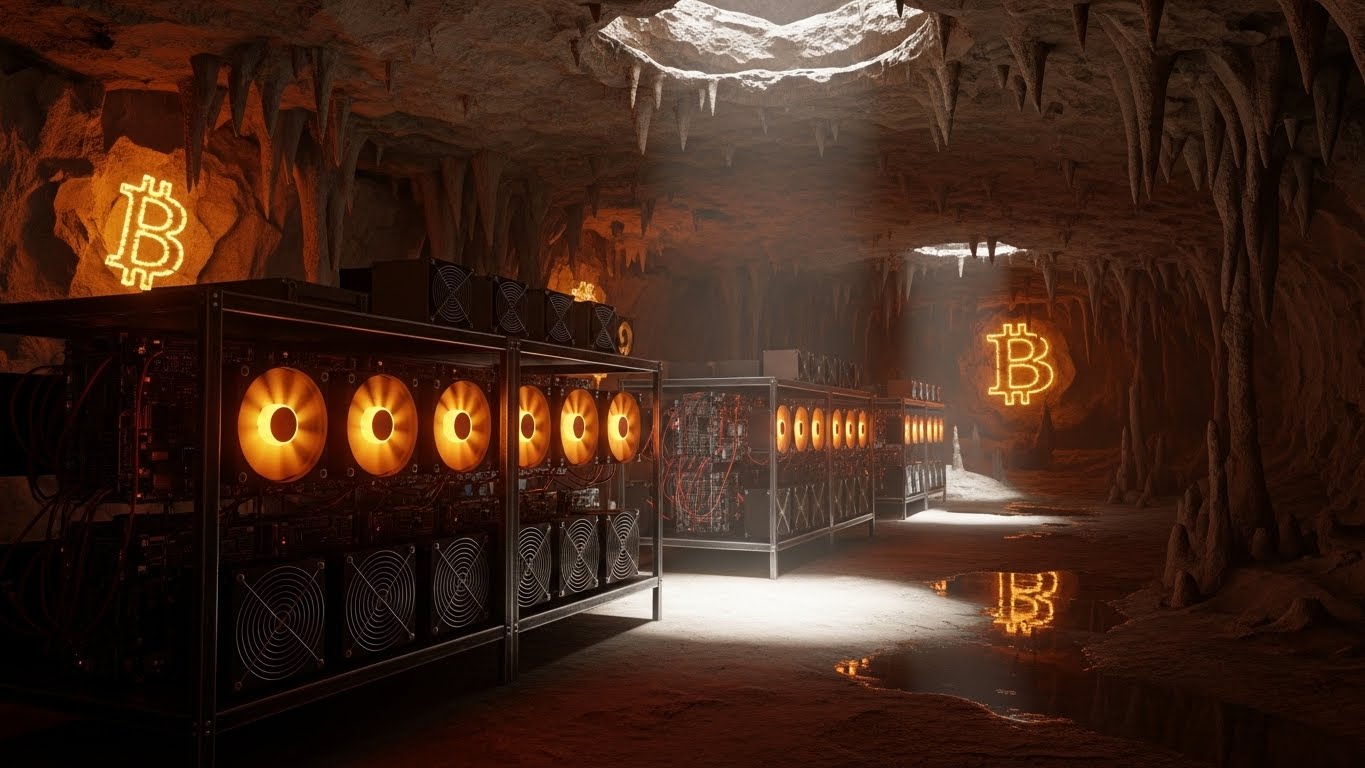
In the years following the ban, analysts observed a surprising trend. Although China officially outlawed cryptocurrency mining, its share of global hashrate began rising again. Today, China Bitcoin Mining Ban estimated to contribute between 14 and 20 percent of the global hashrate, placing it third worldwide behind the United States and Kazakhstan.This resurgence is not the result of a formal policy change. Instead, it reflects miners’ ability to adapt, reorganize, and target regions with friendly local conditions. In provinces such as Xinjiang, Sichuan, and Gansu, miners have quietly returned, often with smaller and more discreet operations than before. What once were massive, warehouse-sized mining farms have been replaced by compact clusters distributed across rural industrial zones, abandoned factory floors, and energy-rich regions with limited oversight.
The return of mining is closely tied to China’s ongoing issue of excess energy supply. In certain areas, power plants routinely generate more electricity than can be stored or transmitted, especially during peak seasons for renewable energy. Hydroelectric plants in Sichuan and Yunnan, for example, often experience high curtailment rates during rainy periods, resulting in wasted surplus power. In such cases, bitcoin mining becomes an attractive outlet for monetizing surplus electricity that would otherwise be lost.As Bitcoin’s price increased significantly through 2024 and 2025, miners found renewed incentive to resume operations, even at moderate risk. The potential profits outweigh the uncertainties associated with local enforcement. And, in some cases, local authorities benefit economically from the quiet reintroduction of mining, especially when it supports local power grids or helps utilization rates in remote energy systems.However, even with this resurgence, experts continue to insist that a full reversal of the bitcoin mining ban remains unlikely.
Political control and financial sovereignty remain non-negotiable
One of the biggest barriers to any shift in China’s crypto stance is the government’s emphasis on political and financial control. Bitcoin, by design, is a decentralized financial network that operates outside the reach of state authority. It facilitates permissionless transactions and can potentially enable capital to flow across borders without going through official channels.These characteristics directly challenge China’s longstanding commitment to strong capital controls and financial stability. The central government prioritizes the stability of the renminbi, effective oversight of financial markets, and the prevention of speculative bubbles. Bitcoin’s borderless nature makes it difficult to regulate in a way that aligns with these goals.
The rise of the digital yuan (e-CNY) further underscores China’s preference for blockchain-based systems that remain firmly under state oversight. The digital yuan is designed to modernize China’s financial infrastructure while maintaining surveillance, control, and monetary authority—objectives that contrast sharply with Bitcoin’s ethos.For Beijing, legitimizing bitcoin mining could blur the messaging around its own central bank digital currency. It could also risk legitimizing an asset class the government has historically characterized as volatile, speculative, and potentially destabilizing. Because of these concerns, experts believe political considerations—not market incentives—remain the dominant force shaping policy.
China’s digital priorities do not currently include Bitcoin
China is actively advancing its national digital strategy, but this strategy focuses on technologies that align with state objectives. The government has consistently encouraged blockchain innovation, but only in areas that support regulated, permissioned systems. At the same time, Beijing is exploring forms of yuan-backed stablecoins China Bitcoin Mining Ban meant to help internationalize the renminbi and enhance competitiveness in global finance.
China Bitcoin Mining Ban by contrast, exists outside state control. It cannot be easily aligned with China’s digital ambitions, which centre on increasing oversight, strengthening domestic financial infrastructure, and promoting controlled digital currencies. Because of this misalignment, experts argue that any policy U-turn allowing a flourishing bitcoin mining industry would contradict the government’s long-term strategy.Even though underground operations contribute to local economies, aligning Bitcoin with national strategy remains a key hurdle—and one that none of the recent developments have overcome.
Environmental and energy objectives continue to conflict with mining
China Bitcoin Mining Ban Another major reason experts doubt a reversal of the bitcoin mining ban lies in China’s environmental commitments. The country has pledged to achieve carbon neutrality by 2060, a goal that has shaped national policies around energy-intensive industries.Bitcoin mining is known globally as a high-consumption activity. While miners often counter that they rely on renewable energy or utilize stranded electricity.
The reality is more complex. China still relies heavily on coal, particularly in regions where underground mining has quietly resurfaced.Even in hydropower regions, seasonal fluctuations make energy availability inconsistent. Mining operations tend to expand rapidly when profitable, potentially creating conflicts with local energy demands or sustainability goals. The government remains cautious about endorsing an industry that could undermine its broader environmental objectives or attract unwanted scrutiny from international observers.
Regulatory ambiguity benefits the government more than legalization

One of the most compelling reasons experts think China will not lift the ban is the strategic utility of ambiguity. The current grey-zone environment offers China a flexible policy position.Mining is officially banned, which means the government retains complete authority to shut down operations at any time.
Yet enforcement varies by region, allowing local authorities to quietly benefit from mining’s economic advantages when conditions permit. This approach gives Beijing control without committing to a pro-bitcoin position.This dynamic equilibrium is one of the main reasons that a full reversal of the ban remains improbable. China gets the benefits without accepting the political costs.
The evolution of mining operations: smaller, smarter, and hidden
Although large-scale farms have largely disappeared, mining in China is far from dead. Instead, the industry has evolved into a more discreet and distributed form.Rather than operating giant facilities, miners now spread equipment across numerous small sites. These clusters often occupy unused industrial spaces, abandoned factories, or sections of data centres with minimal visibility. The decentralized nature of these setups makes them harder for authorities to detect or target.Some miners camouflage their activities under the guise of operating AI workloads, cloud-computing businesses, or legitimate data-processing services.
Since both AI training and bitcoin mining require specialized hardware and generate significant heat, distinguishing between the two becomes difficult without deeper inspection.Hardware manufacturers also continue to play a key role. Companies producing bitcoin mining rigs still have strong ties to domestic buyers, ensuring miners have access to efficient equipment even under regulatory pressure. This synergistic relationship keeps China at the forefront of hardware innovation, even while its mining policy remains officially prohibitive.
Excess energy supply is not enough to motivate policy reversal
One of the strongest arguments for lifting the mining ban is China’s ongoing issue with excess electricity. Many provinces produce more power than they can use or transmit, especially during peak renewable seasons. Bitcoin mining provides a flexible, responsive load that can absorb this surplus electricity and convert it into economic output.However, relying heavily on the excess-energy argument overlooks deeper political realities. While mining can help monetise stranded energy, its benefits are often local rather than national.
The central government tends to prioritize long-term structural goals—such as energy efficiency, grid modernization, and digital infrastructure—over short-term economic gains from mining.Moreover, if bitcoin mining were legalized, demand could grow beyond surplus supply and begin competing with essential sectors. The government prefers to avoid any risk of energy shortages, especially as China continues to expand its industrial output and AI computing capabilities.Therefore, despite the practical appeal, surplus electricity alone is not sufficient to shift national policy in favor of bitcoin mining.
What would need to change for China to lift the ban?
While experts agree that China is unlikely to reverse its bitcoin mining ban in the near future, some hypothetical scenarios could eventually influence policy. These include global regulatory harmonization, breakthroughs in renewable energy integration, or macroeconomic shifts that push China to seek new forms of digital export revenue.
Even in such scenarios, it is widely believed that China would pursue highly regulated frameworks—perhaps designating specific mining zones or introducing state-approved mining quotas—rather than allowing free-market mining to reemerge as it did before 2021.The possibility exists, but it remains remote given current priorities.
Conclusion
The resurgence of underground mining in China illustrates the resilience of the bitcoin mining ecosystem and its ability to adapt in the face of strict regulation. Although China China Bitcoin Mining Ban once held a dominant position in global mining and still possesses unmatched access to hardware, energy infrastructure, and technical expertise, its official stance on cryptocurrencies remains firmly aligned with political control, financial stability, and state-led digital currency development.Experts overwhelmingly believe that despite the growth of covert operations and the presence of excess energy supply, China will maintain its bitcoin mining ban for the foreseeable future.
The combination of environmental goals, financial-sovereignty priorities, and the strategic advantages of regulatory ambiguity forms a powerful barrier to any change in policy.mining may continue to thrive quietly, but a formal return to the golden era of publicly sanctioned Chinese mining appears unlikely. China Bitcoin Mining Ban For the global cryptocurrency ecosystem, China remains influential but unpredictable—a hidden but significant force shaping the landscape of Bitcoin’s future.
FAQs
Q: Is bitcoin mining legal in China today?
Bitcoin mining remains banned under current national regulations. Although underground mining exists, it operates without official approval and is subject to sudden enforcement actions.
Q: Why has underground mining returned despite the ban?
Miners are drawn back by low-cost electricity, excess energy in rural provinces, and high Bitcoin prices, which together create profitable conditions even with regulatory risks.
Q: Does China still produce bitcoin mining hardware?
Yes. China remains a major global hub for manufacturing bitcoin mining rigs and ASIC equipment, even though mining itself is prohibited at the national level.
Q: Could China eventually reverse the bitcoin mining ban?
A reversal is possible in theory, but experts consider it unlikely in the short term due to political priorities, digital-currency strategy, and concerns about financial control.
Q: How does China’s stance affect global bitcoin mining?
China’s underground activity adds complexity to the global mining map, boosting hashrate while creating uncertainty. The country remains influential but operates mostly in the shadows.