Explore how the chaotic dance of bitcoin prices and market forces works volatility, supply/demand shifts, sentiment swings and future outlook

At its heart, the phrase chaotic dance of bitcoin prices and market forces captures how the value of Bitcoin (BTC) reacts to overlapping influences. Unlike a stable currency pegged to a central bank’s policy, Bitcoin’s price shifts quickly as market forces push and pull in different directions. These forces include its fixed supply cap, the sudden surge of institutional capital, regulatory headlines, mining cost dynamics, and investor sentiment cycles.Because of this, Bitcoin doesn’t just move because of one factor—it moves beacause many factors converge, diverge or even collide, creating volatility.
That is the “chaotic dance” at work. Analysts have shown that Bitcoin’s price is significantly shaped by supply and demand dynamics, investor interest, regulatory events and media coverage. This dance can be mesmerizing when the price ascends rapidly, yet nerve-wracking when it falls steeply. Understanding the rhythm and steps means recognizing which market forces are currently leading: Is it institutional ETF inflows? Is it fear of regulation? Is it mining cost pressures? Recognizing the lead dancer in this performance can offer strategic advantage
Chaotic Dance of Bitcoin Prices and Market Forces
When we talk about the chaotic dance of bitcoin prices and market forces, it helps to break down the major categories of forces that drive this choreography.
Supply and Demand Fundamentals
One of the leading drivers is the classic economic duo of supply and demand. Bitcoin has a fixed cap of 21 million coins, which creates inherent scarcity. Demand, meanwhile, fluctuates sometimes steadily, sometimes in surges. The combination of a capped supply and variable demand leads to large price swings. A basic but powerful insight is: when demand outpaces available supply (or future supply expectations), price tends to rise; when demand softens or supply pressure increases, price tends to fall.
Mining Costs and Production Dynamics
Mining plays a hidden but important role in the dance. The cost of mining Bitcoin—electricity, hardware depreciation, operational expenses—sets something of a floor for miners. Some analysts argue that production cost helps define a lower bound for Bitcoin’s price over time. When market forces push Bitcoin below levels where many miners cannot profitably mine, this exerts pressure on supply (miners may shut off rigs) which then can reduce new issuance and shift the dance again.
Investor Sentiment, News and Regulation
Another major lead dancer is sentiment. Investor mood—driven by media, regulatory shifts, technological developments and macro-economics—can trigger rapid swings. For example, regulatory crackdowns or bans in key countries can spook markets; at the same time, approvals of new products or institutional adoption can spark rallies. Because these forces are often emotional and unpredictable, they inject chaos into the dance.
Liquidity, Institutional Flows & Market Infrastructure
The infrastructure around Bitcoin exchanges, ETFs, futures, institutional capital also influences its price. As large institutional players enter or exit, flows can accelerate the movement of price, intensifying the dance. A sudden outflow from ETFs or a surge in retail buying can push price rapidly. These are market forces interacting with price dynamics in real time.
Why the Chaotic Dance of Bitcoin Prices Happens
Why does the chaotic dance of bitcoin prices happen more than in many other asset classes? Here are several reasons that illustrate the unique features of Bitcoin’s market environment.
Inelastic Supply Meets Fluctuating Demand
Because Bitcoin’s supply is essentially inelastic in the short term (new coins are generated at a fixed rate, protocol-determined) the supply side cannot quickly adjust when demand changes. That mismatch amplifies volatility. If the demand doubles and supply cannot instantly respond, the price leaps upward; if demand collapses, the price falls faster than a typical commodity might.
Global and 24/7 Market Structure
Bitcoin trades globally, 24/7. There’s no central market close, no single regulator controlling everything. This means that every hour of every day, market forces — extended across time zones — are at play. The continuous nature of trading adds to the unpredictability of the dance.
High Leverage and Derivatives Impact
The presence of derivatives, futures markets and leverage means that “market forces” include not just spot buyers and sellers, but also large institutional bets, liquidations, funding-rate pressures. When a major liquidation happens, it can cascade and accelerate the dance. For instance, one liquidation event can trigger stop-loss orders, margin calls, and a sharp move downward.
Speculation and Behavioral Cycles
Because many participants in Bitcoin markets are speculative, their actions often reflect fear and greed cycles. One moment the market is euphoric, chasing new highs; the next moment panic sets in and the dance turns chaotic downward. Research identifies investor interest (via Google/Wikipedia search volumes) as correlated with price surges and collapses.
External Shocks and Macro Events
Finally, Bitcoin does not exist in a vacuum. Macroeconomic shocks monetary policy changes, inflation worries, geopolitical events, regulatory announcements can suddenly change the lead dancer in the performance. These external shoves add randomness and unpredictability to the dance.
Key Phases in the Chaotic Dance of Bitcoin Prices
To better grasp how the chaotic dance of bitcoin prices and market forces plays out, let’s look at key phases that frequently recur in its history.
Accumulation Phase
In periods of quiet, when demand is gradually increasing and supply remains constrained, Bitcoin may slowly ascend. This is a preparatory phase of the dance, where smart money accumulates, sentiment is steady, and the price quietly builds strength.
Euphoria & Blow-Off
At some point the music changes tempo: sentiment becomes euphoric, media coverage intensifies, new entrants rush in. Price accelerates upward, often at a steep incline. In this phase, market forces such as institutional adoption, ETF launches, and positive regulatory signals dominate. But as the dance becomes faster and more crowded, stability decreases and the risk of reversal rises.
Peak & Distribution
At the peak, many participants attempt to sell or take profits—distribution happens. The crowd is still in the dance but the insiders may exit. Market forces start shifting from buying pressure to profit‐taking and some selling pressure.
Panic & Crash
When the momentum turns, the dance becomes chaotic. Negative news, regulatory shocks, large liquidations or macro downward pressure can pull the rug out. The price falls swiftly. Market forces flip: demand collapses, sellers dominate, fear drives exits. Because many players are leveraged, the downward swing is amplified. The scarcity supply dynamic reverses as mining becomes unprofitable, some miners exit, supply pressure may reduce but too late to stop the fall.
Recovery & Stabilisation
After the chaos, a newer equilibrium forms. The survivors rebuild, sentiment slowly recovers, demand stabilises. This phase sets the stage for the next cycle of the chaotic dance. The market forces reset and the dance begins anew.
How to Interpret and Navigate the Chaotic Dance of Bitcoin Prices
For traders, investors and enthusiasts, understanding the chaotic dance of bitcoin prices and market forces means applying a mixture of strategic insight, risk management and timing intuition.
Monitor the Fundamental Drivers
Keep an eye on key variables: Bitcoin’s supply (halving events, new issuance), mining cost and activity (as they influence supply pressure), regulatory developments, institutional flows, ETF/derivative volumes, and macroeconomic factors (inflation, interest rates). These are core market forces.
Recognise Sentiment and Market Structure Indicators
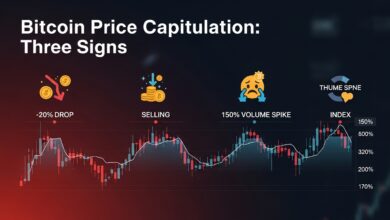
Sentiment is a force in itself. Volume spikes, search-interest spikes, social media mentions, flows into/out of wallets—all these can give clues to whether the market is shifting from accumulation to euphoria to panic. Understanding these helps you anticipate when the dance may change tempo.
Use Risk Management Tools
Since the dance can become chaotic, risk control is paramount. Be mindful of leverage, exposure, stop‐loss placement, portfolio allocation. Because market forces can converge unexpectedly, allow for “shock” events.
Time Horizon Matters
If you view Bitcoin as a long-term asset, you may ride multiple phases of the dance rather than trading every move. If you are short-term, you must pay attention to the immediate tempo: which market forces are dominating now? Are we in a build-up, a blow-off, or a collapse?
Prepare for New Patterns
The choreography of Bitcoin’s dance evolves. New entrants (institutional capital, ETFs), geographical shifts (miners relocating), regulatory changes, and technology advancements (layer-2, protocol upgrades) change the dance’s steps and tempo. Adaptation is essential.
What the Chaotic Dance of Bitcoin Prices Means for Investors and the Market
Understanding the chaotic dance of bitcoin prices and market forces has implications not just for individual investors but for the broader crypto ecosystem.
Greater Volatility, Greater Opportunity—and Risk
The very fact that Bitcoin is more susceptible to this dance means more opportunity for outsized gains—but also higher risk of large losses. For investors, that means potential for big returns but also the need for strong discipline.
Market Maturation but New Complexities
As the ecosystem matures—with more institutional involvement, ETFs, derivatives, global regulation—the dance becomes more complex. While that may bring some stabilisation, it may also mean more intertwined market forces and new feedback loops (for example, large ETF flows triggering derivatives moves).
Influence on Traditional Finance
Bitcoin’s dance isn’t isolated. Because so many market forces overlap with broader financial markets, the behaviour of Bitcoin can influence—and be influenced by—risk-assets, inflation sentiment, central-bank policy, geopolitical risk. Understanding this dance can help position for broader market shifts.
Strategic Portfolio Considerations
Investors should ask: Where is the market in its dance? Are we in the calm accumulation, the euphoric climb, or the panic crash? Is investor sentiment reaching extremes? Are institutional flows changing? Are mining-cost pressures mounting? These considerations influence when to enter, hold or reduce exposure.Common Misconceptions About the Chaotic Dance of Bitcoin Prices To navigate the dance better, it’s helpful to dispel a few myths.
Bitcoin Price Moves Only Because of Headlines
While headlines matter, they are just one part of the dance. The real drivers are supply/demand dynamics, structural cost considerations, mining economics, institutional flows. Headlines often reflect those deeper forces.
High Volatility Means No Fundamentals
Even in chaos, fundamentals matter. Bitcoin’s fixed supply cap, mining cost, network adoption and regulatory architecture all matter. The dance may be erratic, but it has underlying rhythm.
Past Patterns Guarantee Future Moves
The dance evolves. What worked in 2017 or 2021 may not work the same way now. New forces (institutional adoption, ETFs, global macro linkages) have changed parts of the choreography. Investors must adapt.
Looking Ahead — Where Might the Chaotic Dance of Bitcoin Prices Go?
What are potential future scenarios for the chaotic dance of bitcoin prices and market forces? While nothing is certain, here are some plausible trajectories.
Institutional Domination Leads to Smoother Rhythm
If institutional adoption deepens, ETFs stabilise flows, liquidity improves and regulatory clarity arrives, the dance might become less erratic. Market forces may settle into more predictable patterns, reducing volatility. But even then, the dance still exists—it just might be a slower tempo.
New External Shocks Re-Intensify the Dance
Conversely, fresh macro shocks (inflation, regulatory surprise, technological disruption) could amplify the dance’s volatility further. If key market forces shift rapidly, the dance might become even more fractal, with sharper swings.
Shift in Market Structure Changes the Step-Pattern
The mining industry, layer-2 scaling solutions, algorithmic trading, on-chain analytics—all might change how market forces affect price. As these structural changes happen, the dance will adopt new steps and rhythms, requiring participants to learn a new choreography.
Conclusion
The chaotic dance of bitcoin prices and market forces is far more than a catchy phrase—it is a real, dynamic interplay of scarcity, demand, sentiment, institutional capital, mining economics and global macro-forces. If you’re navigating the Bitcoin ecosystem, appreciating this dance is essential. Recognising the lead dancers (which market forces dominate now), understanding the transitions between phases (accumulation → euphoria → panic → recovery), and managing your exposure accordingly can make the difference between being swept away or mastering the rhythm.